





Double Brass Inkstand Set
A double brass inkstand set brings heavy metal, glass inkwells and organised ink-dipping to a Victorian or Edwardian writing desk.

Double Brass Inkstand Set
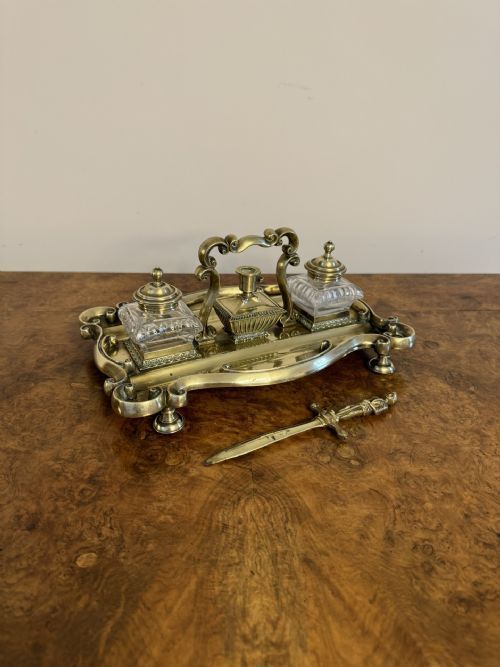
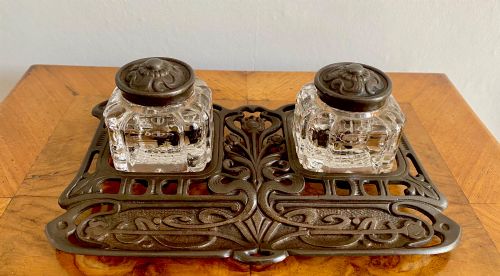
A double brass inkstand set provides a substantial desktop tray or stand fitted to hold two distinct ink pots alongside space for pens and sealing wax. These desk accessories appear in various periods, predominantly the nineteenth century and the Victorian era, spanning styles from French Empire and Rococo Revival to Art Nouveau and Edwardian design.
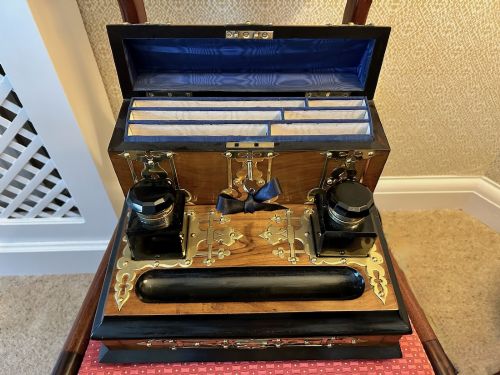
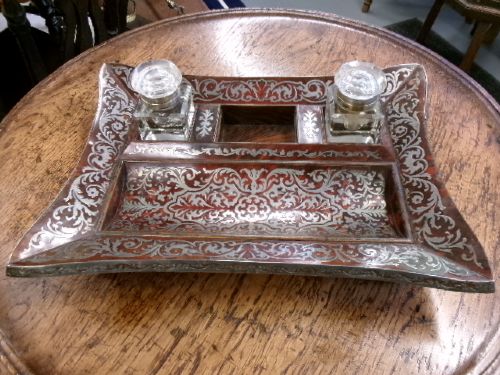
Most examples combine cast or sheet brass with cut glass ink bottles, occasionally incorporating wooden bases in walnut, mahogany or burr walnut, alongside marble and ormolu mounts. The format ranges from simple brass desk tidies with integrated drawers to elaborate freestanding boulle work and gilt bronze assemblies.
Buyers encounter French, English and continental workshop productions, often featuring hinged lids, pen rests and original glass ink inserts. The double configuration allowed a writer to keep two ink colours ready, typically black and red, for correspondence and bookkeeping.
Materials and construction methods
Foundry workers cast brass and ormolu elements using traditional sand-casting techniques, finishing the metal surfaces through chasing, gilding or polishing to achieve crisp decorative detail. Many pieces integrate turned or cut glass inkwells designed to fit snugly into dedicated brass collars within the metal or wooden chassis.
Wooden components, particularly walnut and mahogany trays, utilise precise joinery and veneer work, including inlaid brass marquetry and boulle work popular in nineteenth-century French ateliers. Cast-brass frames often support heavy marble plinths, combining structural rigidity with ornamental cast-metal mounts and hinged lids.
Desk accessories on this page combine standard double inkwells with specialised variations including letter holders, drawers, and desk clocks.
What separates the fine examples
Quality rests in the crispness of the brass casting and the weight of the materials used, where heavier metalwork and deeply chased ornamentation distinguish superior nineteenth-century productions from lighter commercial items. The presence of matching original cut-glass ink pots with undamaged collars elevates a piece considerably.
Integration of secondary materials like vert marble, fine walnut veneers and intricate boulle work demonstrates higher workshop ambition. Attention to small mechanical details, such as smoothly operating drawer actions on desk tidies and well-fitted hinged lids, marks out the better end of the surviving range.
James Cartland & Sons·Moser
The Double Brass Inkstand Set Glossary
- Standish
- An inkstand or tray designed to hold writing implements, ink pots and sanders. It forms the central desktop station for correspondence.
- Boulle work
- Marquetry technique utilising tortoiseshell, brass and pewter inlaid into wood. It decorates high-status nineteenth-century French desk sets.
- Ormolu
- Gilded bronze or brass mountings applied to decorative objects. This technique creates bright metallic highlights on nineteenth-century French and English pieces.
- Cut glass
- Glassware shaped and patterned by abrasive wheel cutting. It forms the heavy ink bottles set into brass desk stands.
- Escapement
- Mechanical regulator mechanism found in desk clock combinations. It controls the release of power in timepiece inkstands.
Double Brass Inkstand Set: Frequently Asked Questions
What is a double brass inkstand set used for?
These desk accessories held two glass ink bottles for dipping quill or steel nib pens during letter writing and record keeping. The tray structure kept writing fluids steady and organised pens, stamps and sealing wax in one place.
They sat upon writing tables in studies, libraries and offices throughout the nineteenth and early twentieth centuries. The dual ink configuration allowed writers to access two different ink colours, commonly black and red, without changing bottles.
How do I date a brass desk set?
Dating relies on stylistic clues, manufacturing materials and construction methods associated with specific decades. Victorian and Edwardian examples often display ornate cast brass or heavy wooden bases with cut glass.
Nineteenth-century pieces frequently incorporate French ormolu, boulle work or vert marble, while later twentieth-century productions show simpler industrial forms. Examining the glass ink bottles and any maker stamps helps narrow the period of manufacture.
Are original ink bottles common?
Original glass ink pots survive in a proportion of pieces, often cut or moulded to fit the specific brass collar of the stand. Finding matching glass inserts enhances the completeness of the desk set.
Replacement bottles appear frequently due to the fragile nature of glass over generations of use. Collectors look for bottles that sit flush within the brass apertures and match the period of the stand.
How do I care for antique brass and wood?
Brass components benefit from gentle dusting and occasional cleaning with a soft cloth to preserve the metal patina without stripping historic finishes. Wooden bases in walnut or mahogany require standard treatment suitable for antique furniture veneers.
Harsh chemical polishes damage chased metal details and delicate patination built up over centuries. Keeping the pieces away from direct heat sources prevents timber warping and protects inlaid materials like boulle work.