




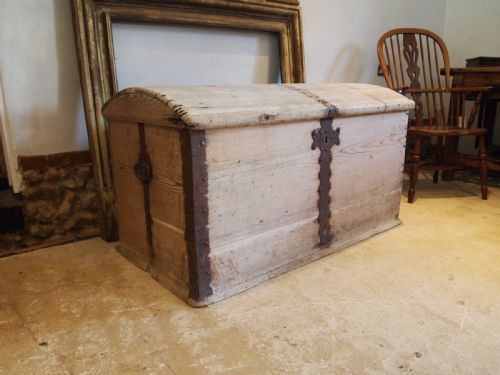


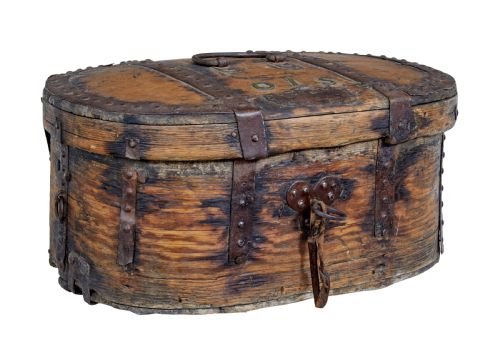


Domed Lid Wooden Chest
These domed lid wooden chests combine practical storage with centuries of craftsmanship, offering tactile timber surfaces and robust iron or brass hardware that anchor any room.
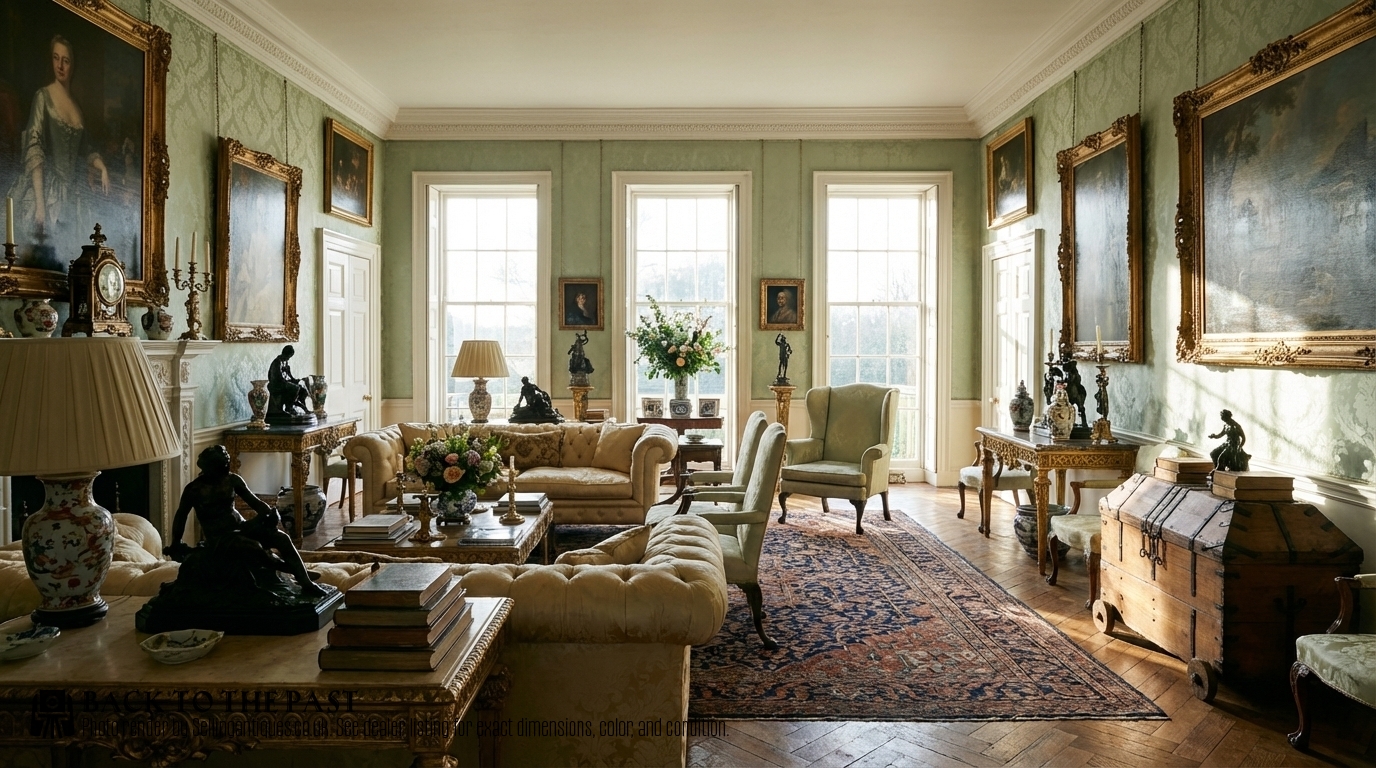
Domed Lid Wooden Chest
A domed lid wooden chest provides enclosed storage through hinged, curved lids that shed water and create distinct internal volume. These pieces range from small table boxes and tea caddies to large blanket chests and shipping trunks.
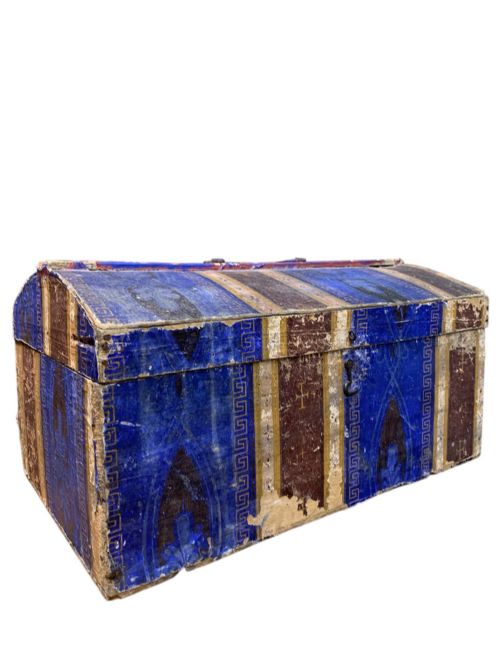
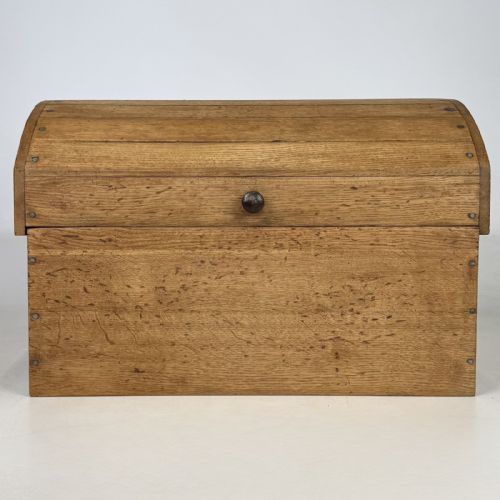
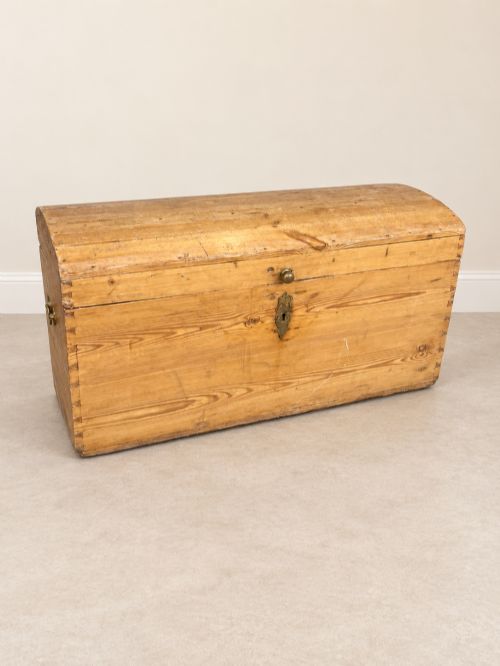
The selections span the eighteenth and nineteenth centuries, including Georgian and Victorian examples alongside Scandinavian country and folk art pieces. Buyers most frequently encounter pine, oak, and mahogany constructions shaped by regional vernacular traditions.
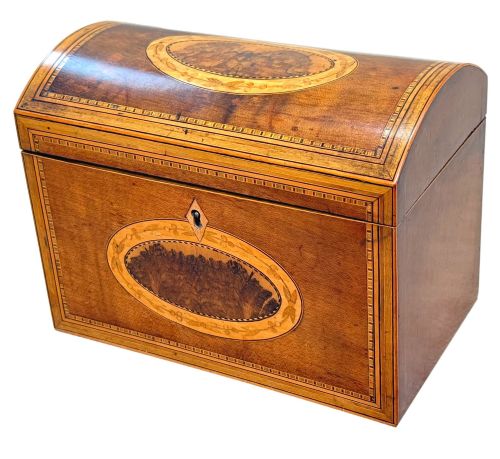
Forms include iron-bound coffers, painted blanket boxes, and cellarets designed to hold bottles or valuables. Each object reflects the utilitarian demands of its period, whether for domestic linen storage or long-distance carriage.
How they were made
Construction relies on solid timbers such as pine, oak, mahogany, and burr walnut, joined to withstand heavy use. Carpenters shaped curved lids using stacked ribs or steam-bent boards secured to sturdy carcass frames.
Hardware forms an integral structural element, with wrought iron and brass bands reinforcing corners and lids. Surface treatments range from original paint finishes and polished wax to canvas coverings that protected the timber during transport.
Domed Lid Wooden Chest Retail Price Guide 2026
Typical asking prices for domed lid wooden chest among the pieces listed under this phrase on Sellingantiques today, from the lower quarter to the upper quarter. They describe what is for sale here now, not the wider market.
Some nineteenth-century tea caddies feature internal compartments sized precisely to hide precious leaves from light and thieving hands.
What varies in quality
Quality rests upon the integrity of the timber selection and the preservation of original surfaces. Pieces retaining undisturbed historic paint or patinated polish display higher integrity than those stripped or overly restored.
The sophistication of the hardware and joinery distinguishes workshop output. Hand-forged iron mounts, dovetailed corners, and original locks demonstrate superior craftsmanship compared to later replacements.
The Domed Lid Wooden Chest Glossary
- Dome top
- A curved lid construction designed to increase internal capacity and shed moisture. This profile defines the silhouette of many traditional trunks and caddies.
- Cellaret
- A lockable container designed specifically for holding wine bottles and decanters securely. These often feature compartmentalised interiors lined for insulation.
- Marriage chest
- A commissioned storage piece gifted to mark a wedding, frequently inscribed or painted with specific dates and family ciphers. These items carry significant narrative and historical value.
- Folk art
- Utilitarian objects decorated within regional traditions by non-professional makers. These pieces utilise local pigments and motifs specific to Scandinavian or European rural communities.
Domed Lid Wooden Chest: Frequently Asked Questions
What were domed chests used for?
These chests served primarily for secure transport and storage of valuable textiles, documents, and personal belongings. The curved lid prevented items from being piled on top while allowing extra vertical space inside.
Smaller variants functioned as tea caddies or document boxes, while larger trunks accommodated blankets, clothing, or shipping cargo during travel.
How do I date a wooden chest?
Dating relies on examining the construction techniques, timber species, and fastener types used in the carcass. Hand-forged iron nails, dovetail joints, and primary woods like pine or oak provide key chronological indicators.
Stylistic markers such as painted folk motifs or Gothic Revival brasswork further narrow the era of manufacture, aligning pieces with Georgian or Victorian periods.
Are painted finishes original?
Determining original paint involves inspecting surface wear, craquelure, and the presence of underlying preparatory layers. Authentic early finishes exhibit natural oxidation and integration with the timber grain beneath.
Traces of pigment beneath iron mounts or locks generally confirm that the colour dates to the period of initial construction rather than later redecoration.
How should I clean a wooden chest?
Maintenance requires gentle dusting with a dry, soft cloth to remove surface particles without disturbing the historic wax or paint layer. Avoid modern chemical polishes or water, which can penetrate porous timbers and lift fragile finishes.
Applying a microcrystalline wax periodically helps nourish unpainted hardwoods while preserving the natural patina accumulated over centuries.