

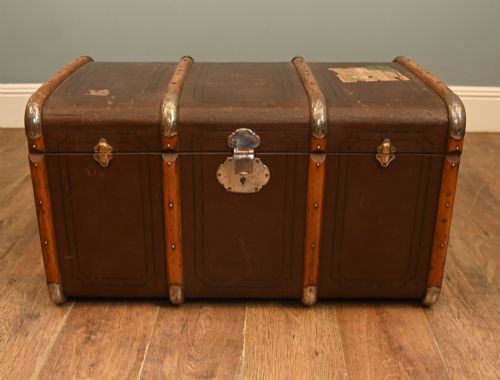


Dome Top Leather Trunk
A dome top leather trunk brings centuries of robust travel history into a room, offering tactile warmth and sturdy storage.
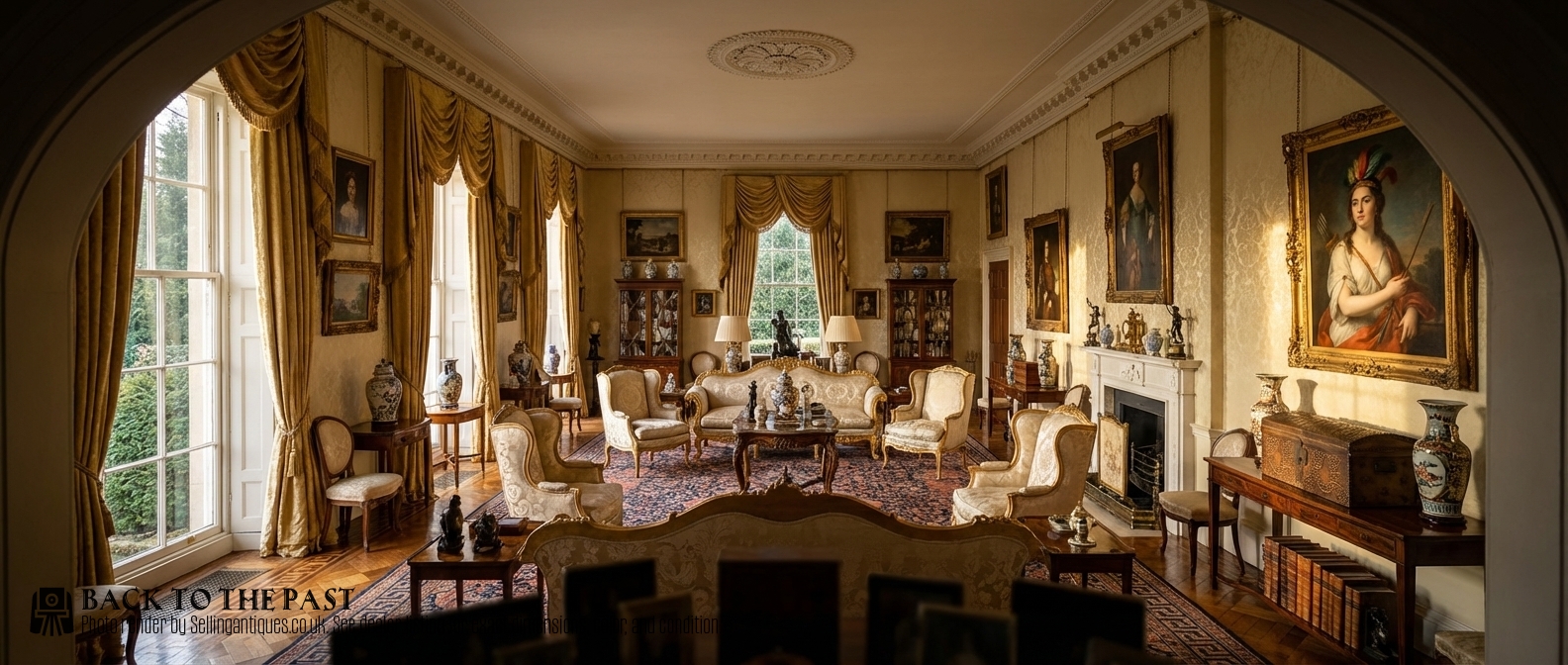
Dome Top Leather Trunk
When you search for a dome top leather trunk, you encounter substantial luggage and storage pieces constructed across the seventeenth, eighteenth, and nineteenth centuries. These sturdy vessels served travellers and households alike, designed with curved lids to shed water and maximise internal volume.
The versions most frequently met on this page span the Georgian and Victorian eras, alongside continental European examples. You will find pieces ranging from small chests on stands to large campaign cases and marriage trunks.
Makers and workshops across England, France, Spain, and the Netherlands produced these coffers using local timbers covered in hide or leather. Their enduring appeal lies in the rich patination of the materials and the robust construction that has survived centuries of use.
How they were made
The foundation of a dome top leather trunk typically relies on a wooden carcass formed of oak or other native timbers. Over this wooden frame, artisans stretched animal hide, heavy leather, or canvas to provide a durable outer layer.
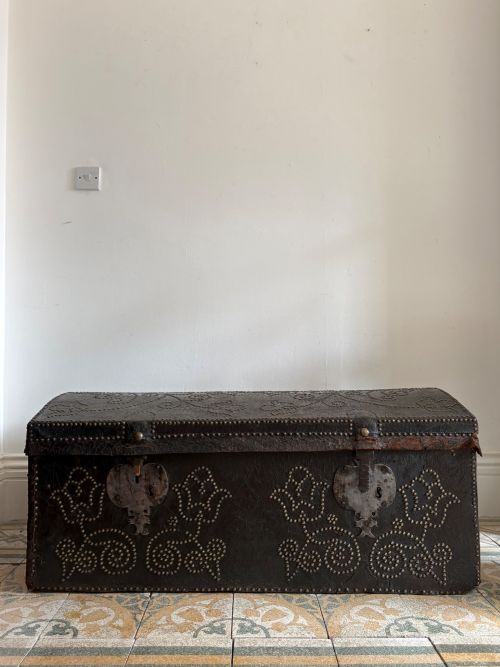
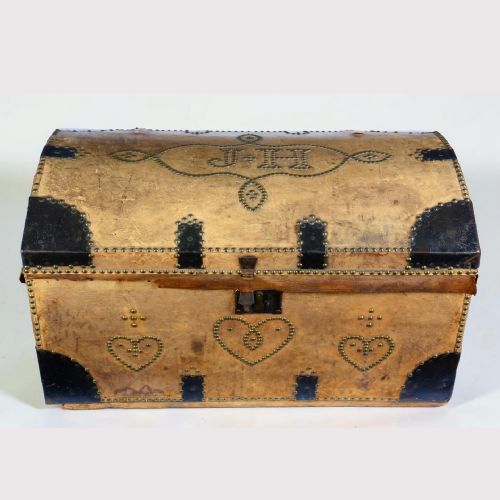
To secure the covering and reinforce the structure, makers utilised iron or brass studwork, often arranging decorative brass tacks in geometric patterns across the surface. Iron bands, straps, and carrying handles were then attached to withstand the rigours of travel.
Dome Top Leather Trunk Retail Price Guide 2026
Typical asking prices for dome top leather trunk among the pieces listed under this phrase on Sellingantiques today, from the lower quarter to the upper quarter. They describe what is for sale here now, not the wider market.
Several trunks bear the original owner's initials pricked out in brass tacks, preserving a quiet seventeenth-century signature.
What varies in quality
The distinction between ordinary utility luggage and superior examples rests in the ambition of the construction and the fineness of the decorative brass studwork. Finer pieces display dense, carefully tapped brass tacks forming intricate patterns, whereas simpler trunks rely on sparse, functional iron fixings.
The choice of underlying timber and the quality of the leather skin also dictate the hierarchy of these items. Thick, supple hide tightly fitted to a heavy oak carcass represents a higher standard of manufacture than thin canvas or degraded leather applied over softer woods.
Arthur Wannop·Chapple and Sons
The Dome Top Leather Trunk Glossary
- Dome top
- A rounded lid profile designed to shed water and allow extra headroom for packed contents. This curved construction distinguishes these trunks from flat-topped storage boxes.
- Studwork
- The decorative and structural application of brass or iron tacks driven through leather into the wood beneath. Artisans often arranged these studs in rows or initials.
- Campaign case
- A portable trunk built specifically for military officers or travellers on the move. These pieces frequently feature robust carrying handles and reinforced corners.
- Hide
- Untanned or heavy tanned animal skin used as a tough exterior covering. It provides a thicker, more tactile surface than standard processed leather.
Dome Top Leather Trunk: Frequently Asked Questions
What is a dome top leather trunk?
A dome top leather trunk is a historic storage chest featuring a curved wooden lid covered in leather, hide, or canvas. These pieces were built for travel and domestic storage from the seventeenth century onwards.
They often incorporate iron bands and brass studwork for reinforcement and decoration. Today, they function as decorative coffee tables or storage chests in modern homes.
How were these trunks used?
Historically, these trunks transported belongings during journeys across Europe and the colonies. Their curved lids allowed rainwater to run off easily while travelling on coaches or ships.
Inside the home, families used them to store heavy textiles, linens, and personal valuables. Their robust construction ensured contents remained protected from moisture and dust.
How do I live with one?
Living with a dome top leather trunk is straightforward because their rich patinated surfaces complement both traditional and contemporary interiors. Large examples serve well as living room tables with internal storage.
Keep them away from direct heat sources and strong sunlight to protect the aged leather and wood. Occasional gentle conditioning helps maintain the suppleness of the historic hide.
How do I date an antique trunk?
Dating relies on examining the construction methods, timber types, and hardware styles. Seventeenth and eighteenth-century examples often display simpler hand-forged ironwork and heavy oak carcasses.
Victorian and later pieces frequently show more refined brass studwork and standardised locking mechanisms. Maker marks or original owner initials, when present, also help narrow down the period.