




Dome Top Caddy
A dome top caddy brings tactile warmth and period elegance to any room, offering a refined home for treasured keepsakes.
Dome Top Caddy
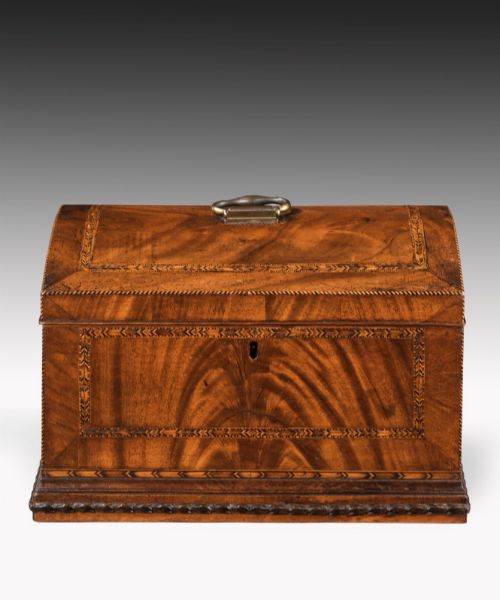
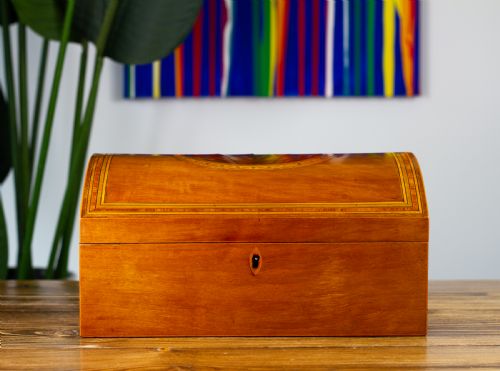
A dome top caddy is a sophisticated receptacle designed originally to hold tea, but frequently adapted for stationery or scent bottles. You will most commonly encounter pieces fashioned during the Georgian and Victorian periods, showcasing rounded lids that emphasise the grain of the wood. These objects range from compact tea caddies with fitted interiors to larger decorative boxes and caskets.
The materials utilised in these pieces define their character, with rich hardwoods dominating the selection. Mahogany and burr walnut appear frequently, complemented by exotic coromandel and satinwood. Certain examples feature decorative inlays such as boxwood or intricate Tunbridge ware patterns that elevate the visual interest of the curved lid.
How they were made
Cabinet makers constructed these vessels using solid timber carcases overlaid with carefully selected veneers of burr walnut, mahogany, or coromandel to display striking natural grain patterns. The curved dome was shaped with precision, often reinforced internally to maintain its structural integrity over centuries of opening and closing.
Surface ornamentation involved meticulous techniques such as boxwood stringing, parquetry, and contrasting inlay work, frequently paired with cast brass mounts and escutcheons. Fitted interiors were lined with paper, velvet, or fitted wooden compartments to secure canisters or bottles safely.
At least one clever maker decided tea storage needed wings, applying a delicate moth motif directly into the Georgian wood inlay.
What varies in quality
The sophistication of the timber veneer selection and the symmetry of the grain across the curved lid set superior pieces apart. Master craftsmen chose burr walnut and satinwood with vibrant, matching figures that flow seamlessly over the dome.
Detailing in the construction, such as fine boxwood stringing, intact original brass hardware, and the complexity of internal fittings, indicates a higher standard of workmanship. Pieces retaining working locks with matching keys or specialised parquetry demonstrate greater initial investment and superior preservation.
The Dome Top Caddy Glossary
- Burr walnut
- A highly figured wood grain obtained from the wart-like growths on walnut trees, prized for its swirling, organic patterns on antique box lids.
- Tunbridge ware
- A distinctive type of decorative woodwork characterised by tiny coloured wood mosaic tesserae forming geometric or pictorial motifs.
- Coromandel
- A dense, heavy tropical hardwood featuring dark brown and black stripes, frequently utilised in high-end Victorian decorative boxes.
- Escutcheon
- A protective plate surrounding the keyhole of a caddy, typically cast in brass to complement the exterior woodwork.
- Parquetry
- A geometric mosaic of wood pieces used for decorative veneering on box surfaces, creating dynamic patterns through contrasting tones.
Dome Top Caddy: Frequently Asked Questions
What were dome top caddies used for?
These vessels were originally manufactured to store dry tea leaves safely away from moisture and light. Tea was an expensive commodity in the Georgian and Victorian eras, requiring secure, lockable containers.
Over time, many of these boxes were adapted to serve alternative functions. Examples often housed stationery, playing cards, or delicate glass scent bottles.
How do I care for a wooden caddy?
Keep wooden boxes away from direct sunlight and sudden temperature fluctuations to prevent the delicate veneers from warping or cracking. Maintaining a stable indoor environment protects the structural integrity of the curved lid.
Apply a light application of appropriate wax polish periodically to nourish the hardwood surface and maintain its natural lustre. Avoid using liquid cleaners or harsh chemicals on antique wood and brass mounts.
How do I distinguish Georgian from Victorian pieces?
Georgian examples often feature simpler, elegant mahogany or yew wood constructions with subtle stringing or fan inlays. The proportions tend to focus on classical restraint and clean architectural lines.
Victorian pieces frequently display more exuberant materials like burr walnut and coromandel, alongside complex Tunbridge ware or Gothic Revival details. The presence of heavier brass mounts and elaborate internal fittings usually points to the later nineteenth century.
Are original keys common with these boxes?
Finding an antique box that retains its original working key is uncommon because keys were easily misplaced over generations of use. Many surviving pieces have locks that remain functional even if a replacement key is used.
When a caddy retains its factory-fitted key and working lock, it adds a desirable layer of completeness to the piece. The absence of a key does not detract from the decorative merit or historical craftsmanship of the box.