


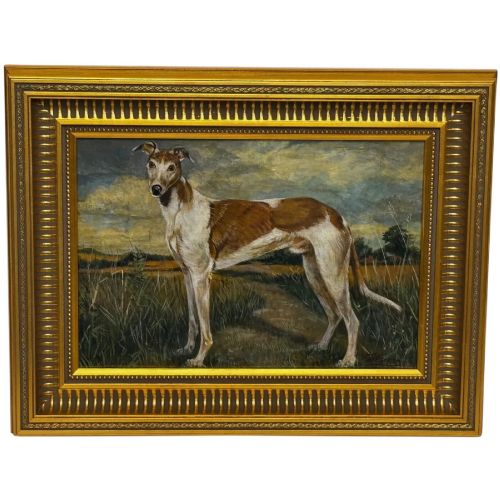
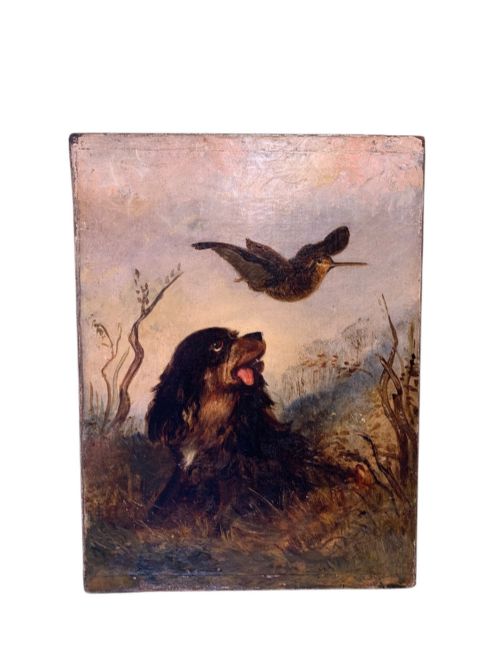
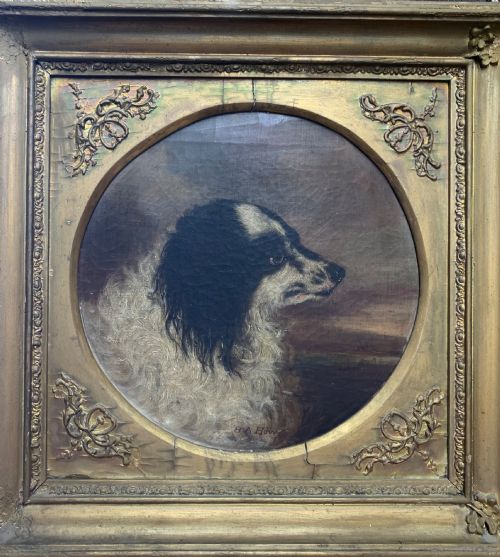
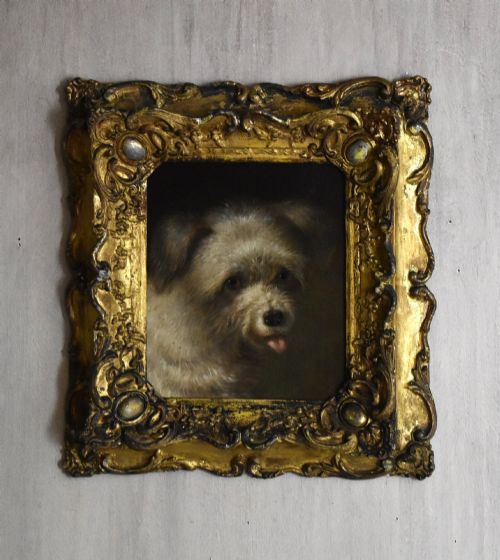


Dog Canvas Painting
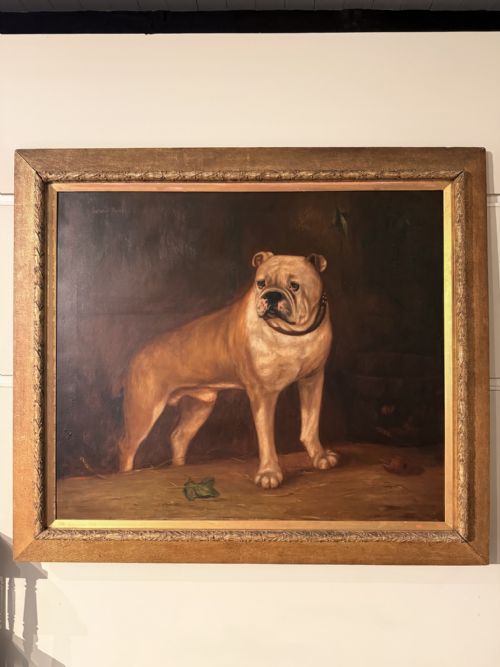
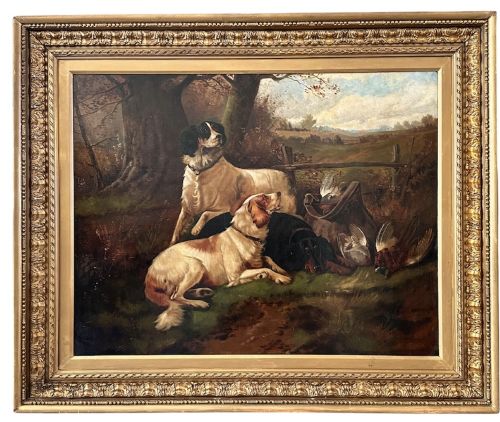
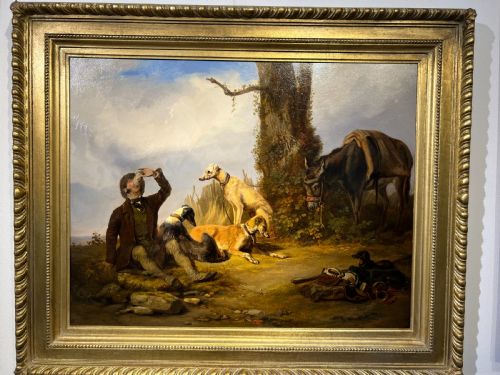
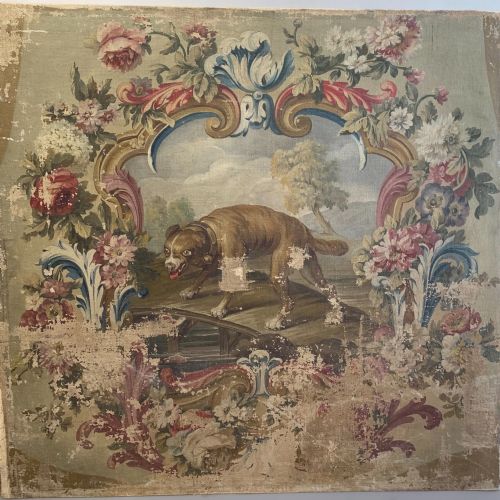
When you search for a dog canvas painting, you enter a rich tradition of canine portraiture spanning centuries of British and European art.
Dog Canvas Painting
A dog canvas painting captures the likeness and character of beloved pets, working hounds, and sporting dogs across various historical periods. The most common examples met on this page date from the Victorian era and the wider nineteenth century, reflecting a booming appetite for animal portraiture.
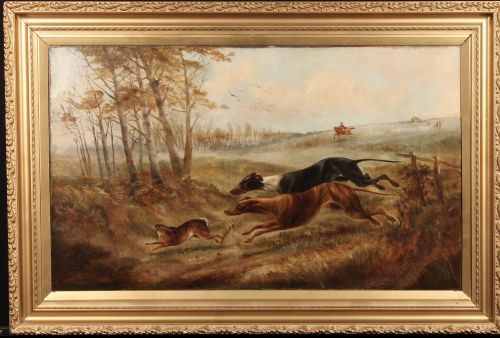
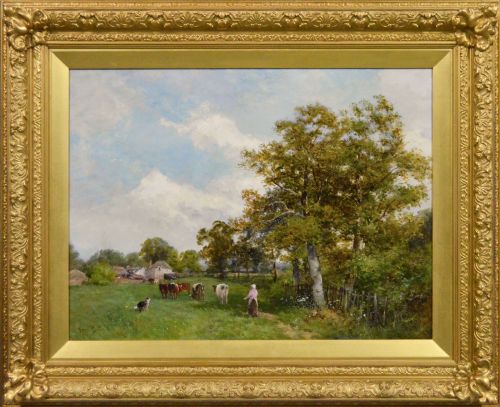
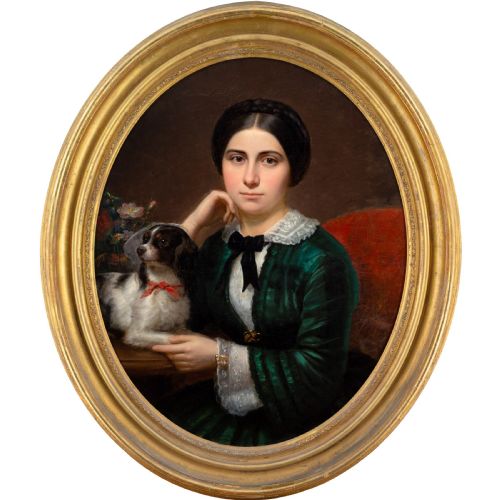
These works range from intimate head studies of individual terriers and spaniels to grand compositions involving gun dogs, hunting scenes, and family groups. Many pieces place the animal firmly within a landscape setting, whether on a Scottish moorland or beside a country estate.
Makers and schools from Britain and continental Europe contributed significantly to this genre, employing oil paint on woven supports to record everything from working collies to lapdogs. The survival of these canvases offers a direct window into historical human-animal bonds.
Materials and technique
The foundation of these works is woven canvas stretched across a wooden frame, providing a stable yet flexible surface for the application of paint. Artists built up their compositions using oil paint, valued for its rich pigment depth, slow drying time, and capacity for fine blending.
Listings feature works from the seventeenth century through to the mid-twentieth century, dominated by nineteenth-century oil on canvas pieces.
Factors determining quality
The quality of a dog canvas painting rests principally on the artist's anatomical accuracy, handling of light, and ability to convey the distinct personality of the animal. Master painters captured the alertness of a setter or the heavy coat of a retriever with convincing weight and texture, whereas lesser works rely on stiff outlines and flat shading.
The integration of the subject within its background also dictates merit, separating rushed decorative pieces from carefully observed studies set in convincing landscapes. Furthermore, the condition of the original canvas and the survival of period gilding on the frame influence the overall integrity of the piece.
Henry Barraud·George Armfield·Valentine T. Garland·David Bates·John Sargent Noble·Sir Edwin Henry Landseer·C R Breytle·Claude Cardon·Frans Snyders·John Emms·Thomas Hicks·LM Webb·George E Sharpe·Colin Graeme Roe·John Trivett Nettleship·John Horsburgh
The Dog Canvas Painting Glossary
- Canvas
- A heavy woven fabric, typically linen or cotton, used as a support surface for oil paintings. It is stretched tightly over a wooden strainer or stretcher before painting.
- Oil paint
- A slow-drying paint made by mixing pigments with a drying oil, most commonly linseed oil. This medium allows for smooth blending and rich depth of colour.
- Giltwood
- Wood that has been decorated with a thin layer of gold leaf or metallic powder. Frames made in this manner were designed to enhance the visual impact of the artwork.
- Sporting art
- A genre of art depicting field sports, hunting, horses, and dogs. It gained immense popularity during the eighteenth and nineteenth centuries.
- Stretcher
- The wooden frame upon which an artist's canvas is stretched. Original stretchers help date and authenticate antique paintings.
Dog Canvas Painting: Frequently Asked Questions
What subjects appear in dog canvas painting?
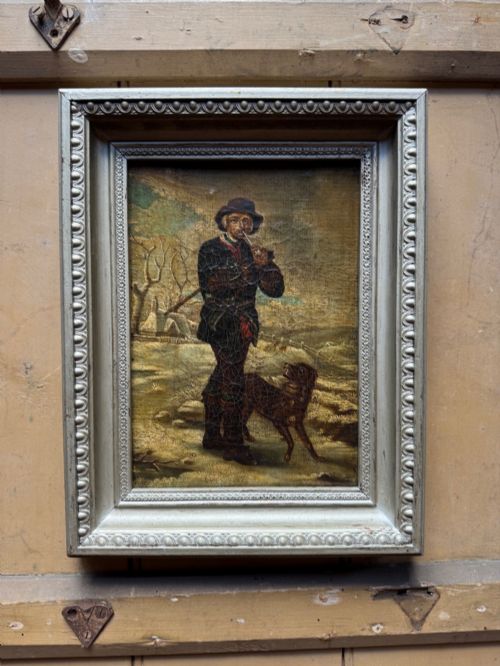
These works feature a wide array of canine subjects, ranging from single portraits of named pets to working gun dogs, spaniels, terriers, and hounds participating in field sports. Many pieces also place dogs alongside their owners in domestic or rural landscapes.
Commissioned portraits often highlight prized hunting dogs or family companions, capturing specific breeds with careful attention to their physical traits and working capabilities.
How do I date a dog canvas painting?
Dating relies on a combination of stylistic clues, such as the clothing of any human figures present, the breed characteristics depicted, and the construction of the canvas and stretcher. Pigment analysis and examination of the frame can also provide helpful chronological markers.
Signatures, monograms, or inscriptions on the reverse of the canvas frequently point to specific artists or active periods, helping narrow down the exact decade of creation.
Where were these paintings displayed originally?
Historical dog paintings typically hung in country houses, estate libraries, and sporting lodges to celebrate favoured hunting animals and family pets. They served both as decorative statements of wealth and as affectionate tributes to loyal companions.
In modern settings, these works suit studies, hallways, and living rooms, where their traditional subjects and rich oil textures complement classic and eclectic interiors alike.