





Distressed Wood Console Table
These distressed wood console table pieces bring historic character to a room, offering surface space with time-worn charm.
Distressed Wood Console Table
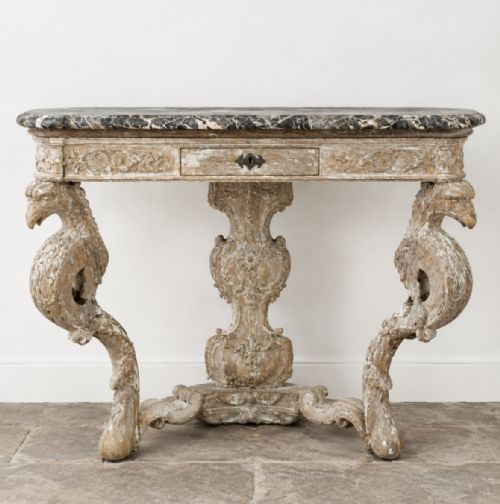
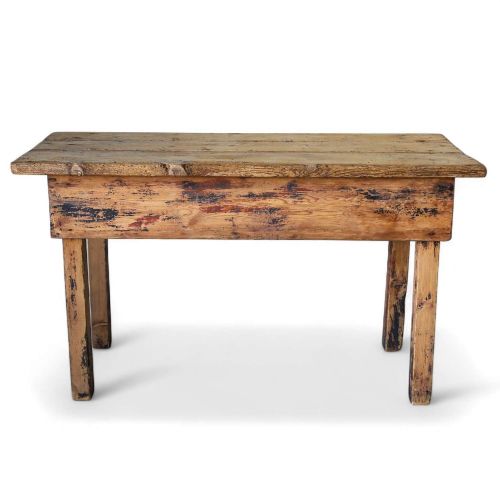
A distressed wood console table search uncovers a diverse range of side furniture, from 18th century European antiques to early 20th century country pieces. Buyers frequently encounter painted timber formats, including French provincial designs and English dresser bases.
The selection encompasses console tables, side tables, and demi lune shapes designed to sit flat against a wall in hallways and reception rooms. Pieces span multiple periods, with 19th century items appearing alongside earlier baroque and rococo examples.
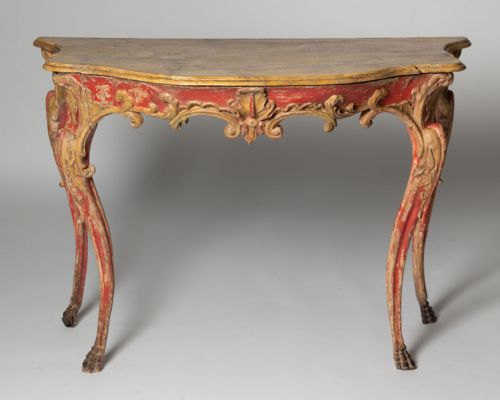
Origins vary widely across the inventory, taking in English country houses, Swedish estates, Italian palazzos, and French chateaux. Regional variations bring distinct silhouettes, from serpentine fronts to wall-mounted formats and potboard dresser bases.
Materials and Construction
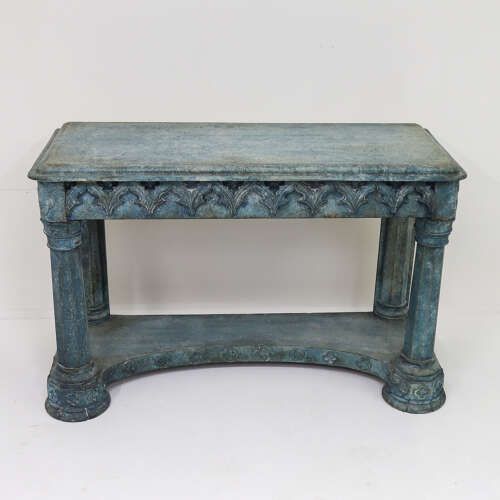
Carpenters utilised traditional timber construction, working primarily with pine and walnut alongside general carved wood and solid timber. Surfaces received historic coats of paint, verdigris copper, or gilding that developed natural wear over generations.
Many tables incorporate decorative stonework, featuring inset marble tops supported by carved wooden bases. Joinery reflects the period of origin, pairing hand-carved details with structural pine frameworks.
Some tables originate from potting sheds and orangery workspaces, bringing earthy utility straight into the hallway.
Assessing Quality and Character
Quality rests in the integrity of the original painted surface and the depth of natural patination on the timber. Tables retaining their early or original paint schemes carry greater authenticity than later decorated pieces.
Carving execution distinguishes regional work, with Italian and French rococo examples displaying spirited relief work compared to simpler country forms. Structural balance in narrower demi lune and wall-mounted formats also dictates the standing of a piece.
The Distressed Wood Console Table Glossary
- Demi lune
- Half-moon shape. These tables fit flush against walls in narrow spaces.
- Console table
- A table designed to stand against a wall, often supported by brackets or console legs. They serve decorative and display purposes in formal rooms.
- Dresser base
- A low wooden sideboard fitted with drawers or cupboards below. English country examples often feature open potboards beneath.
- Serpentine
- A wave-like curved shape. This contour appears on the front edges of specific tables.
- Gilt
- A thin layer of gold applied to the wooden surface. It creates a reflective decorative finish on antique frames.
Distressed Wood Console Table: Frequently Asked Questions
Where should I put a console table?
These tables suit narrow circulation spaces like hallways, corridors, and entrance foyers where depth is restricted. They also function well against living room walls beneath mirrors or artwork.
Because many formats feature flat backs or wall-mounted designs, they occupy minimal floor area while providing useful surface display space.
How do I date an antique console table?
Dating relies on examining the construction methods, timber species, and stylistic traits associated with specific centuries. Cabinet makers of the eighteenth century employed different joinery techniques compared to nineteenth-century workshops.
Surface treatments such as original layered paintwork and traditional gilding also offer clues to the active period of manufacture.
What is a demi lune table?
A demi lune is a half-moon shaped table constructed to stand flat against a wall. This silhouette gained popularity in various European styles during the eighteenth and nineteenth centuries.
Their curved profile makes them practical for smaller rooms while maintaining decorative presence.
How do I care for painted wood furniture?
Historic painted surfaces require gentle treatment using soft, dry cloths to remove dust. Moisture and direct sunlight can damage aged paint and vulnerable timber.
Avoiding harsh cleaning products preserves the original patinated finish that develops over centuries.