

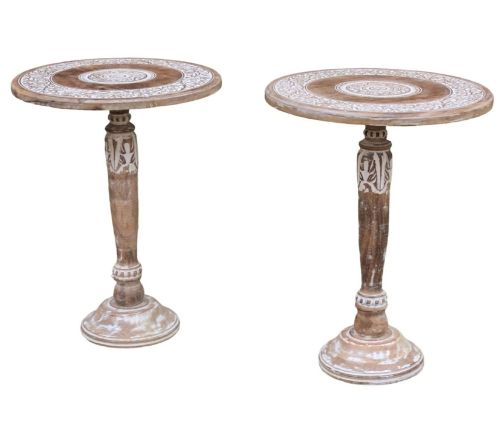
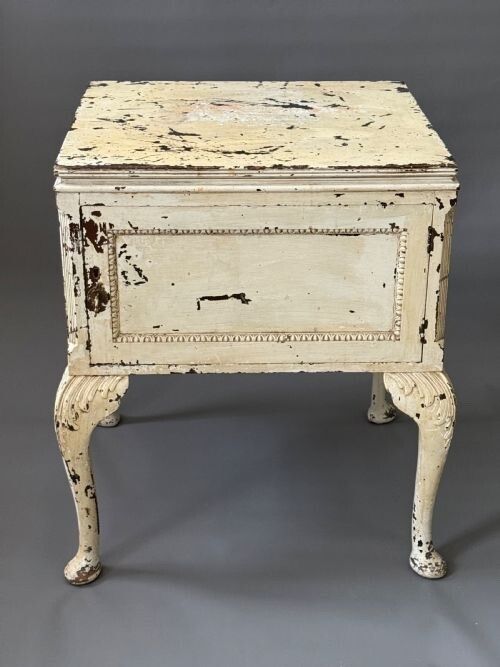
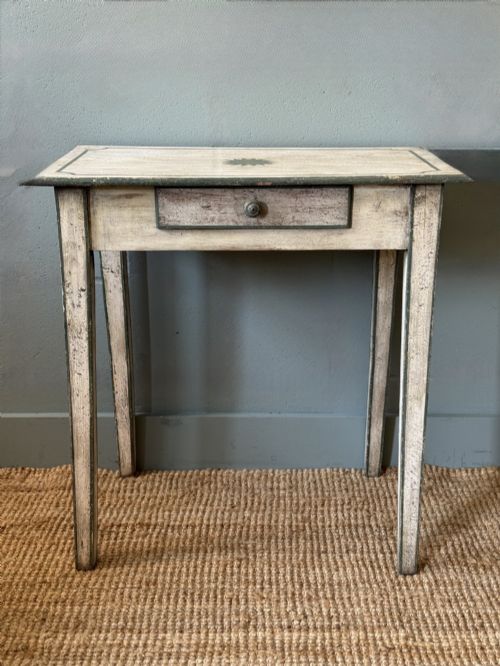


Distressed White Accent Table
A distressed white accent table brings quiet charm and practical surface space to a room, combining painted finishes with period timber forms.
Distressed White Accent Table
When you search for a distressed white accent table, you are looking at functional small furniture pieces that carry aged painted surfaces, often in Scandinavian or French regional styles. These items serve multiple practical purposes around the home as bedside cabinets, lamp stands, or occasional tables.
Makers and workshops from Sweden, France, and Britain produced these items to sit quietly in parlours, bedrooms, and halls. Their painted finishes have weathered over decades to create the textured appearance that defines the group today.
How they were made
Construction relies on traditional timbers such as pine, mahogany, fruitwood, and oak, shaped by hand or with early mechanical assistance. Carpenters joined tops, legs, and frames using dovetail, mortise, and tenon methods suited to each specific table type.
Surfaces were finished with layers of paint over the bare wood, which has since developed cracks, chips, and softening through natural ageing and repeated use. Decorative elements sometimes include carved details, turned legs, or simple strapwork depending on the regional style.
Distressed White Accent Table Retail Price Guide 2026
Typical asking prices for distressed white accent table among the pieces listed under this phrase on Sellingantiques today, from the lower quarter to the upper quarter. They describe what is for sale here now, not the wider market.
Object types on this page include bedside cabinets, occasional tables, side tables, garden tables, centre tables, and stools.
What varies in quality
The standard of a piece rests primarily on the integrity of its timber frame and the authentic character of its aged paint surface. Tables with sound structural joints and undisturbed historic layers of paint hold greater architectural interest than those with recent or heavy-handed overpainting.
Proportion and execution set individual examples apart, from simple pine occasional tables to more refined mahogany or fruitwood pieces with turned supports. The balance between the underlying woodwork and the patinated finish determines the overall presence of the table in a room.
The Distressed White Accent Table Glossary
- Distressed finish
- A surface treatment showing intentional or natural wear, chips, and thinning that reveals underlying wood or earlier coats of paint. This aesthetic highlights the age and history of the piece.
- Occasional table
- A small, movable table designed for intermittent use in living spaces, often serving as a stand for lamps or decorative objects. These pieces include round and pedestal forms.
- Gustavian style
- A Swedish interpretation of French neoclassical design, characterised by pale painted finishes, restrained carving, and functional elegance. It emerged during the late eighteenth century and influenced nineteenth-century production.
- Fruitwood
- Timber sourced from fruit-bearing trees such as cherry, pear, or apple, prized by cabinetmakers for its fine grain and warm tone. It was frequently used in provincial furniture making.
- Strapwork
- A decorative motif composed of flat, interlaced bands resembling leather straps or ribbons, often carved into wood surfaces. This detail appears on garden and occasional tables from various periods.
Distressed White Accent Table: Frequently Asked Questions
What is a distressed white accent table?
A distressed white accent table is a small piece of furniture, such as a side table or bedside cabinet, finished with aged and weathered white paint. These items provide functional surface space while adding texture and historic character to interior spaces.
The category encompasses nineteenth-century and early twentieth-century pieces originating from Britain, Sweden, and France. Their varied forms include occasional tables, lamp stands, and pedestal tables.
How do I style these tables at home?
These tables work well beside seating, beds, or in hallways where a compact surface is useful for lamps, books, or decorative objects. Their neutral aged tones allow them to blend easily with both traditional and contemporary interiors.
The distressed paint finish pairs naturally with natural fibres, textiles, and antique accessories. They function effectively as standalone accent pieces or paired as bedside cabinets.
Are these tables from a specific period?
The pieces listed span the nineteenth and early twentieth centuries, with examples referencing Georgian, Victorian, and provincial European design traditions. Construction dates commonly range from around eighteen-eighty through nineteen-twenty.
Makers built these items using regional timbers like pine, oak, mahogany, and fruitwood. Their enduring appeal lies in the way decades of use have shaped their painted surfaces.
What materials are used in these tables?
Makers constructed these tables using a variety of solid woods, including pine, oak, mahogany, and fruitwood. Linen and iron details occasionally appear alongside the primary wooden frames.
The visible exterior surfaces feature aged paint applications, which distinguish these pieces from polished brown furniture. This combination of timber construction and worn paint defines the material identity of the group.