

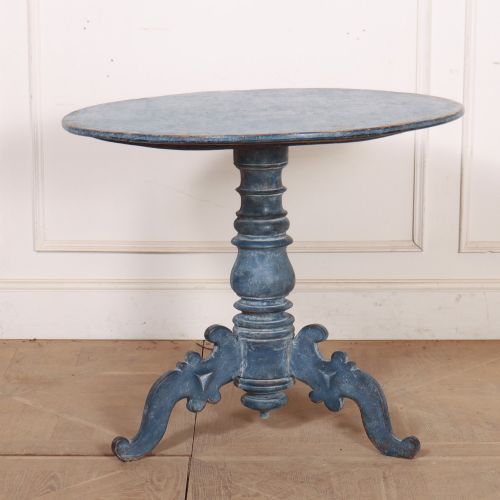


Gustavian Style Occasional Table
A gustavian style occasional table brings bright painted timber and pale Scandinavian country charm straight into a modern sitting room.
Gustavian Style Occasional Table
A gustavian style occasional table usually takes the form of a side table, lamp table, pedestal table, or centre table. These pieces emerge predominantly from the nineteenth century, alongside eighteenth-century examples and early twentieth-century interpretations.
The aesthetic draws heavily on Swedish country and Scandinavian country traditions. Pieces often display restrained neoclassical design or hints of Swedish rococo shaping.
Buyers encounter round occasional tables, tripod lamp tables, and rectangular side tables in scaled-down footprints. They serve practical roles beside seating while introducing a pale decorative accent.
How they were made
Makers constructed these tables from timber, specifically utilising pine and other solid wood foundations. Surfaces received layers of paint, often scraped or applied in traditional pale hues characteristic of Scandinavian workshops.
Detailing occasionally incorporates brass elements for subtle contrast against the painted timber. Construction methods rely on traditional joinery suitable for lighter occasional furniture and tripod bases.
Gustavian Style Occasional Table Retail Price Guide 2026
Typical asking prices for gustavian style occasional table among the pieces listed under this phrase on Sellingantiques today, from the lower quarter to the upper quarter. They describe what is for sale here now, not the wider market.
Some tables wear their history quite literally, showing layers of old paint bravely scraped back by time itself.
What varies in quality
Quality separates ordinary utility pieces from those displaying refined neoclassical lines and balanced proportions. The handling of the painted finish and the integrity of the underlying timber define the upper tier of the range.
Subtle details such as turned pedestal columns, well-executed tripod supports, and the crispness of carved mouldings elevate a piece above standard country workshop output.
The Gustavian Style Occasional Table Glossary
- Occasional table
- A small, movable table designed for a specific, intermittent use rather than central daily service. These compact pieces easily relocate around a room as needed.
- Tripod table
- A freestanding table supported by three legs branching from a central pillar. This stable and compact form gained wide popularity across European cabinetmaking.
- Scraped pine
- Wood surfaces treated by removing heavy later topcoats to reveal earlier layers of historic paint. This technique exposes the subtle patination accumulated over decades of use.
- Pedestal table
- A single central column supporting a table top above a weighted base. This configuration maximises legroom beneath the surface.
Gustavian Style Occasional Table: Frequently Asked Questions
What is a gustavian style occasional table?
These pieces are small, light tables originating from Scandinavian and Swedish traditions, usually fashioned from painted pine or timber.
They reflect the lighter neoclassical taste favoured in northern Europe during the eighteenth and nineteenth centuries.
How were these tables used originally?
Houses utilised them as moveable stands for lamps, decorative objects, or drinks beside seating areas.
Their portable nature allowed owners to shift them around rooms according to daily requirements.
How do I live with one today?
A painted side or lamp table fits comfortably beside a sofa, armchair, or bed as a practical surface.
Their neutral painted finishes blend easily into both contemporary and traditional interior schemes.
How do I tell periods apart?
Eighteenth-century examples tend to display more fluid rococo carving and organic shaping in the wood.
Nineteenth-century and early twentieth-century interpretations often lean towards stricter neoclassical symmetry and simpler turned supports.