
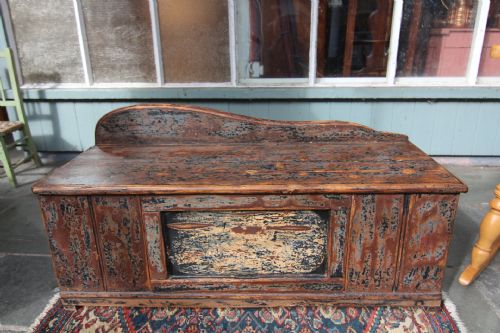
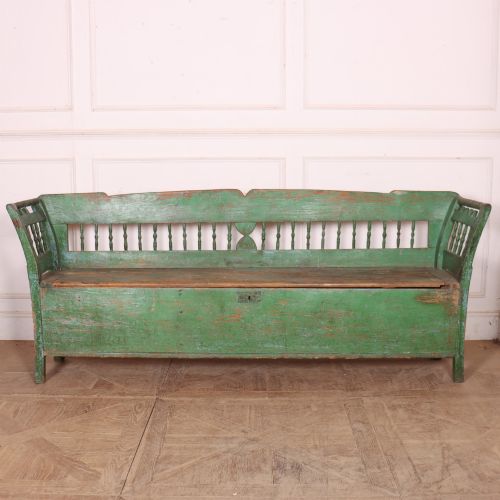
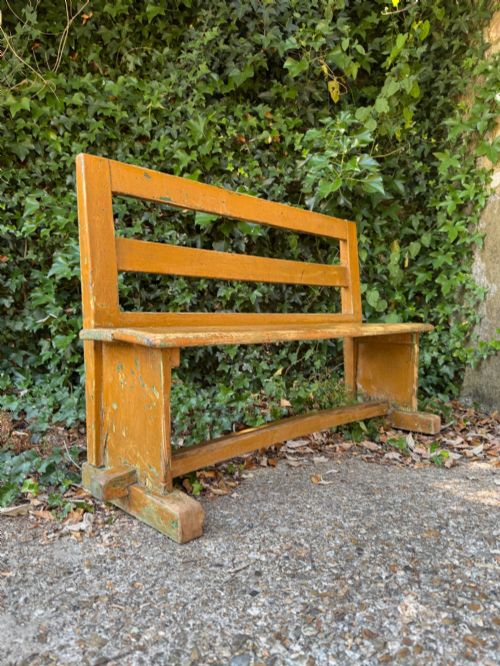

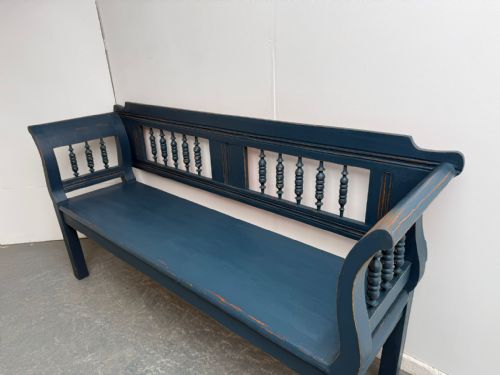
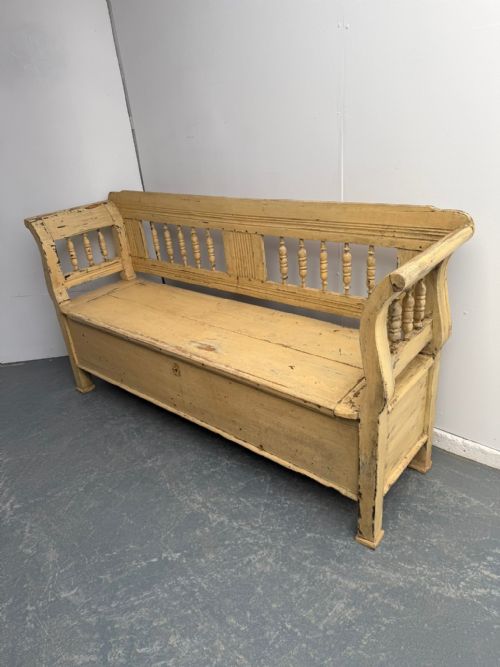


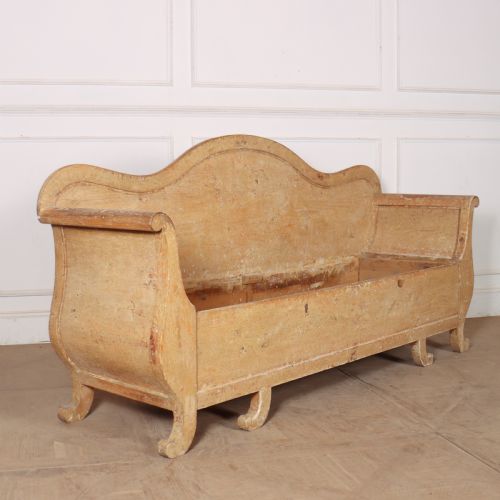


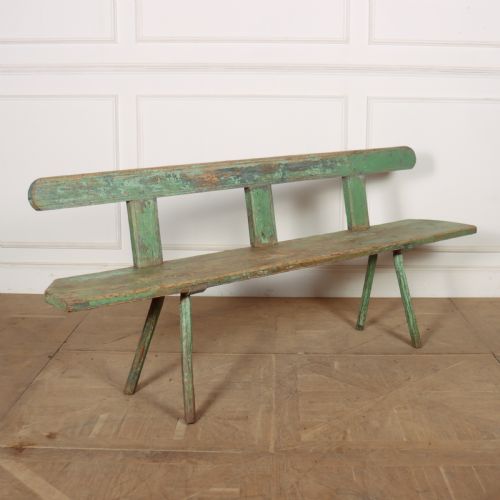

Distressed Pine Settle Bench
A distressed pine settle bench offers sturdy timber construction and high-backed privacy, serving as a traditional seat with integrated storage.
Distressed Pine Settle Bench
A distressed pine settle bench is a traditional high-backed seating form combining timber construction with built-in storage beneath the seat. These pieces function as substantial furniture items designed to block draughts in older domestic spaces.
The selections available here range across multiple regional traditions, including Hungarian, Swedish, Austrian, and Welsh origins. Buyers encounter various formats from this group, spanning simple long dining benches to large box settles with painted finishes.
Dated examples stretch from the 18th century through the Victorian era and 1880, showing forms such as box seats and tavern benches. Painted timber predominates across these variants, utilising aged surfaces that display historical wear.
How they were made
Makers built these pieces using solid pine and timber planks joined to form high backs and enclosed box bases. Iron fixings and hinges reinforced the structural joints on storage compartments and lids.
Surfaces received layers of paint, including polychrome, grey, blue, and cream finishes applied directly to the wood. Decades of use created the distressed patination visible on these painted timbers.
Current listings feature pine and painted timber materials across 18th-century, Victorian, and 19th-century periods.
What varies in quality
The integrity of the original timber frame and the survival of early painted surfaces distinguish superior examples from heavily altered pieces. Original paint layers that remain largely intact carry more historical weight than later overpainting.
Proportion and scale also separate standard utility benches from grander multi-seater forms and high-backed regional settles. Structural soundness in the integrated box seat mechanism dictates the practical standard of each piece.
The Distressed Pine Settle Bench Glossary
- Settle bench
- A wooden bench featuring a high back and solid arms designed to deflect draughts in domestic interiors. Many incorporate a box seat configuration beneath the hinged squab.
- Box seat
- A storage compartment integrated directly beneath the seating surface of a bench or settle. Access is typically gained by lifting the hinged wooden lid.
- Polychrome
- Painted decoration utilising multiple colours applied to wood surfaces. This technique appears on folk art and regional seating from continental traditions.
- Tavern bench
- A long, sturdy wooden seat historically used in public houses and communal gathering spaces. These examples often feature simplified framing suited to heavy public use.
Distressed Pine Settle Bench: Frequently Asked Questions
What is a distressed pine settle bench?
A distressed pine settle bench is a traditional wooden seat featuring a high back and often an integrated storage box beneath the timber lid. These seating forms provided warmth and draught protection in historical interiors.
Examples found here originate from various 18th-century, Victorian, and 19th-century European traditions, displaying aged painted finishes on solid pine.
How were settle benches used historically?
Historically, families positioned these high-backed benches near hearths to shield occupants from cold draughts circulating through older rooms. The enclosed lower compartment served as practical storage for household items and textiles.
In public houses or taverns, similar long wooden benches accommodated multiple patrons along communal tables.
How do I style a painted settle bench?
A painted settle bench works well in hallways, kitchens, or dining areas where its high back creates a distinct architectural silhouette. Placing the piece against a plain wall allows the original painted timber surface to remain the focal point.
Additional comfort can be introduced using simple textiles or fabric cushions placed along the wooden seat.
How do I tell regional styles apart?
Regional styles often reveal themselves through specific paint colours, decorative motifs, and overall joinery details. Austrian and Hungarian pieces frequently exhibit folk art painting traditions, whereas Swedish examples often display restrained Gustavian or country finishes.
Proportions also vary, ranging from compact farmhouse seating to long French dining benches and high-backed Welsh tavern forms.