
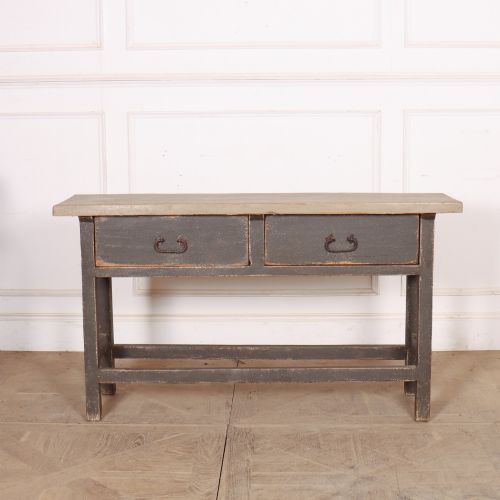
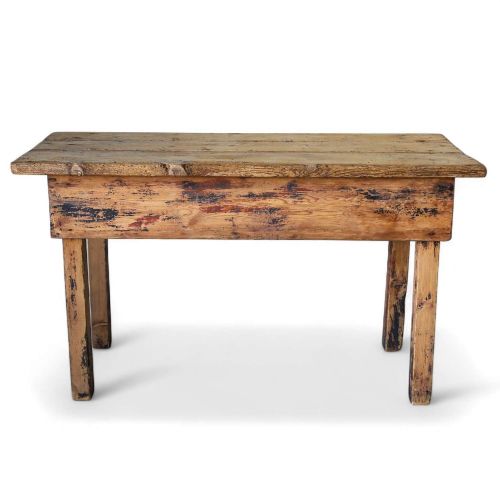


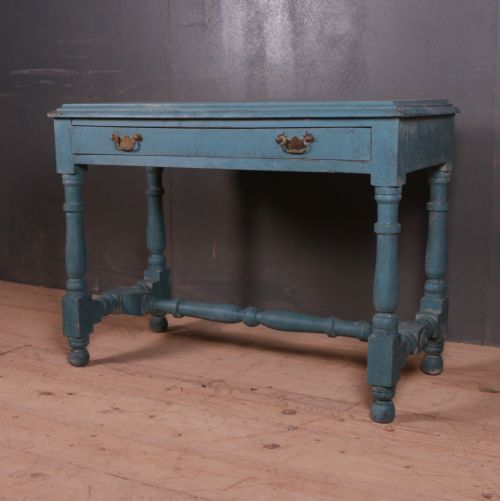


Distressed Pine Hall Table
These distressed pine hall table pieces are robust character items shaped from resilient timber, offering practical utility and rustic charm for an entranceway.
Distressed Pine Hall Table
When you search for a distressed pine hall table, you are looking at practical surface pieces formed from timber, often styled in rustic farmhouse or English country traditions. These items serve corridors and entryways well, providing a useful surface without overwhelming a narrow space.
The pieces available here span various utilitarian forms, including washstands, side tables, servers, and console tables. Their origins stretch across English, Swedish, and Dutch traditions, showing how different regions adapted simple timber and paint for everyday household use.
Dated examples on this page range from the eighteenth century through the Regency period and into Victorian times, alongside early twentieth century pieces. This timeline shows a long-standing preference for functional wooden furniture finished simply in paint or left natural.
How they were made
Construction relies primarily on pine and painted timber, often bolstered by iron or brass hardware on drawers and fittings. Carpenters selected these accessible woods for strength and ease of working, building functional tables intended for daily domestic service.
Surfaces frequently show layers of paint, ranging from original painted finishes to later patinated coats applied over the bare wood. This combination of timber framework and surface pigment gives each piece its distinctive aged character.
Potboard shelves beneath servers were once meant for drying pots, but now they excel at housing muddy boots.
What varies in quality
The distinction between ordinary and superior pieces rests in the integrity of the original construction and the honesty of the surface wear. Tables retaining their early painted finish alongside sound structural timber hold greater interest for collectors than heavily altered examples.
Proportion and proportion within forms such as washstands and servers also dictate the overall appeal of a piece. Well-balanced framing and untouched joinery reflect the maker's original intent far better than heavily restored surfaces.
The Distressed Pine Hall Table Glossary
- Washstand
- A small table or cabinet originally designed to hold a basin and pitcher for personal washing. These pieces now function well as narrow console tables in hallways.
- Dresser Base
- The lower portion of a traditional kitchen or dining room dresser featuring drawers and cupboards. They provide substantial surface space and storage underneath.
- Server
- A long serving table used in dining rooms for holding dishes during meals. Their narrow profile suits hallway placement.
- Potboard
- An open slatted lower shelf beneath a dresser base or table used originally for storing pots. This feature adds structural stability and display space.
- Patina
- The surface sheen and wear developed on wood and paint over decades of use. It represents the natural ageing process of the material.
Distressed Pine Hall Table: Frequently Asked Questions
What is a distressed pine hall table?
It is a practical wooden surface piece, often drawn from traditional forms like side tables, washstands, and servers. These items bring rustic character and narrow proportions to entryways and corridors.
They rely on sturdy pine construction and aged painted finishes to provide both surface utility and decorative presence in a home.
How were these tables used originally?
Many examples began life as washstands, servers, or side tables in domestic kitchens, bedrooms, and dining spaces. They held basins, food dishes, or general household items.
Over time, their narrow dimensions and useful drawers made them natural candidates for hallways and entrance spaces where surface area is needed.
How do I live with one?
Place the table against a hallway wall where its narrow depth leaves passage clear while offering space for keys, post, or a lamp. Keep the surface protected from excessive moisture.
Allow the natural aged paint and timber to show character without heavy modern intervention, letting the historic surface remain the focal point.
How do I tell periods apart?
Look to the construction methods, leg styles, and hardware conventions associated with specific design eras like Regency or Victorian. Eighteenth-century pieces often display simpler, heavier framing.
Paint layers and joinery details also offer clues to age, distinguishing earlier handmade work from later twentieth-century interpretations of rustic styles.