



White Painted Server Table
A white painted server table brings practical surface space and rustic charm to a room, offering sturdy pine construction dressed in heritage finishes.
White Painted Server Table
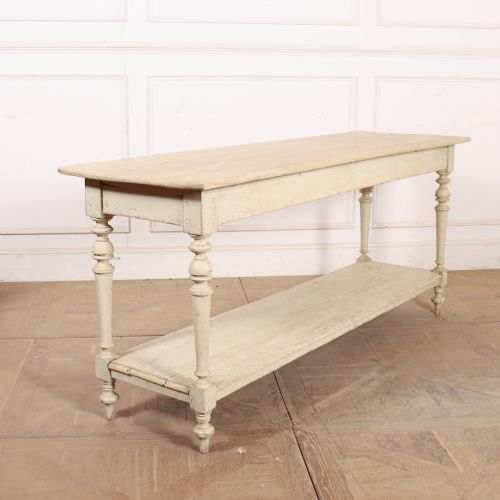
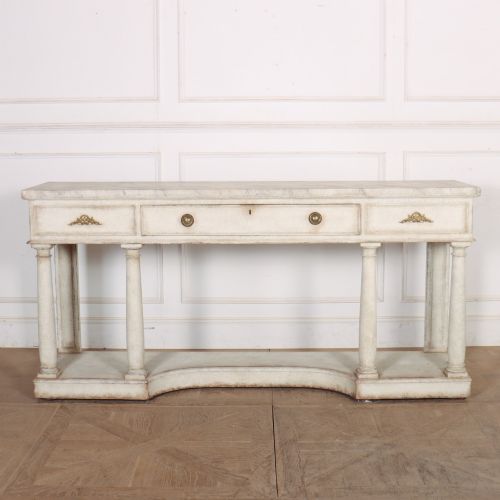
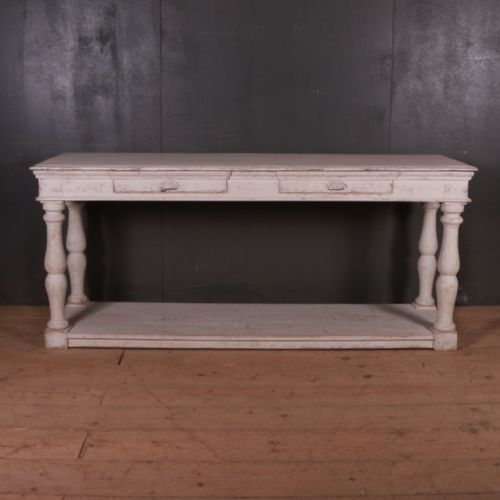
A white painted server table sits at the intersection of utility and provincial design, serving multiple domestic roles across dining rooms, hallways, and kitchens. When searching for a white painted server table, collectors encounter pieces spanning the eighteenth and nineteenth centuries, taking the form of drapers tables, console tables, preparation tables, and dresser bases.
The material palette recorded in the listings centres on solid timber frameworks, predominantly pine and softwood, finished with applied paint surfaces. Origins diverge across English, French, and Scandinavian traditions, bringing distinct regional interpretations from country house prep tables to marble-topped French consoles.
Structural formats vary between open potboard bases, narrow sideboards, and heavy preparation surfaces. Buyers select these items to anchor a room with functional period character, relying on authentic painted patination built up over decades of domestic use.
Materials and construction methods
Makers constructed these tables primarily from solid pine and softwood timbers, selecting woods that offered both structural stability and a receptive substrate for decorative paint. Joinery relied on traditional carpentry techniques appropriate for heavy kitchen and preparation tasks.
Surfaces received successive layers of paint, often developing crackle and wear that reflect long periods of everyday service. Selected examples incorporate contrasting elements such as inset marble tops or brass fittings, marrying utilitarian strength with refined decorative detailing.
Listings feature pine, softwood, and marble materials across nineteenth-century English, French, and Scandinavian country styles.
Distinctions in quality and finish
Quality rests in the integrity of the timber frame and the organic ageing of the painted surface, where genuine historic wear outstrips modern reproduction finishes. Tables retaining their original potboards, untouched structural joints, and undisturbed layers of period paint command greater attention from discerning buyers.
Proportion and regional character also dictate distinction, as seen in the slender elegance of French drapers tables versus the robust utility of English country house preparation tables. The harmonious balance between the utilitarian function of the base and the refinement of the top defines the upper tier of surviving examples.
The White Painted Server Table Glossary
- Potboard
- An open lower shelf fitted beneath a dresser base or server table for storing pots and domestic utensils. This traditional feature provides structural rigidity while offering visible display space.
- Drapers Table
- A long, narrow utilitarian table originally utilised in fabric shops for measuring and displaying textiles. Their generous proportions and sturdy construction make them popular as modern serving surfaces.
- Preparation Table
- A heavy-duty work table built for domestic or commercial food preparation, often featuring scrubbed timber tops over painted bases. These pieces prioritise robust joinery and practical surface area.
- Console Table
- A wall-mounted or freestanding table designed to fit against a flat surface, frequently featuring decorative legs and shaped skirts. They served as formal display furniture in Georgian and continental interiors.
- Softwood
- Timber derived from coniferous trees, such as pine, which formed the primary structural material for country furniture. It provided an economical and workable medium for painted domestic items.
White Painted Server Table: Frequently Asked Questions
What is a server table?
A server table is a functional surface traditionally used for plating food or holding serving dishes in a dining room. They often feature narrow depths and sturdy timber construction to support heavy domestic use.
Over time, these pieces transitioned from working kitchens into principal living spaces, valued for their decorative painted finishes and practical storage capabilities.
How do I date a painted table?
Dating relies on examining the construction methods, tool marks on the timber, and the composition of the paint layers. Eighteenth-century pieces typically show hand-cut joinery and deeper patination.
Nineteenth-century examples introduce standardised mill-sawn timber while retaining hand-applied decorative finishes that accumulate authentic wear patterns over generations.
Where were these tables made?
Surviving examples originate from various European traditions, including English country houses, French provincial workshops, and Scandinavian rural communities. Each region imparted distinct proportions and decorative vocabulary.
English pieces often favour utilitarian potboards and pine frames, whereas French and Swedish variants display neoclassical influences or lighter painted palettes.
Can I use a prep table for dining?
Preparation tables make excellent dining surfaces due to their generous proportions and stable, heavy-duty construction. Their original working use often leaves them with durable tops suited for daily gathering.
Buyers should check the clearance height beneath the apron or potboard to ensure comfortable seating space for dining chairs.