
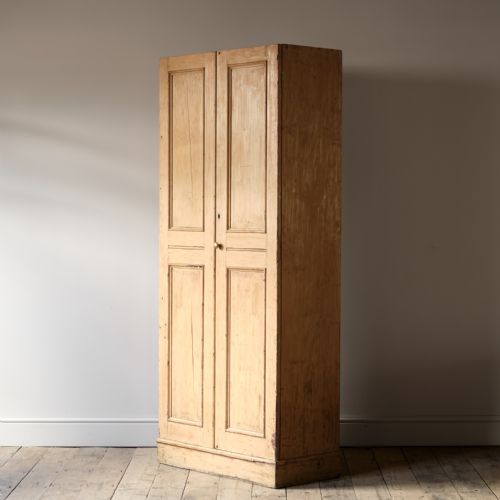
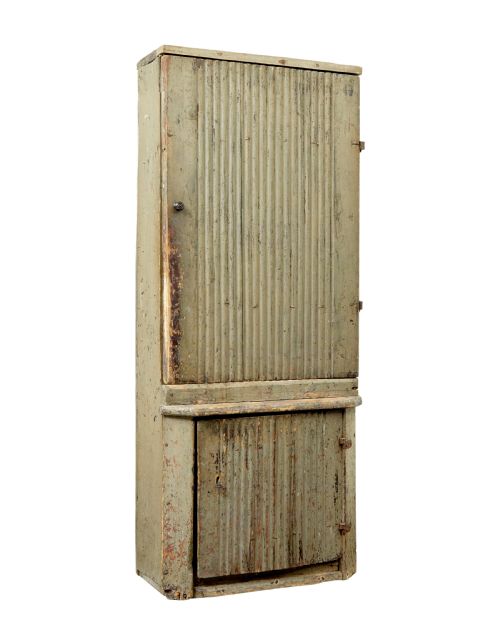
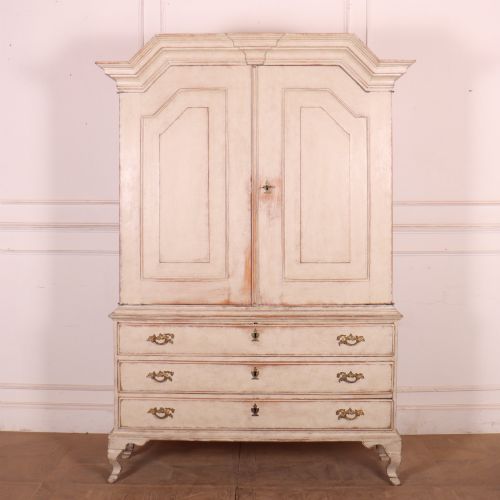


Distressed Pine Armoire
A distressed pine armoire brings architectural presence and honest storage to a room through weathered painted surfaces and utilitarian timber construction.
Distressed Pine Armoire
A distressed pine armoire encompasses large storage cupboards, linen presses, and wardrobes encountered across European and British vernacular traditions. These pieces predominantly date from the eighteenth and nineteenth centuries, spanning Georgian, Victorian, and Edwardian eras alongside Scandinavian country styles.
Buyers searching for a distressed pine armoire will most commonly find nineteenth-century Scandinavian painted cupboards and housekeepers cupboards. Forms vary from single and double-door storage cabinets to tall library bookcases and hanging cupboards built for domestic utility.
Materials and construction
Makers utilised softwoods, principally pine, framed with iron and brass hardware to build these robust storage pieces. Surfaces were frequently treated with layers of paint, creating the polychrome, grey, and distressed finishes characteristic of country workshops.
Joinery focused on practical longevity rather than courtly refinement, relying on thick panels and sturdy timber boards. Paintwork applied over decades weathered naturally, leaving characteristic patination across Scandinavian folk art and provincial British pieces.
Listings feature pine, paint, iron, and brass across nineteenth-century and Georgian forms, including housekeepers cupboards and Scandinavian painted linen cupboards.
Assessing quality and character
Quality rests in the proportion of the carcass and the integrity of the original timber rather than excessive ornament. Better examples retain honest proportions, balanced door panels, and structural stability despite decades of domestic service.
The character of the surface finish dictates visual merit, separating honest historical wear from later decorative interventions. Original painted surfaces showing genuine age command greater appreciation than uniform modern coatings applied to old timber.
The Distressed Pine Armoire Glossary
- Pine
- A softwood commonly used in vernacular furniture making throughout the eighteenth and nineteenth centuries. It provided an accessible material that took paint readily for country workshops.
- Armoire
- A large wardrobe or cupboard used originally for storing clothes and household linen. These substantial pieces anchor room layouts with their height and storage capacity.
- Housekeepers cupboard
- A large utilitarian storage piece traditionally used in substantial homes for linens and provisions. They frequently feature multiple doors and internal shelving.
- Polychrome
- Decorated in multiple colours, often found on continental painted furniture. This technique adds vibrant visual depth to rustic pine surfaces.
- Vernacular
- Furniture built by local craftspeople to regional designs for everyday domestic use. These pieces reflect local traditions rather than metropolitan academic styles.
Distressed Pine Armoire: Frequently Asked Questions
What is a distressed pine armoire used for?
These large cupboards provide substantial storage for clothing, linens, and household items while serving as a strong decorative focal point in bedrooms or living spaces.
Their deep shelves and hanging space accommodate modern storage needs inside historical timber frames.
How do I date a pine armoire?
Dating relies on construction methods, timber thickness, and historical wear patterns visible across the panels and interior fittings. Eighteenth-century pieces often show hand-planed surfaces and simpler iron hinges, while Victorian and Edwardian examples utilise machine-sawn boards.
Paint layers and hardware styles also help anchor pieces to periods such as the Georgian era or nineteenth-century Scandinavian traditions.
Are painted pine cupboards original?
Many pieces retain their historical painted finishes, which have weathered naturally through decades of domestic use in provincial homes. Swedish and Italian country pieces frequently showcase traditional painted decoration.
Buyers should examine the paint layers for signs of genuine age and patination rather than modern distressing.
How do I care for antique pine furniture?
Keep these timber pieces away from direct heat sources and drastic humidity changes to prevent the softwood from warping or splitting. Gentle dusting and occasional wax maintenance will preserve the dry surface patination.
Avoid harsh chemical cleaners that might strip the historic painted finishes.