

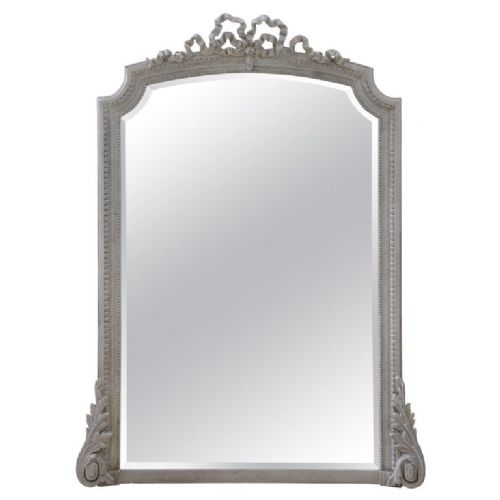


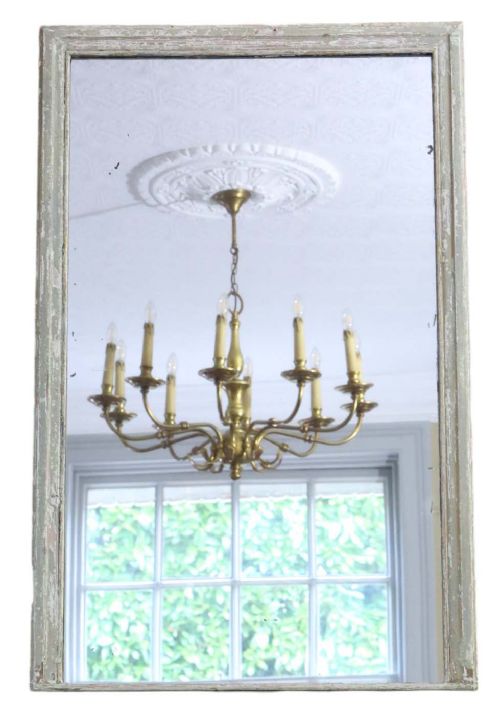

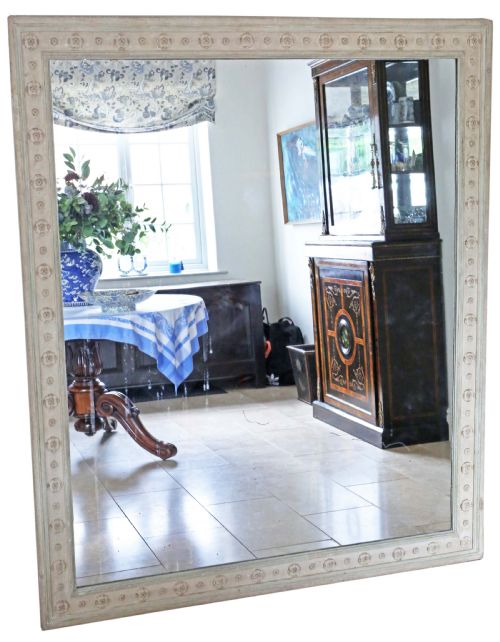
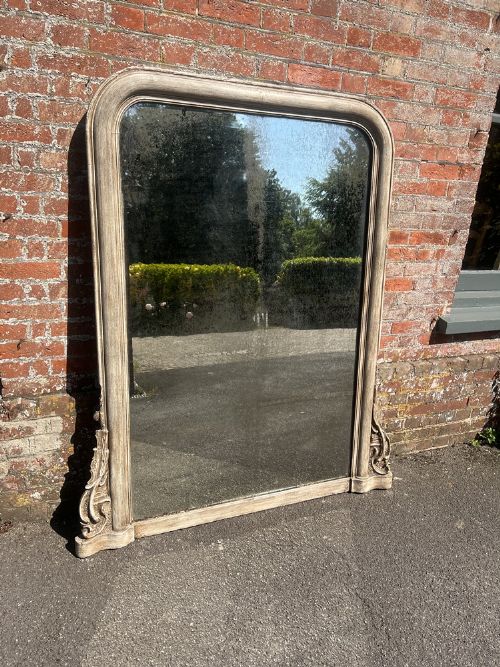
Distressed Grey Overmantel Mirror
A distressed grey overmantel mirror brings architectural presence and aged reflection to a chimney breast, combining weathered painted surfaces with generous proportions.
Distressed Grey Overmantel Mirror
A distressed grey overmantel mirror is a large rectangular or arched wall glass designed specifically to sit above a fireplace mantelpiece. These pieces originate predominantly from the nineteenth century, encompassing French and English country houses and salons.
The version most commonly met on this page is a nineteenth-century carved wood and gesso piece finished in weathered paint. They span styles from Louis Philippe and Rococo Revival to French Provincial and Victorian.
Makers shaped these frames to command attention in principal rooms, frequently combining arched or shaped tops with painted and gilt surfaces.
How they were made
Artisans carved wooden frames directly from timber, applying layers of gesso to build up intricate relief details such as scrolls, ribbons and floral motifs. Gilt accents were often added beneath or over the paint layers.
Surfaces received coats of paint that have subsequently weathered into the distressed grey finishes seen today. Mirror glass, including early mercury plates, was fitted into the rebated frames to reflect interior light.
Listings span the nineteenth century up to nineteen-twenty, featuring carved wood, gesso, and painted mirror glass.
What varies in quality
Quality rests in the crispness and depth of the carved wood and gesso ornamentation rather than a flat surface. Deeply undercut relief work and balanced proportions distinguish finer workshop output from simpler utilitarian frames.
The integrity of the original painted surface and the character of the mirror glass dictate the visual weight of the piece. Untouched patination on the gesso and timber elevates the standing of an overmantel mirror.
The Distressed Grey Overmantel Mirror Glossary
- Overmantel mirror
- A large wall glass specifically proportioned to hang on the wall directly above a fireplace mantel. They typically follow the horizontal width of the hearth below.
- Gesso
- A plaster-like mixture applied to wooden frames and carved or moulded into decorative relief details. It provides a smooth ground for subsequent painting and gilding.
- Mercury glass
- An early type of mirror glass created by pouring a mercury and tin amalgam behind double-walled blown glass. It produces a distinctive mottled, speckled reflection.
- Trumeau mirror
- A decorative wall mirror integrated into wood panelling or fitted with an oil painting panel above the glass. They reflect distinct French neoclassical interior schemes.
- Cushion mirror
- A frame profile featuring a broad, convex border that slopes outward or inward toward the central glass plate. This form creates a pronounced three-dimensional effect on the wall.
Distressed Grey Overmantel Mirror: Frequently Asked Questions
Where should an overmantel mirror hang?
These large mirrors are traditionally positioned centrally on the wall directly above a fireplace mantelpiece. Their scale allows them to anchor the chimney breast and reflect light across the room.
They also function effectively on principal walls in reception rooms without fireplaces, provided the fixings support the considerable weight of the carved wood and glass.
How do I identify a nineteenth-century frame?
Nineteenth-century frames display hand-carved wooden elements combined with dense gesso mouldings that show genuine age-related wear. Examination of the reverse often reveals aged timber construction and traditional joining methods.
The presence of original mercury glass or early mirror plates further confirms period manufacture.
What styles are available?
The selection includes French Provincial, Louis Philippe, Rococo Revival and Victorian designs. These styles range from simple arched painted surfaces to ornate carved wood and gesso frames.
English nineteenth-century interpretations sit alongside continental French models, each offering distinct moulding profiles and decorative motifs.
How do I clean the glass?
Clean the mirror glass gently using a soft cloth and a minimal amount of mild glass cleaner applied to the cloth rather than directly to the plate. This prevents moisture from seeping behind the edges.
Take care to avoid spraying liquid onto the distressed painted wood and gesso frame, as moisture can damage the aged surface finish.