
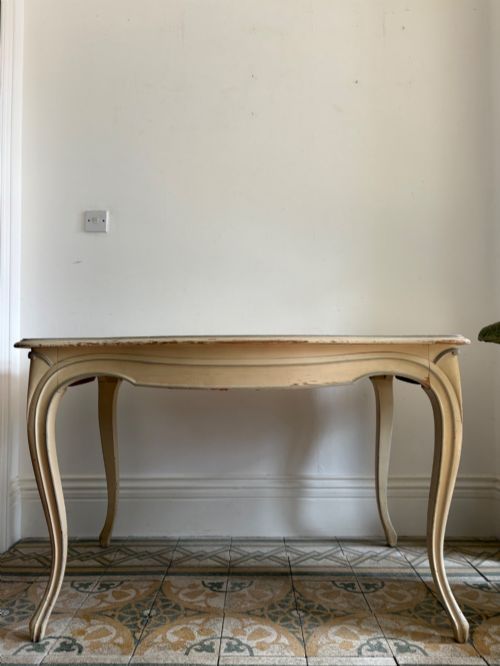
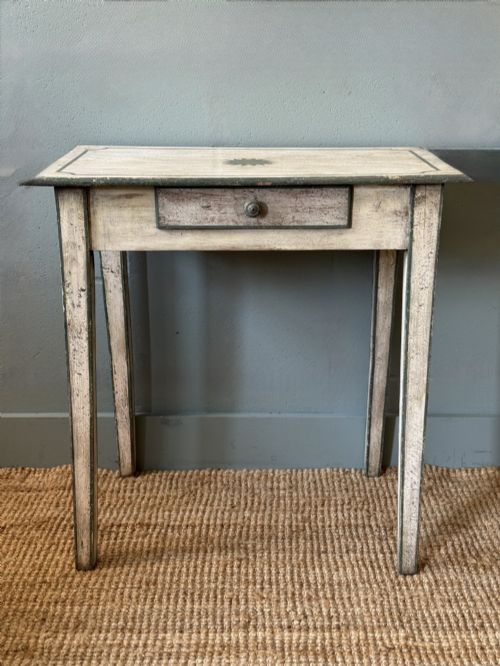
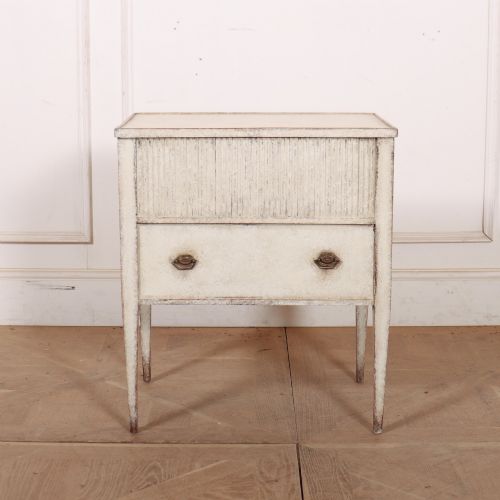
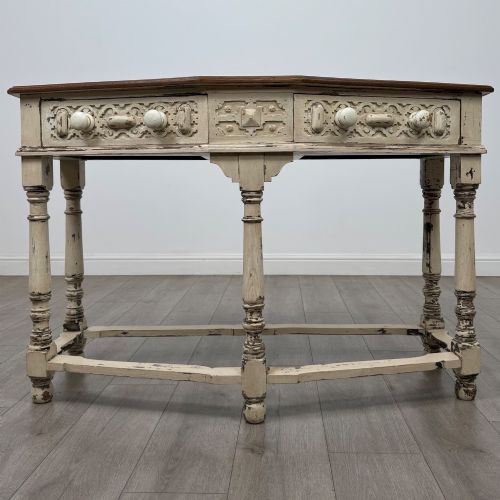
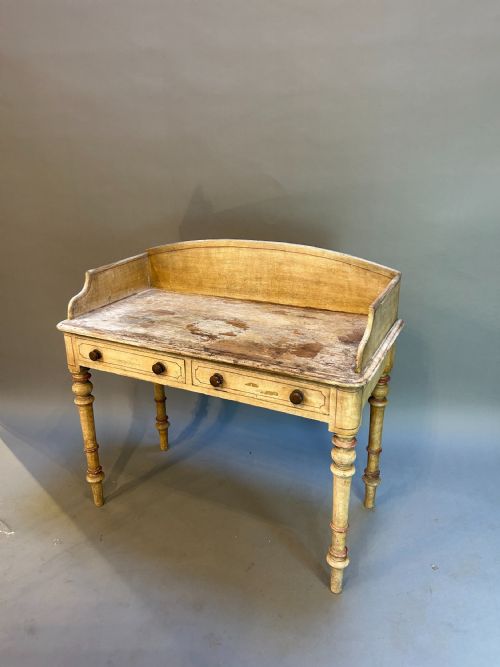
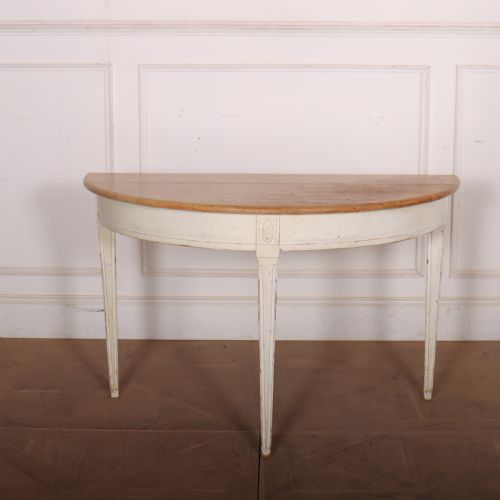


Distressed Cream Side Table
A distressed cream side table brings painted charm and practical surface space to a room, drawing on decades of French, Swedish and Italian stylistic traditions.
Distressed Cream Side Table
When you search for a distressed cream side table, you encounter a selection of painted wooden furnishings spanning the eighteenth, nineteenth and early twentieth centuries. These pieces encompass console tables, bedside cabinets, lamp tables and occasional tables originating from various European traditions.
Makers and artisans across Europe built these items for domestic utility, ranging from grand country house console tables to modest bedside cupboards. The surviving pieces demonstrate diverse decorative approaches, from simple rustic paint to detailed neoclassical carving.
How they were made
Carpenters constructed these tables primarily from timber such as pine, oak and fruitwood, shaping structural elements with hand tools. Joinery techniques varied from simple pegged construction in country pine servers to sophisticated joinery in neoclassical console tables.
Surfaces received layers of paint, often in cream or allied neutral tones, which acquired natural distressing through age and domestic wear. Some iterations incorporate applied carved details, marble tops or inset materials like suede to complete the design.
Listings span from the eighteenth century to the Edwardian era, incorporating painted wood, pine, oak, marble and brass materials.
What varies in quality
Quality reveals itself in the proportion of the form and the integrity of the original timber construction beneath the paint layers. Finer examples display balanced proportions, skilful carving and harmonious integration of period details such as cabriole legs.
The character of the painted surface significantly influences the overall merit of a piece, distinguishing intentional historical decoration from later interventions. Original painted surfaces with authentic wear hold greater distinction than heavily reworked finishes.
The Distressed Cream Side Table Glossary
- Gustavian
- A Swedish aesthetic inspired by French neoclassical design, characterised by restrained carving and pale painted finishes. This style dominates many nineteenth-century Scandinavian tables.
- Console table
- A table designed to stand against a wall, frequently secured with brackets or resting on front legs. These items often feature decorative front aprons and marble or wooden tops.
- Demi-lune
- A half-moon shape utilised for console and side tables to fit snugly against walls. This form appeared frequently in eighteenth and nineteenth-century European interiors.
- Cabriole leg
- A furniture leg that curves outward and then tapers inward, mimicking animal legs. This shape appears on various French and continental console and side tables.
Distressed Cream Side Table: Frequently Asked Questions
Where did these tables originate?
These tables come from various European regions, including France, Sweden, Italy and England, reflecting local workshop traditions.
Craftsmen built them using native timbers such as pine and fruitwood before applying regional decorative paint finishes.
How do I care for the painted surface?
Maintain the painted finish by dusting with a soft, dry cloth and avoiding harsh chemical cleaning products.
Keep the timber away from direct heat sources and excessive moisture to protect the structural integrity and surface character.
What is the difference between a console and a side table?
Console tables traditionally stood flat against a wall, often serving decorative roles in hallways or reception rooms with wall fixings.
Side tables function as freestanding pieces positioned beside seating or beds to provide accessible surface space.
How can I identify the period of a painted table?
Dating relies on examining construction methods, tool marks on the timber underneath the paint, and stylistic hardware details.
Regional paint applications and wear patterns also provide clues to whether a piece belongs to the eighteenth, nineteenth or early twentieth century.