





Distressed Console Table
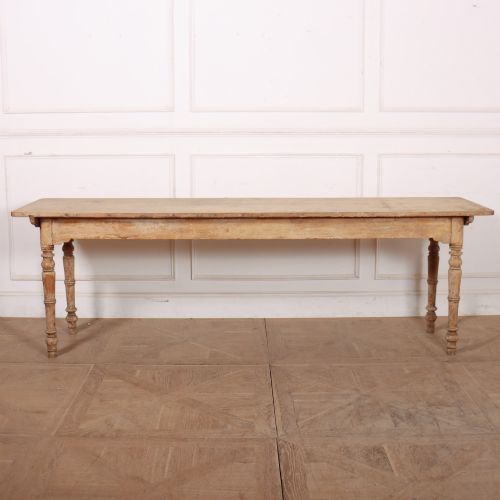
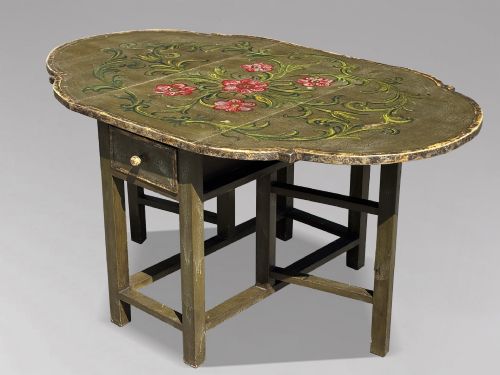
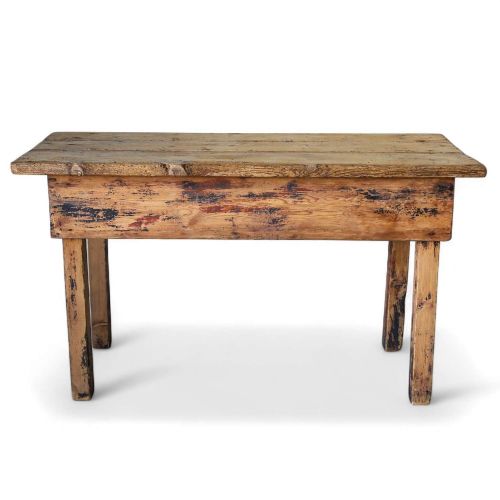
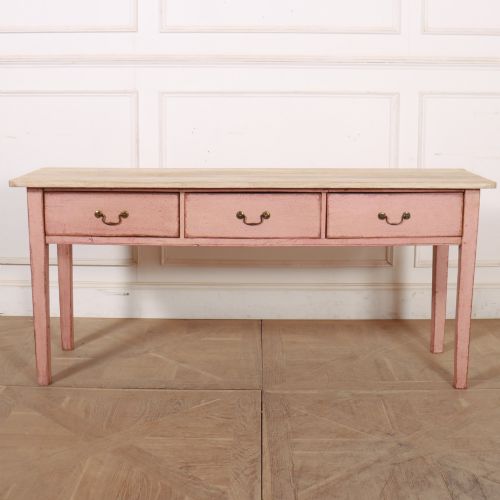
A distressed console table brings layered history and painted character to a hallway or living space, offering surface utility with decorative presence.
Distressed Console Table
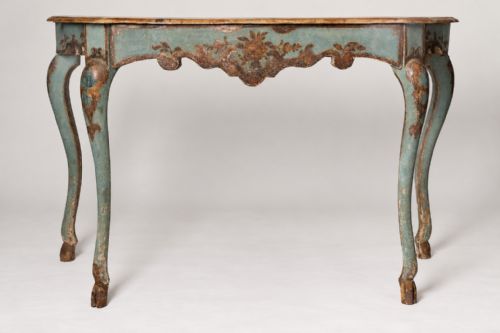
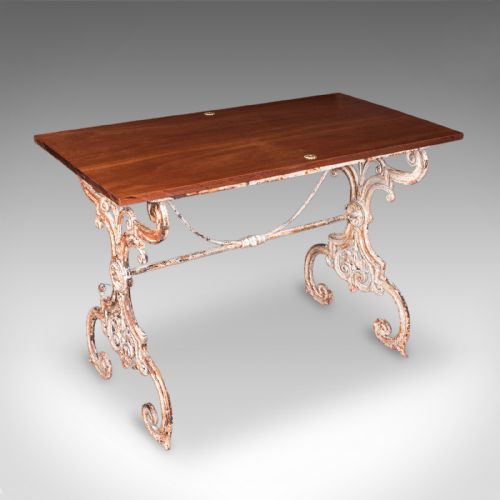
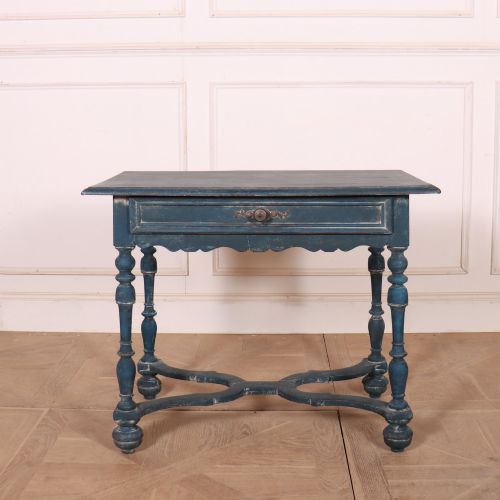
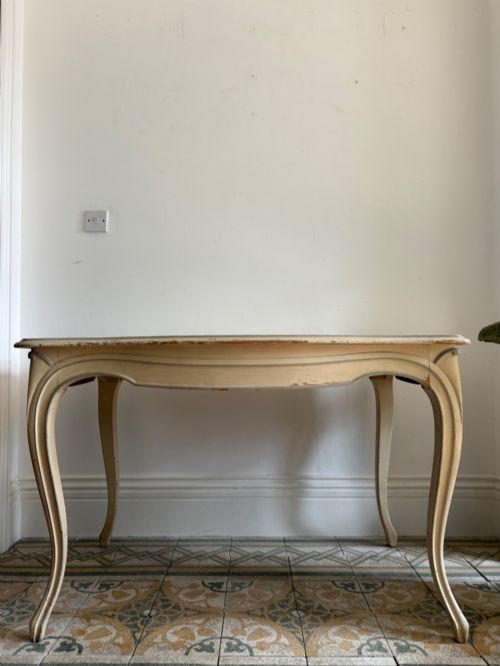
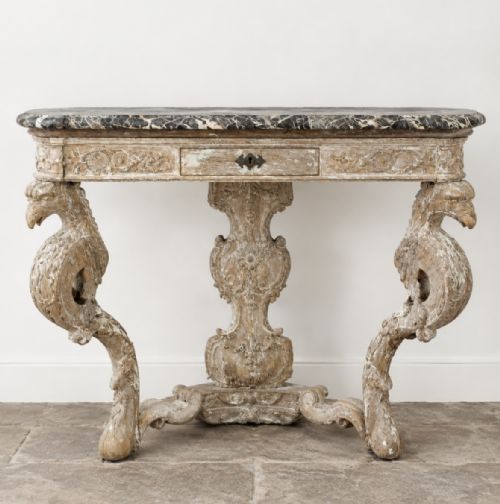
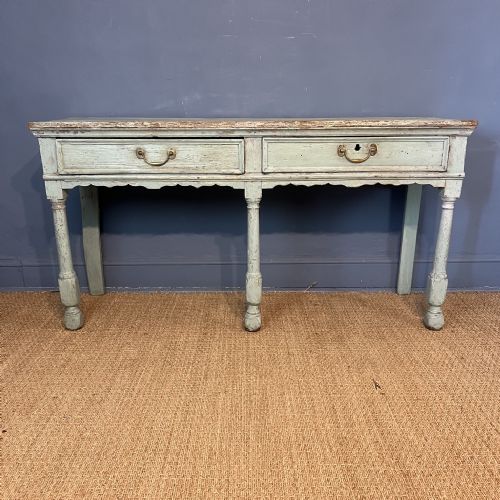
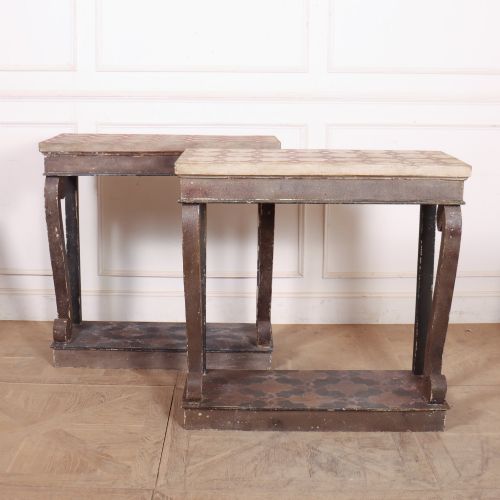
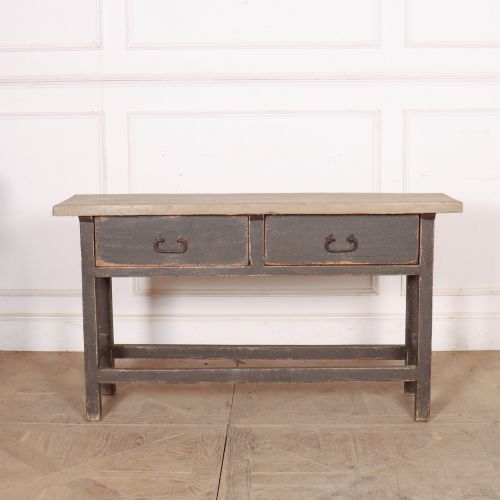
A distressed console table encompasses wall-mounted and freestanding side pieces designed for narrow spaces, drawing on English, French, Italian, and Swedish traditions. You will frequently encounter demi-lune shapes, rectangular side tables, and sturdy pine dresser bases from the eighteenth and nineteenth centuries.
The aesthetic leans heavily into country house styles, French provincial finishes, and Gustavian design, where painted surfaces show natural wear over generations. These pieces serve practical functions in hallways, dining rooms, and living areas while anchoring a room with distinct regional character.
Materials and Construction
Carpenters relied on timber such as pine and oak for the primary carcases, shaping them into console tables, servers, and washstands. Surfaces received layers of paint, gesso, and sometimes marble tops, creating durable structures designed for daily domestic use.
Joinery techniques reflect traditional workshop practices, utilising pegged joints, carved wood details, and hand-applied finishes that weather distinctively over time. Brass hardware frequently appears on drawers and fittings, complementing the painted wooden structures.
Distressed Console Table Retail Price Guide 2026
Typical asking prices for distressed console table among the pieces listed under this phrase on Sellingantiques today, from the lower quarter to the upper quarter. They describe what is for sale here now, not the wider market.
Listings span the eighteenth, nineteenth, and early twentieth centuries, featuring pine, oak, marble, and brass materials.
Evaluating Character and Craft
Quality rests in the integrity of the original timber frame and the authenticity of the painted surface rather than a pristine finish. Pieces retaining their early or original paint layers command greater interest than later repaints masking structural alterations.
Proportion and regional detailing distinguish standard utility furniture from finer examples, such as those featuring carved cabriole legs, marble inserts, or sophisticated Italian and French stylistic traits.
The Distressed Console Table Glossary
- Console table
- A table designed to stand against a wall, traditionally supported by console brackets or legs.
- Demi-lune
- A half-moon shape commonly found on tabletops and servers designed to sit flush against a wall.
- Gesso
- A plaster-like material applied to wood surfaces as a base for painting or gilding.
- Dresser base
- A low wooden sideboard or table featuring drawers and sometimes a potboard shelf below.
- Cabriole leg
- A furniture leg that curves outward and then tapers inward, inspired by animal limbs.
Distressed Console Table: Frequently Asked Questions
Where should I place a console table?
These tables suit narrow circulation areas such as hallways, entryways, and landings where floor space is limited. They also function well against living room walls beneath mirrors or artwork.
Because their depths are generally shallow, they provide display space for lamps and decorative objects without obstructing movement through a room.
How do I care for a painted wooden surface?
Dust surfaces regularly with a soft, dry cloth to prevent dirt accumulation in the grain and crevices of the paint. Avoid harsh chemical cleaners that can strip or soften historic finishes.
Keep wooden furniture away from direct heat sources and strong sunlight to prevent timber movement and fading of the painted decoration.
How do I identify a nineteenth-century piece?
Nineteenth-century construction often shows hand-cut joints, older timber movement, and patinated paint layers that cannot be easily replicated by modern manufacturing. Examining the underside and drawer construction reveals hand-planed boards and traditional fixings.
Stylistic cues such as Gothic Revival details or provincial painted finishes help narrow down the manufacturing era when combined with material inspection.