


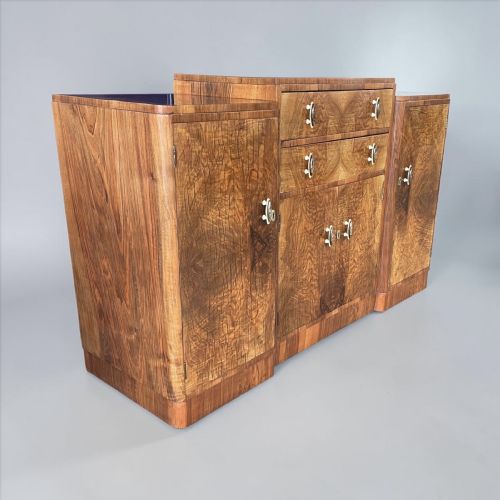
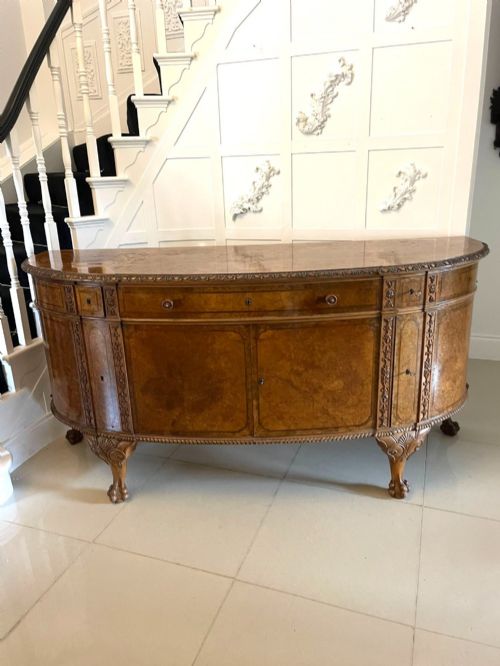
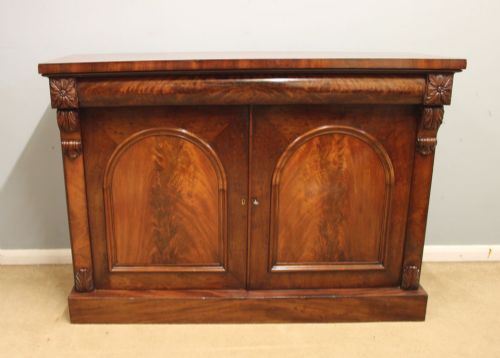
Dining Room Storage Cabinet
A dining room storage cabinet organises tableware and linens while anchoring the room with solid wood and fitted joinery.
Dining Room Storage Cabinet
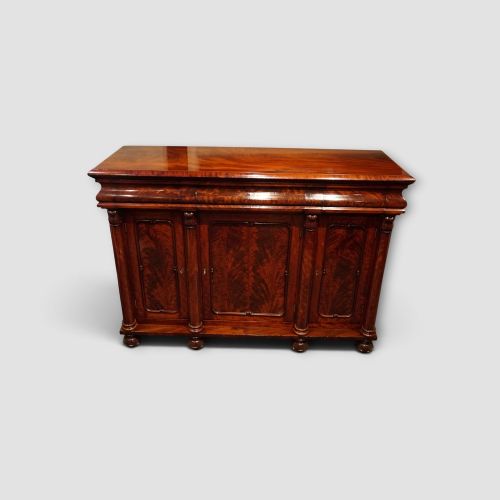
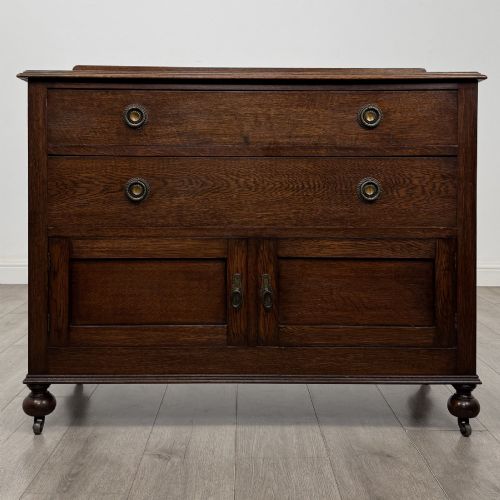
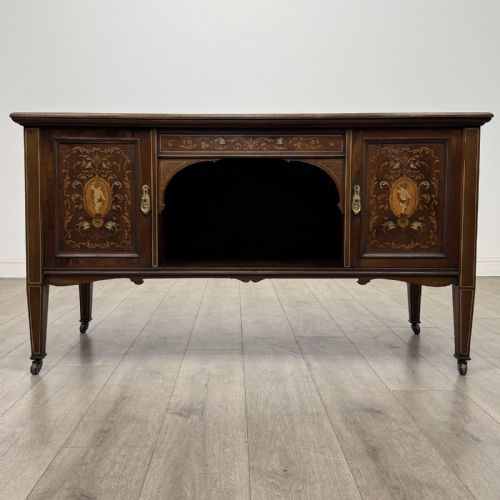
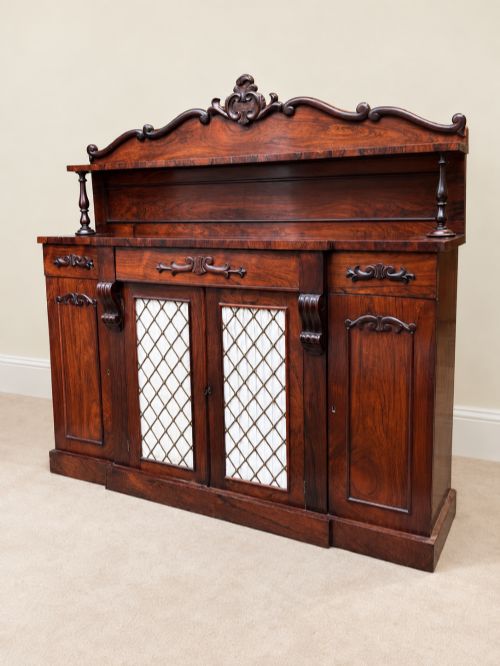
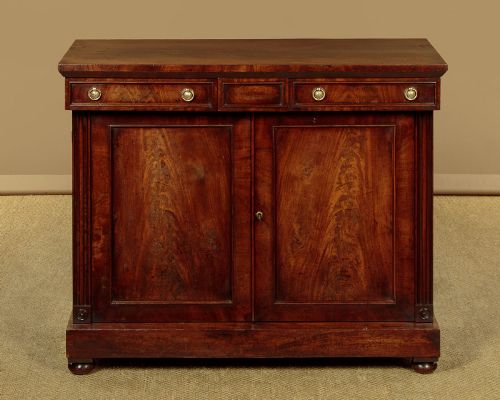
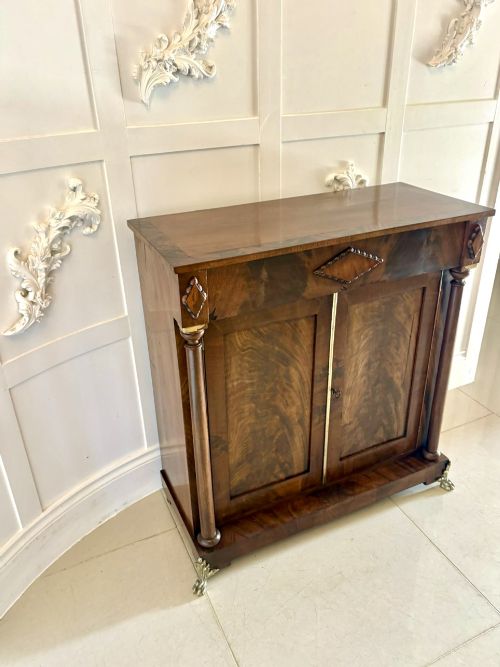
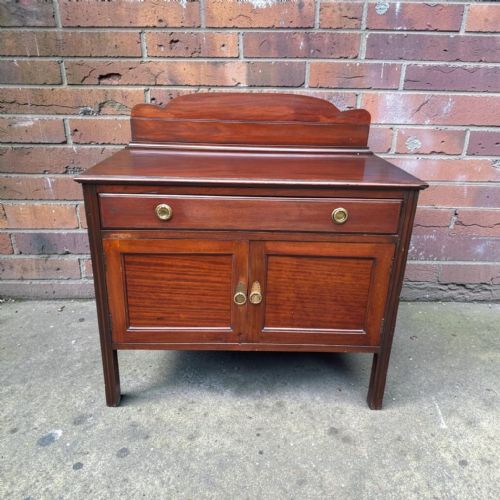
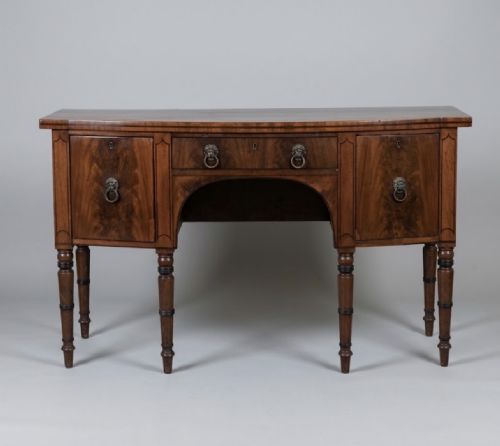
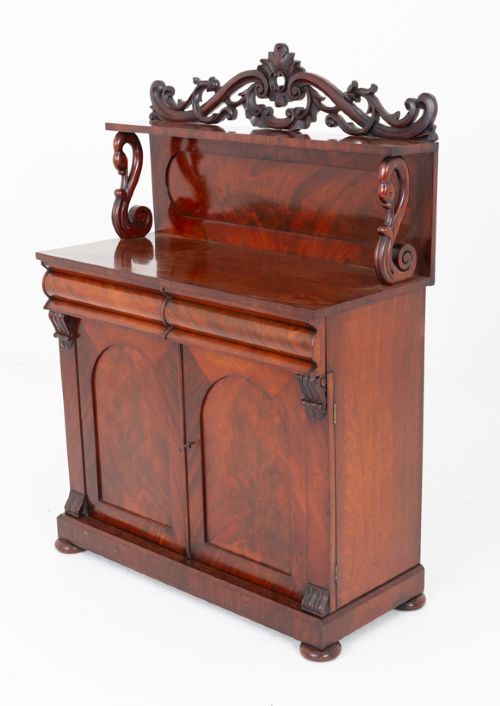
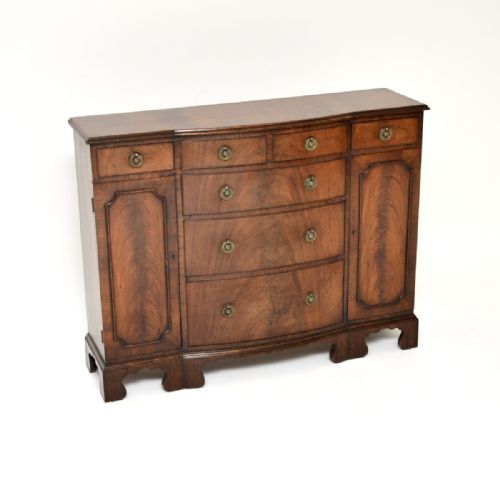
A dining room storage cabinet encompasses sideboards, chiffoniers, credenzas, buffets, and dresser bases spanning Georgian, Victorian, Edwardian, and Art Deco periods. These pieces originate from workshops and makers across Britain, utilising substantial forms designed specifically to house dining utensils and provisions.
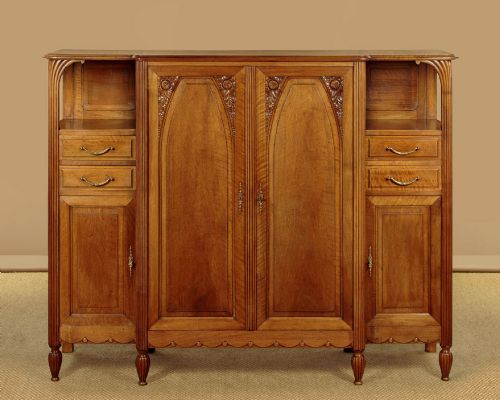
Earlier iterations include Georgian oak dresser bases and Regency rosewood chiffoniers, while later twentieth-century entries show Art Deco styling and streamlined cupboards. Each variant reflects the dining habits and interior fashions of its respective decade.
Materials and Technique
Cabinet makers utilised solid woods like mahogany, oak, and rosewood alongside decorative veneers such as flame mahogany and burr walnut. These primary timbers provide structural integrity and rich natural grain patterns across large surfaces like doors and top boards.
Construction techniques rely on traditional joinery, dovetail drawers, and hand-carving, complemented by fitted brass hardware and occasional marquetry inlay. Glass panels and mirror plates appear in later Edwardian and Victorian variants to lighten the substantial wooden silhouettes.
Dining Room Storage Cabinet Retail Price Guide 2026
Typical asking prices for dining room storage cabinet among the pieces listed under this phrase on Sellingantiques today, from the lower quarter to the upper quarter. They describe what is for sale here now, not the wider market.
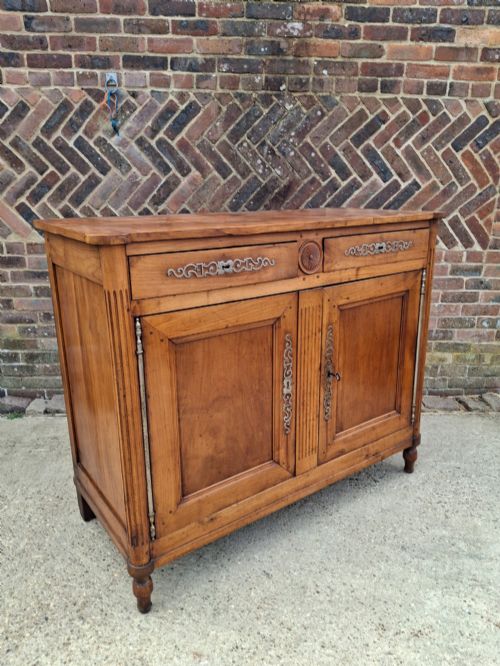
A French provincial sacristy cabinet quietly crosses from church vestry to modern dining room without losing its low, steady charm.
Judging Quality
Quality rests upon the selection of timber figures, such as matched flame mahogany veneer or burr walnut, and the crispness of hand-carved detailing. Superior pieces display thoughtful grain continuity across drawers and doors rather than random timber cuts.
The internal construction and drawer linings dictate standards, with secondary softwoods neatly finished and joints tightly fitted without excessive modern adhesives. Original brass face handles and intact backboards further separate standard production items from finer workshop commissions.
M. D. Miller and Sons·Hamptons of Pall Mall London·Maple and Co·Edwards and Roberts
The Dining Room Storage Cabinet Glossary
- Chiffonier
- A compact low sideboard featuring enclosed shelving beneath, frequently topped with a raised back shelf or small superstructure.
- Credenza
- A sideboard or low cabinet lacking legs, sitting flush to the floor, often ornamented with marquetry or fine veneers.
- Dresser Base
- A sturdy wooden table base fitted with rows of drawers and lower cupboards, originating from earlier domestic kitchens and dining rooms.
- Bow Front
- A convex curved cabinet front that projects outward in a smooth arc, popular in Georgian and Edwardian designs.
- Marquetry
- The art of forming decorative patterns by fitting together contrasting pieces of wood veneer onto a solid core.
Dining Room Storage Cabinet: Frequently Asked Questions
What is a dining room storage cabinet?
A dining room storage cabinet is a substantial wooden furniture piece designed to hold tableware, cutlery, and linens. Common forms include sideboards, chiffoniers, and dresser bases.
These items combine deep lower cupboards with functional upper drawers to keep dining essentials organised near the table.
How were these cabinets used historically?
Historically, servants used these cabinets to rest serving dishes before they reached the dining table. They also provided secure storage for silver service, porcelain, and household linen.
Over time, they evolved from purely utilitarian serving stations into prominent decorative centrepieces for formal dining rooms.
How do I style a storage cabinet?
You can style a dining room storage cabinet by placing lamps, ceramics, or serving trays on the surface above. The internal shelves easily accommodate modern dinnerware or vintage glassware collections.
Selecting pieces with mirror backs or bow fronts adds visual depth and reflects light into darker dining spaces.
How do I identify the period of a cabinet?
Period identification relies on observing the primary woods, decorative motifs, and construction methods used in the piece. Georgian and Regency examples favour straight-grain mahogany and restrained classical lines, whereas Victorian pieces often display heavier proportions and burr walnut.
Edwardian items frequently introduce lighter oak, mirror backs, and Arts and Crafts or Art Nouveau carving styles.