


Diamond Starburst Pendant
A diamond starburst pendant captures celestial brilliance in precious metal and old stones, offering a wearable piece of antique history.
Diamond Starburst Pendant
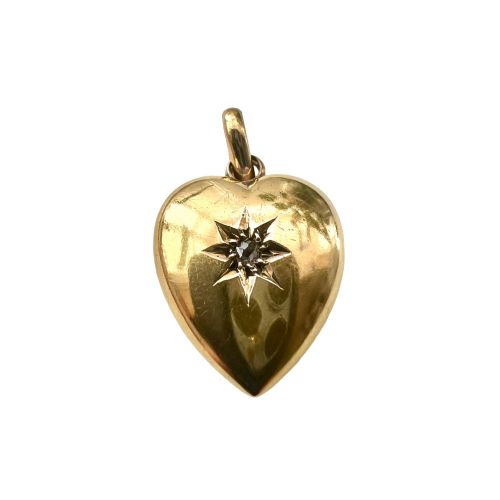
When you search for a diamond starburst pendant, you encounter radiant jewels designed around a central celestial motif. These pieces emerge predominantly from the Victorian and Edwardian eras, extending through to mid-century modern designs.
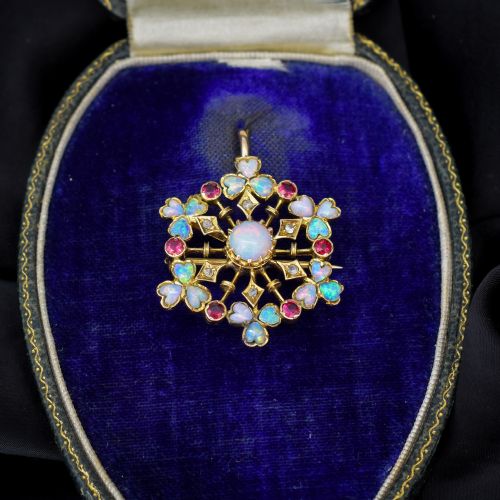
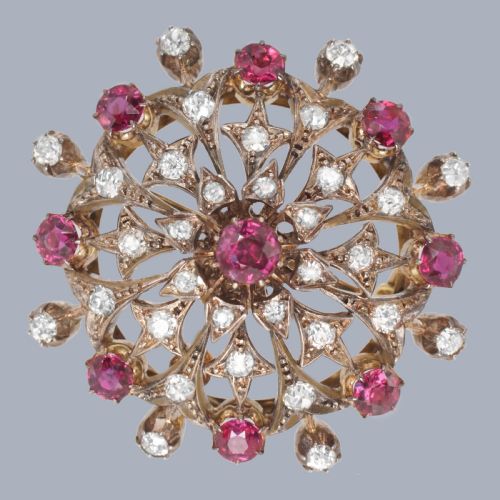
The versions most commonly met on this page combine gold and silver settings with old cut diamonds, pearl accents, or coloured gemstones like rubies, turquoises, and opals.
Many examples function as convertible pieces, shifting between brooches and pendants to suit different historical modes of dress.
How they were made
Maker's hands combined silver-topped gold settings to showcase the bright fire of old cut and rose cut diamonds against a dark metal background. Backings frequently utilised yellow gold in nine-carat, fifteen-carat, or eighteen-carat purities, or utilised fourteen-carat gold in later iterations.
Goldsmiths integrated seed pearls, turquoise cabochons, rubies, and opals among the diamond rays, fixing stones securely into detailed starburst and floral frameworks by hand.
Listings feature Victorian, Edwardian, and mid-century eras, incorporating gold, silver, diamonds, pearls, turquoise, rubies, opals, emeralds, and peridots.
What varies in quality
The overall impact relies heavily on the cut and total carat weight of the diamonds, where older rose cuts and old mine cuts deliver distinct hand-faceted sparkle compared to later brilliant cuts. The integration of convertible mechanisms also distinguishes finer pieces, showing seamless engineering between brooch fittings and pendant loops.
Hirsch and Oppenheimer
The Diamond Starburst Pendant Glossary
- Old cut diamond
- A hand-faceted diamond shape from the nineteenth century featuring a smaller table and higher crown that produces a soft, candlelit glow. These stones characterise authentic period pieces.
- Rose cut diamond
- A stone style featuring a domed top covered in triangular facets and a flat base, resembling an unopened rosebud. This cut dates back centuries and appears frequently in starburst designs.
- Convertible brooch pendant
- A dual-purpose piece of jewellery equipped with a removable pin and a hidden loop. This allows the wearer to pin the starburst to a garment or suspend it from a chain.
- Silver-topped gold
- A manufacturing technique where jewellery makers layered silver over gold to mount diamonds against a white metal surface while retaining the strength of gold underneath.
Diamond Starburst Pendant: Frequently Asked Questions
How do I wear a convertible starburst pendant?
These versatile jewels attach securely to garments via a pin on the reverse when worn as a brooch. Alternatively, threading a chain through the integrated bail transforms the piece into a necklace pendant.
Securing the safety chain, where fitted, provides extra peace of mind when wearing the item on heavier fabrics.
Are these pieces genuinely Victorian?
Many examples date directly from the nineteenth century, exhibiting characteristic hand-cut stones and closed-back settings typical of the period. Examining the gold purity marks, such as fifteen-carat or eighteen-carat stamps, helps confirm age.
Stylistic elements like silver-topped mountings also point firmly toward Victorian and Edwardian manufacturing methods.
What metals are used in these pendants?
Makers predominantly employed yellow gold for the structural body and backings, ranging from nine-carat up to eighteen-carat purity. Silver was frequently soldered to the front of the gold framework to hold the diamond settings.
Later mid-century examples occasionally utilise white gold or fourteen-carat yellow gold compositions.
Can I replace a missing seed pearl?
Specialist antique jewellers can source period-appropriate seed pearls to restore damaged or incomplete floral and starburst motifs. Matching the original drill size and lustre ensures the repair remains sympathetic to the piece.
Retaining the original components whenever possible helps preserve the historical integrity of the jewel.