
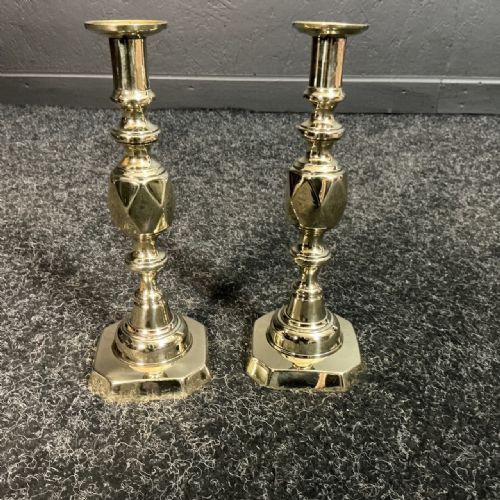


Diamond Knop Brass
Diamond knop brass candlesticks bring substantial Victorian weight and distinct figural stems to a room, offering both reliable illumination and decorative presence.
Diamond Knop Brass
When you search for diamond knop brass, you encounter nineteenth century candlesticks cast and turned in solid brass. These pieces date from the Victorian era, specifically spanning the decades between eighteen eighty and eighteen ninety three.
The form centres on candlesticks bearing specific named patterns such as King of Diamonds, Queen of Diamonds, Ace of Diamonds, alongside tall beehive designs. Pairs dominate the selection, standing up to fourteen inches in height with generous proportions.
Victorian makers produced these domestic lighting fixtures to function on dining tables and mantelpieces. The distinct diamond knop nomenclature distinguishes these figural stems from plain turned brass columns.
How they were made
Foundries manufactured these candlesticks using cast and turned brass, assembling components with threaded joins or securely brazed internal fittings. The metal takes on a warm golden hue through polishing, whilst retaining the natural weight of nineteenth century brass foundry work.
Makers incorporated stamped maker marks on specific examples, such as the attribution to James Clews, while other workshops produced unmarked tall beehive and diamond patterned stems. Turning on a lathe shaped the cylindrical columns and stepped bases, complemented by cast knops.
Current listings feature Victorian pieces exclusively in brass, dated between eighteen eighty and eighteen ninety three.
What varies in quality
Quality rests in the crispness of the cast diamond details and the structural integrity of the heavy brass bases. Finer examples display sharp definition in the named pattern knops and substantial gauge metal that resists bending.
Proportion and scale separate standard production from impressive large pairs standing at fourteen inches or taller. The presence of clear maker stamps adds documentary weight to individual pairs.
James Clews
The Diamond Knop Brass Glossary
- Knop
- A prominent rounded knob or bulging decorative feature on the stem of a candlestick. This element provides a secure grip when moving the holder.
- Beehive
- A decorative turned profile featuring stacked horizontal rings resembling a traditional straw beehive. This motif appears frequently on Victorian brass candlesticks.
- Brass
- An alloy of copper and zinc used extensively for nineteenth century metalwork. It takes a bright polish and provides robust durability for domestic items.
- Victorian
- The period spanning the reign of Queen Victoria from eighteen thirty7 to nineteen oh one. Objects from this era often combine heavy utility with decorative ornament.
Diamond Knop Brass: Frequently Asked Questions
What are diamond knop brass candlesticks?
These items are nineteenth century solid brass lighting pieces featuring distinct diamond shaped decorative nodes along their stems. They date from the Victorian era and often carry names related to playing cards.
Foundries produced them in matched pairs for domestic illumination before the widespread adoption of electric lighting. Their substantial weight and figural designs make them decorative focal points today.
How do I date these candlesticks?
Dating relies on stylistic markers from the Victorian period, specifically between eighteen eighty and eighteen ninety three. Design patterns such as beehive turnings and named diamond motifs align with this late nineteenth century window.
Some pieces feature stamped maker details or specific registration data that narrow down the production year. Examining the construction methods and brass composition also assists in confirming the era.
How were they used originally?
Households utilised these candlesticks to illuminate rooms before gas and electric lighting became universal. Servants carried them or placed them on dining tables, desks, and mantelpieces to provide movable light.
Their sturdy brass construction allowed them to withstand daily handling and transport around the home. The wide bases caught melting wax and prevented accidental tipping.
How do I clean brass candlesticks?
Maintenance involves gentle cleaning with a soft cloth to remove dust and preserve the underlying metal surface. Strong abrasive polishes can strip away historical character and soften crisp cast details.
Many collectors prefer to leave an aged patina rather than achieving a bright mirror finish. Regular dusting prevents grime buildup in the recesses of the diamond knops and beehive turnings.