
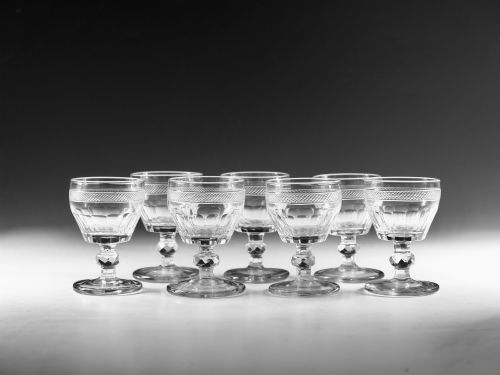


Diamond Facet Wine Glass
These diamond facet wine glass pieces combine Georgian and Victorian craftsmanship with brilliant cut glass work, offering a touch of period elegance to the table.
Diamond Facet Wine Glass
A diamond facet wine glass is a drinking vessel featuring precise geometric facets cut into the stem or bowl, designed to catch the light during evening dining. When you search for a diamond facet wine glass, you encounter examples spanning the 18th century through to the Edwardian period, including related forms like port glasses and cordial glasses.
The earlier Georgian specimens from the late 18th century typically present slender stems with delicate facet cutting below the bowl. Later Victorian and Edwardian iterations tend to appear alongside decanters and carafes sharing similar heavy cut patterns.
Materials and construction
These pieces are fashioned from lead crystal, lead glass, and clear glass, which provide the heavy weight and high refractive index necessary for crisp facet cutting. Artisans shaped the hot metal before employing wheels to grind and polish the distinctive geometric patterns into the surface.
The cutting technique requires immense steady skill to ensure each facet meets at exact angles, creating the characteristic sparkle seen on 18th-century stems and 19th-century decanters alike.
Listings span from the 18th century through the Georgian, Victorian, and Edwardian eras, utilising lead crystal, cut glass, and clear glass.
Assessing quality and finish
Quality rests upon the crispness of the cutting and the clarity of the metal, where sharper facet edges and a lack of interior bubbles denote superior workshop standards. Georgian examples with well-defined stem facets command attention for their proportion and the brilliance of the lead glass.
Later Victorian and Edwardian pieces show variation in the depth of the wheel work, separating utilitarian tablewares from exhibition-grade decanters and glassware.
The Diamond Facet Wine Glass Glossary
- Facet cut
- A decorative technique involving the grinding of flat planes into the surface of glass. This method enhances the reflection of light across the object.
- Lead crystal
- A type of glass containing metallic lead oxide. It offers greater weight, clarity, and ease of cutting than standard soda-lime glass.
- Cordial glass
- A small vessel traditionally used for serving sweet liqueurs after a meal. These often mirror the stem treatments found on contemporary wine glasses.
- Carafe
- An open-topped container used for serving wine or water at the table. They frequently appear in matching sets alongside period glassware.
Diamond Facet Wine Glass: Frequently Asked Questions
What is a diamond facet wine glass?
A diamond facet wine glass is a drinking vessel featuring geometric cuts along the stem or bowl, designed to refract light brilliantly.
These pieces date primarily from the Georgian and Victorian eras, valued for their heavy lead glass construction and refined cutting techniques.
How do I date an old glass?
Dating involves examining the manufacturing characteristics, such as pontil marks on the base and the composition of the metal itself. Georgian pieces often display lighter, more slender proportions compared to heavier Victorian examples.
Tool marks and the specific style of facet cutting also offer strong clues to the decade of production.
Can I use antique glassware daily?
Many collectors prefer to use their period glasses for special occasions, treating them with gentle hand washing to preserve the polished surface.
Care should be taken to avoid thermal shock and modern dishwashers, which can cloud the historic lead glass over time.
Why is lead crystal used?
Lead oxide added to the glass batch increases the refractive index, making the material sparkle more intensely under candlelight or electric illumination.
It also creates a softer metal that is easier for glass cutters to work into sharp, precise geometric facets.