





Devotional Prayer Chair
A devotional prayer chair brings nineteenth-century prayer seats and prie-dieu forms into modern rooms, offering rich walnut, oak, and velvet craftsmanship.
Devotional Prayer Chair
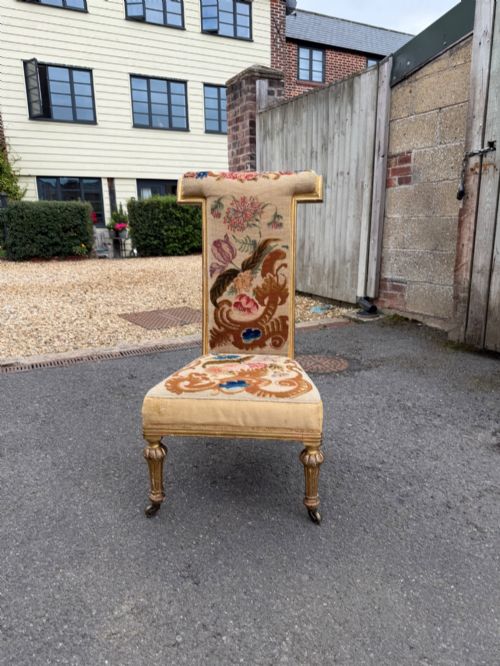
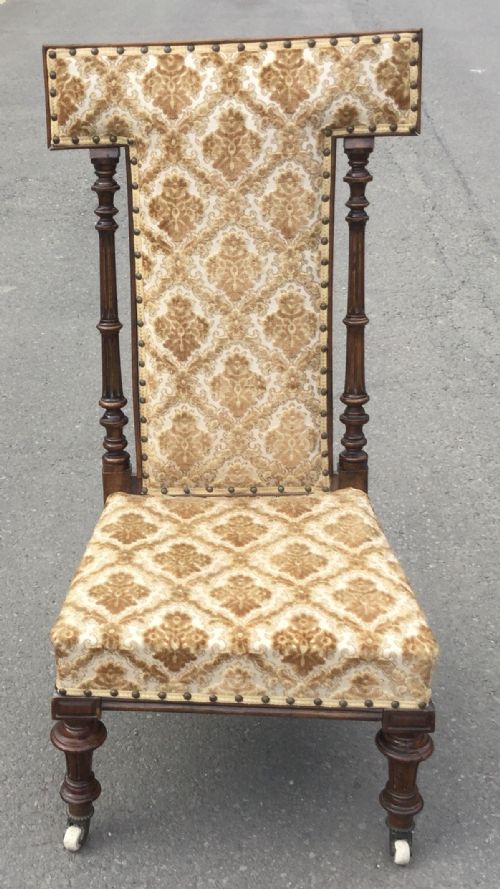
A devotional prayer chair is an architectural and spiritual form designed for kneeling and quiet reflection, appearing primarily across nineteenth-century Victorian periods. The selection focuses on prie-dieu chairs, prayer chairs, and occasional side chairs that double as devotional seating. These items span Victorian, Gothic Revival, and French Rococo Revival styles, featuring characteristic low seats and tall backs.
Buyers meet variations such as walnut frames, ebonised wood, and carved oak, alongside pairs of French walnut and rosewood prie-dieu chairs. Many examples incorporate specialised elements like fretted tops, integrated kneelers, and rich textile upholstery. The forms reflect both British cabinetmaking and continental European influences during the 1850s to 1880s.
How they were made
Makers shaped these devotional prayer chair pieces using solid hardwoods including walnut, rosewood, oak, and mahogany, often pairing structural timbers with turned and carved details. Ebonised finishes appear on select wooden frames to mimic more costly exotic materials. Woodcarving defines the Black Forest examples and Gothic Revival structural elements.
Upholstery forms a core part of the construction, employing traditional textiles such as green velvet, tapestry fabric, and patterned fabric. These coverings are secured to padded seats and tall backrests designed to support the user during prayer. Brass components and structural fixings provide hidden reinforcement within the wooden frames.
Devotional Prayer Chair Retail Price Guide 2026
Typical asking prices for devotional prayer chair among the pieces listed under this phrase on Sellingantiques today, from the lower quarter to the upper quarter. They describe what is for sale here now, not the wider market.
Some nineteenth-century makers evidently expected prayers to require serious woodwork, given the heavy oak and carved Black Forest foliage.
What varies in quality
Quality rests in the depth and crispness of the timber carving, particularly on Gothic Revival and Black Forest interpretations where hand-chiselled details elevate the silhouette. Dense native hardwoods like walnut and rosewood offer superior structural integrity compared to secondary timbers. The architectural ambition of the frame, such as fretted tops and robust joinery, dictates the upper tier of execution.
The sophistication of the original or period textile upholstery distinguishes standard workshop production from finer commissions. Velvet and tapestry fabrics with intricate weave patterns indicate higher initial cost and better preservation of surface texture. Matched pairs demonstrate greater workshop ambition than isolated occasional chairs.
Angerstein
The Devotional Prayer Chair Glossary
- Prie-dieu
- A devotional prayer chair featuring a low seat and an elevated upper shelf or rest designed for kneeling and leaning. The term translates from French as pray-God.
- Gothic Revival
- An architectural and decorative style drawing inspiration from medieval forms, prominent in nineteenth-century church and domestic furnishings. It utilises pointed arches, tracery, and heavy carved oak.
- Ebonised
- Wood treated with a dark stain or finish to imitate ebony. This technique was popular in Victorian cabinetmaking for striking visual contrast.
- Fretted
- Woodwork pierced or perforated with decorative openwork patterns. This technique appears on the upper rails of certain Victorian prayer seats.
- Black Forest
- A regional style of nineteenth-century woodcarving originating from the German mountain region, noted for naturalistic animal and foliage motifs on oak frames.
Devotional Prayer Chair: Frequently Asked Questions
What is a devotional prayer chair?
A devotional prayer chair is a nineteenth-century seating form designed for private prayer, featuring a low seat and a tall, narrow backrest that often includes a rest for the arms or hands.
These pieces combine domestic comfort with ecclesiastical styling, serving as functional prayer furniture and decorative occasional seating in Victorian interiors.
How do I use a prayer chair today?
You can place a prayer chair in a bedroom, study, or hallway as an accent chair or occasional seat that introduces historical character to a room.
Their narrow proportions and tall backs make them useful in compact spaces where standard armchairs would overwhelm the layout.
What woods were used for these chairs?
Cabinetmakers built these chairs using dense hardwoods such as walnut, rosewood, oak, and mahogany, selected for their strength and ability to hold intricate carvings.
Some examples also feature ebonised wood surfaces to achieve a dark, uniform appearance reminiscent of ebony.
How can I identify Gothic Revival examples?
Gothic Revival devotional prayer chairs display architectural motifs inspired by medieval churches, including pointed arches, trefoils, and heavy carved woodwork.
They frequently appear in oak or walnut, sometimes incorporating fretted tops and robust framing that mirrors ecclesiastical joinery.