

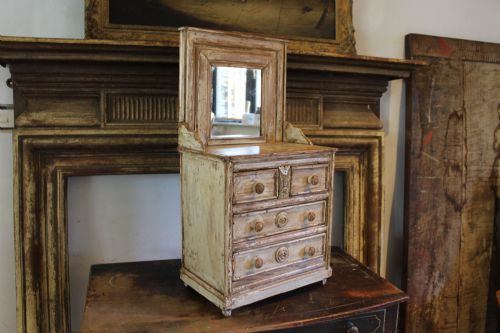


Desktop Mirror with Drawers
A desktop mirror with drawers brings together a practical looking glass and neat storage for small valuables.
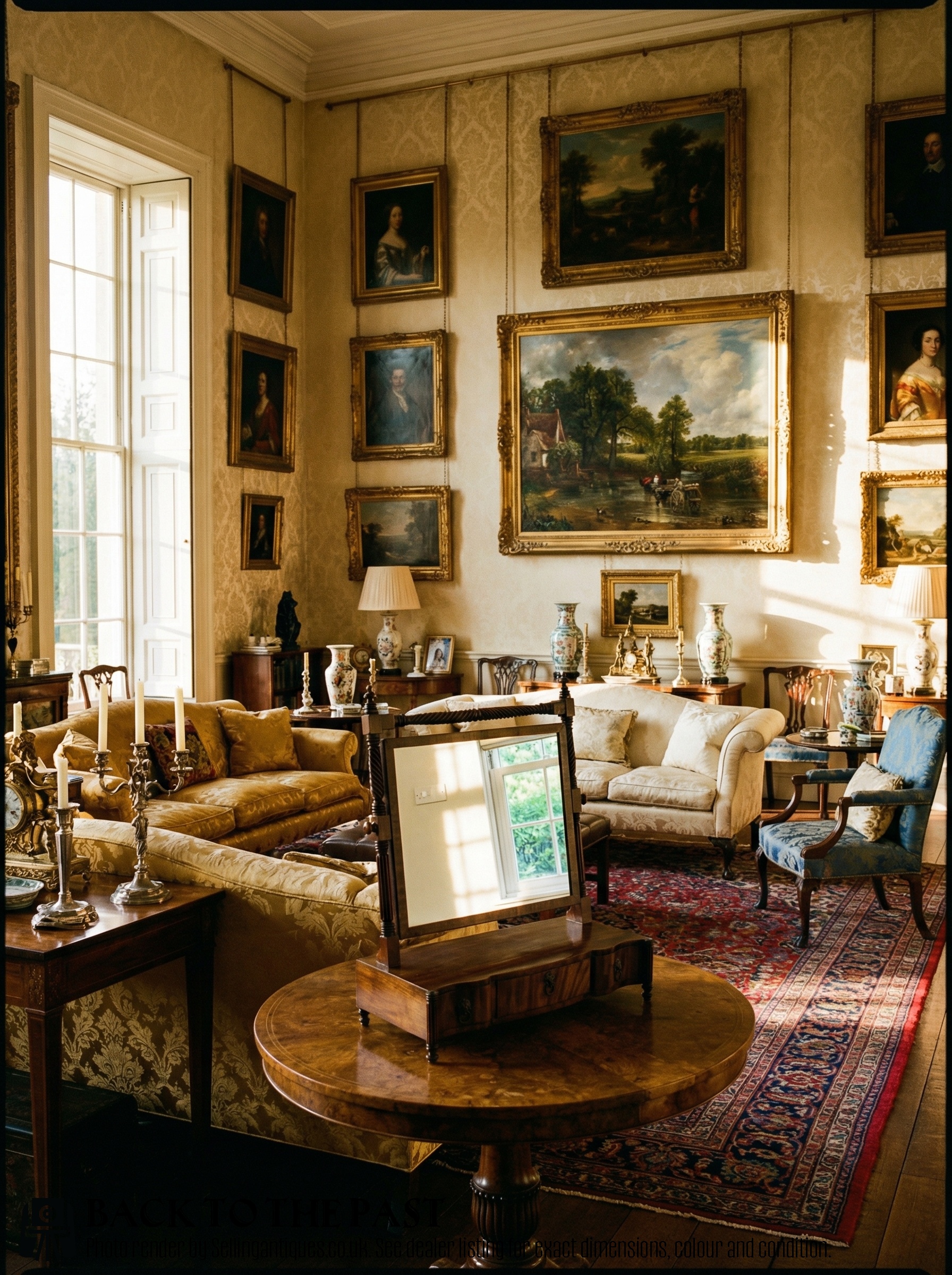
Desktop Mirror with Drawers
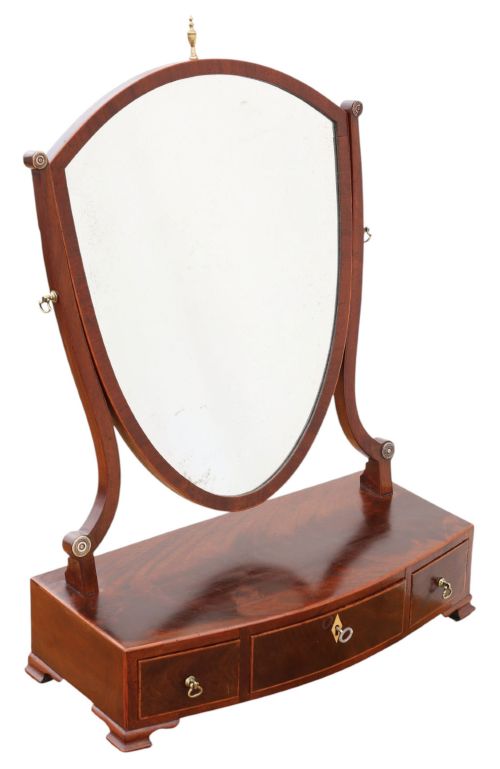
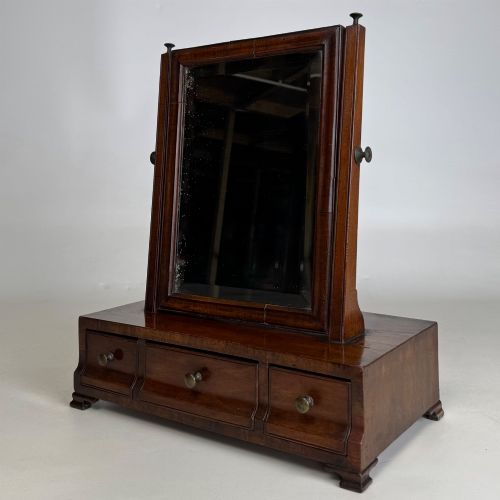
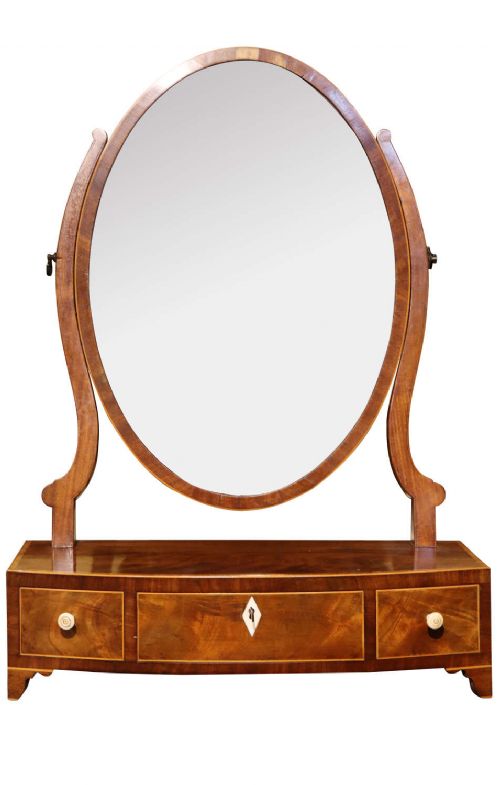
A desktop mirror with drawers sits upon a small chest or shaped base fitted with small compartments. These items appear across several distinct periods, including the Georgian era and the Victorian age.
Buyers encounter forms described as dressing table mirrors, toilet mirrors, and swing mirrors. Mahogany forms the backbone of these selections, alongside walnut and occasional marquetry decoration.
Most examples date from the eighteenth and nineteenth centuries, spanning Queen Anne, Chippendale, and Regency styles. The glass plate typically swings within upright arms attached to the base box.
Construction and materials
Cabinetmakers utilised timber veneers and solid boards, selecting rich figured mahogany and warm walnut for the base boxes. Satinwood inlay and giltwood details accent specific pieces.
Brass fittings such as adjusting screws, side finials, and small drawer pulls secure the pivoting glass frame and operate the storage compartments.
Distinctions in quality
Quality rests upon the selection of timber veneers and the crispness of proportions in the base drawers. Finer pieces demonstrate careful attention to the shaping of the mirror frame and the dovetailing of the drawers.
The integration of marquetry inlay or the retention of original mirror glass elevates certain examples above simpler utility versions.
The Desktop Mirror with Drawers Glossary
- Toilet mirror
- A small mirror designed to sit on a dressing table or chest, frequently equipped with small drawers beneath.
- Swing mirror
- A glass plate mounted on pivots between two upright arms allowing the angle of reflection to alter.
- Marquetry
- Decorative veneer work formed by fitted pieces of various woods and other materials to create pictorial or geometric patterns.
- Dovetail
- A joint used in drawer construction formed by interlocking wedge-shaped fingers.
- Shield mirror
- A glass plate cut into the rounded shape of a heraldic shield, popular during the later eighteenth century.
Desktop Mirror with Drawers: Frequently Asked Questions
How were these mirrors used?
These pieces sat upon desks or dressing tables to assist with grooming and personal care.
The small drawers underneath held pins, cosmetics, and trinkets close to hand.
What woods are common?
Mahogany and walnut dominate the surviving examples from the eighteenth and nineteenth centuries.
Craftsmen also utilised satinwood for inlay and applied giltwood to accent particular mouldings.
Are the mirror plates original?
Mirror glass frequently suffers damage over centuries of use and cleaning.
Replacement glass appears regularly on older pieces while retaining the antique frame and base.
How do styles differ?
Early examples display Queen Anne walnut influences with shaped crestings and compact proportions.
Later Victorian and Regency pieces offer different moulding profiles and varied drawer arrangements.