


Carved Wooden Swing Mirror
A carved wooden swing mirror brings period character to a dressing table, pivoting on its frame to catch the light.
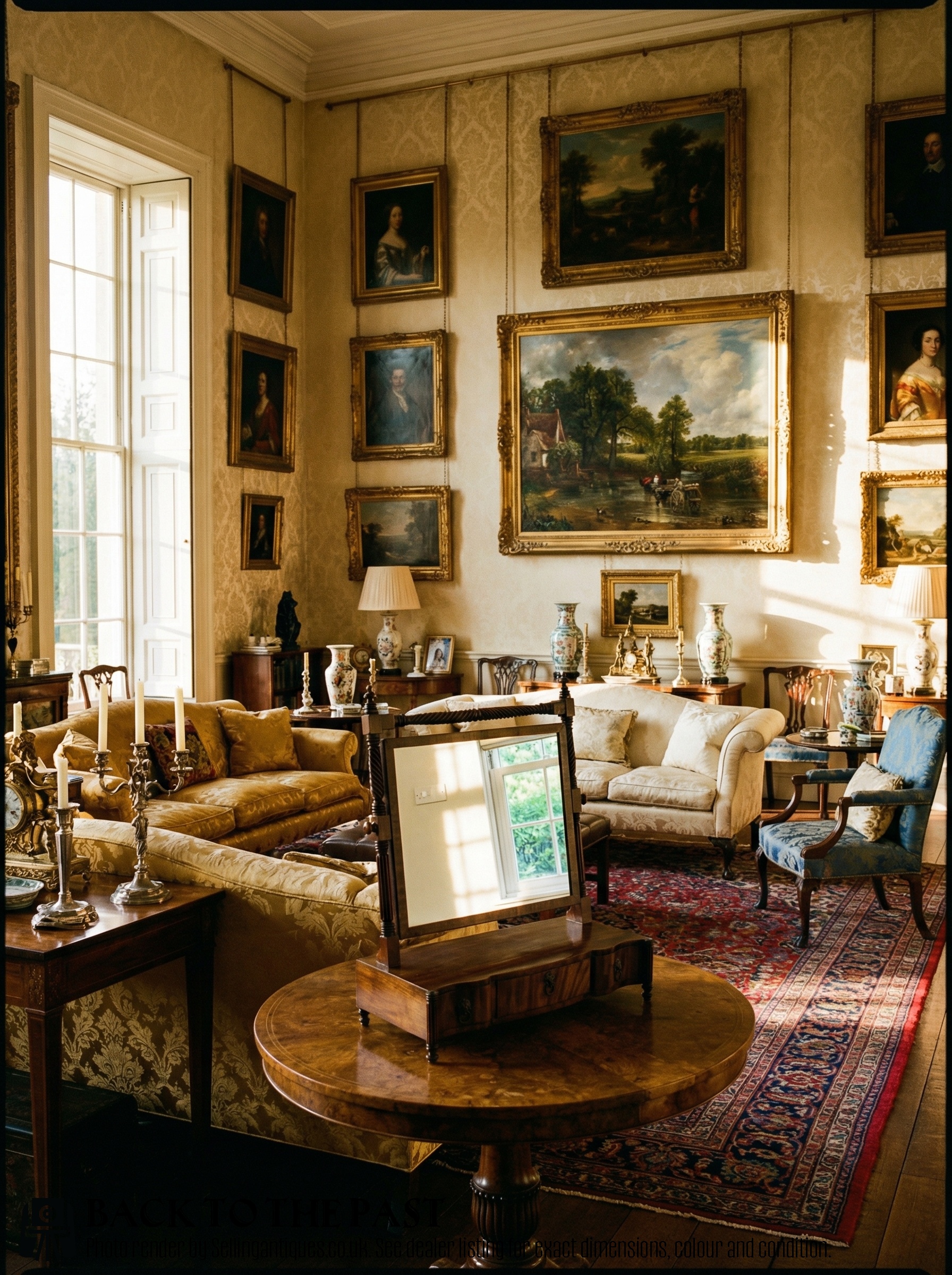
Carved Wooden Swing Mirror
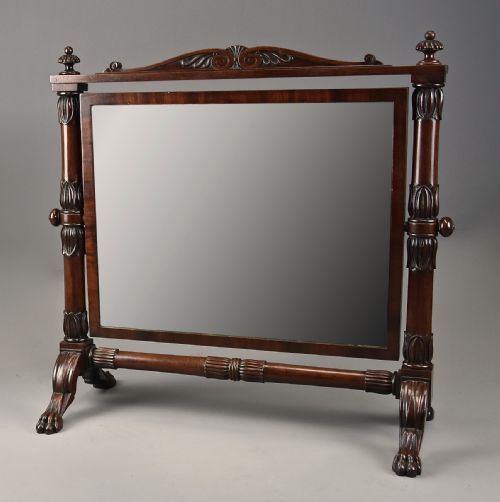
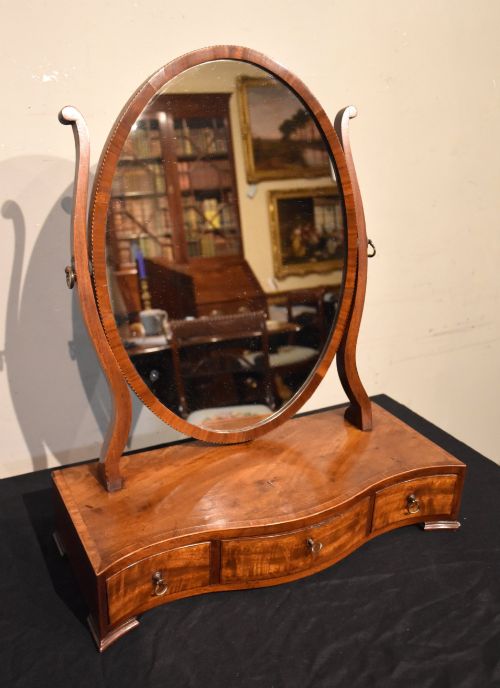
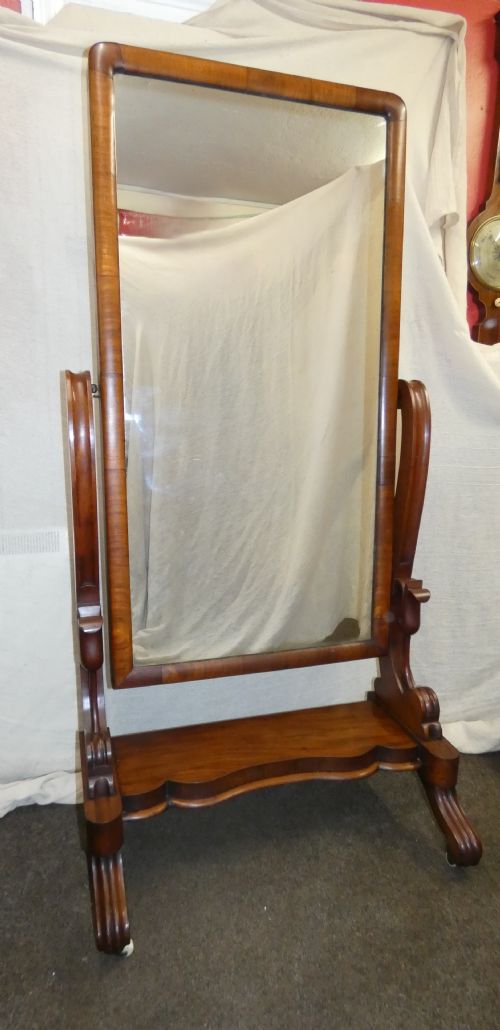
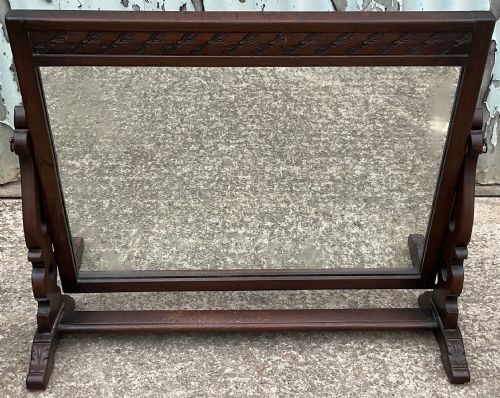
A carved wooden swing mirror takes several forms across the periods represented here, ranging from compact toilet mirrors designed to sit on tables to large freestanding cheval mirrors.
The most common version met on this page is the Victorian or Georgian mahogany dressing mirror, often featuring fitted drawers in the base and a pivoting glass frame.
Makers drew on Georgian, Regency, Queen Anne, and Hepplewhite styles, shaping woods into serpentine fronts or mounting them with turned columns.
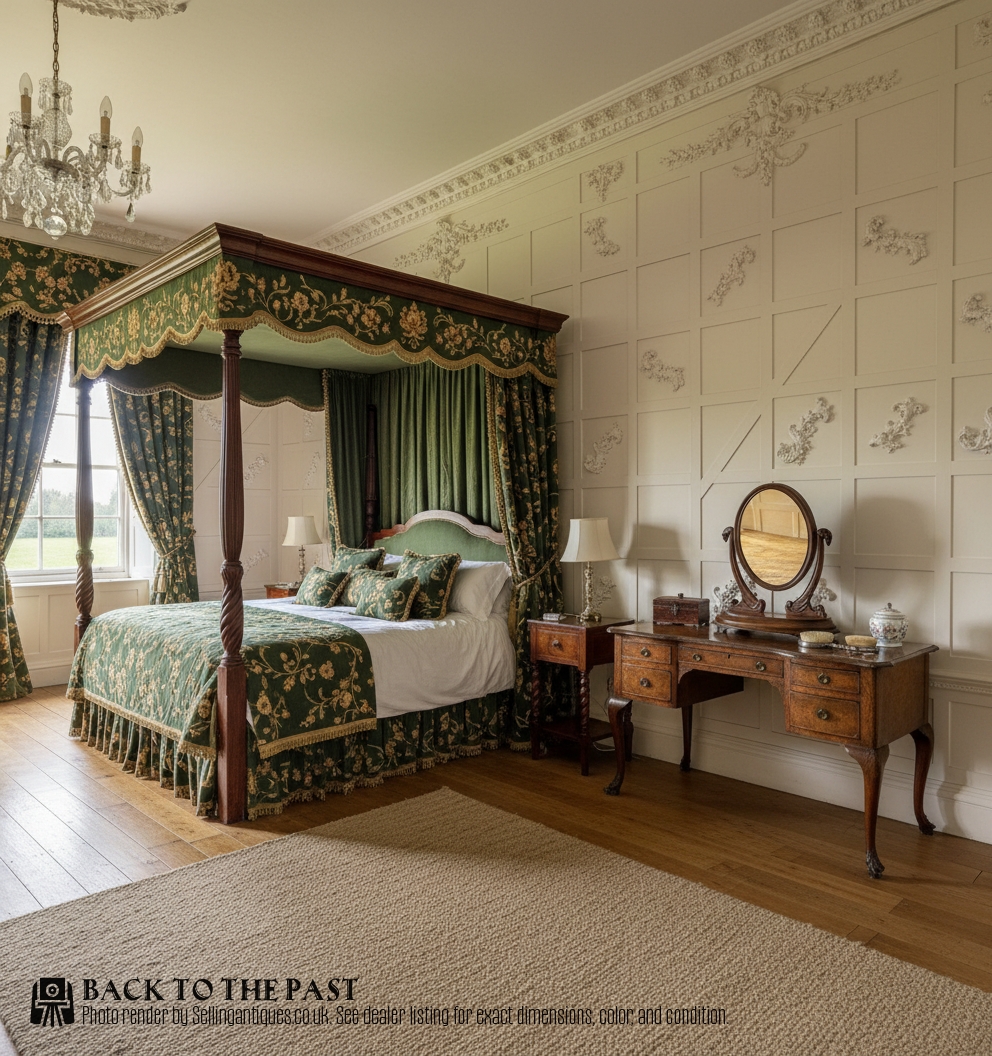
Materials and construction
Cabinetmakers utilised dense timbers such as mahogany, Cuban mahogany, walnut, burr walnut, and oak to build the structural frames and supporting columns of these mirrors.
Brass fittings, including pivot screws and candle sconces on older examples, complemented the polished timber surfaces alongside traditional mirror glass.
Object forms include vanity mirrors, toilet mirrors, dressing tables, and tall cheval mirrors.
Assessing quality and craftsmanship
The distinction between standard pieces and the finest examples lies in the depth and crispness of the timber carving, alongside the selection of figured veneers like burr walnut or Cuban mahogany.
Proportion and structural integrity dictate the standing of a mirror, where solid joints, well-fitted base drawers, and balanced framing separate utilitarian items from grander furniture.
P and MA Nicholson
The Carved Wooden Swing Mirror Glossary
- Cheval mirror
- A large freestanding mirror supported by a vertical frame that allows the glass to swing fully within it. These tall pieces were designed for full-length viewing in bedrooms.
- Toilet mirror
- A smaller dressing mirror intended to sit upon a chest of drawers or a dressing table. They frequently incorporate small trinket drawers in the base block.
- Serpentine front
- A furniture front curving outward in the centre and inward at the sides in a continuous wave. This shape requires advanced woodworking skill to execute properly.
- Turned columns
- Cylindrical wooden supports shaped on a lathe, often flanking the mirror plate. They provide architectural stability and decorative vertical lines.
Carved Wooden Swing Mirror: Frequently Asked Questions
Where should a swing mirror be placed?
These mirrors sit comfortably on top of heavy chests of drawers, sideboards, or dedicated dressing tables where their height matches eye level.
Freestanding cheval versions stand directly on the floor in bedrooms or dressing rooms to provide a full-length reflection.
How do I date a wooden mirror?
Dating relies on observing the timber species, secondary woods, and construction methods used in the base framework and drawer linings.
Stylistic cues such as Hepplewhite curves, Regency brass mounts, or Victorian turned columns also point toward specific manufacturing eras.
Are the mirror plates original?
Many older pieces retain their original mirror glass, which can display light foxing, minor speckling, or softening of the silver backing over the decades.
Replacements occur frequently when antique glass has deteriorated beyond utility, though surviving original plates remain preferred by collectors.
How do I care for the wood?
Maintenance involves dusting with a soft, dry cloth and occasionally feeding the polished mahogany or walnut surfaces with traditional beeswax.
Avoiding direct sunlight and excessive moisture prevents the timber from warping and protects the antique polish from fading.