




Desktop Letter Compendium
A desktop letter compendium keeps your correspondence orderly, bringing handsome Victorian and Edwardian timber to the writing desk.
Desktop Letter Compendium
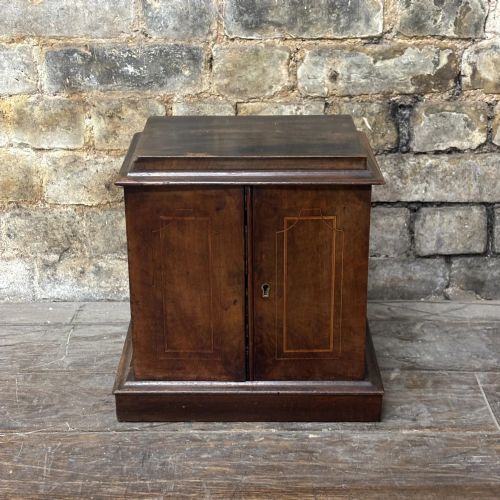
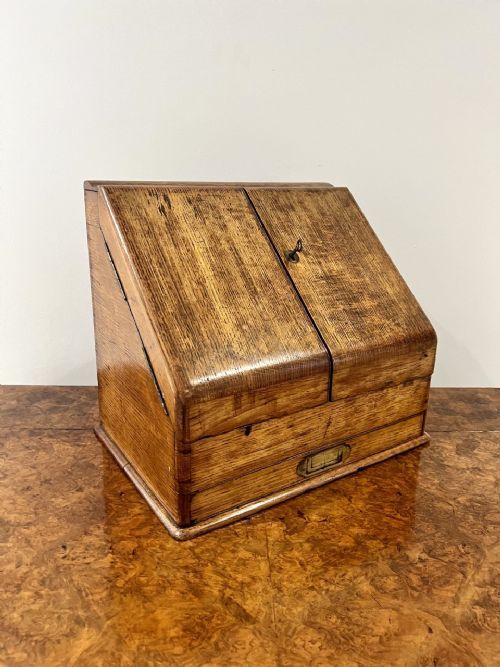
A desktop letter compendium comprises stationery cabinets, stationery boxes and correspondence boxes designed to organise writing paper, envelopes and desk accessories. These functional pieces range from simple Victorian oak boxes to elaborate Edwardian stationery cabinets featuring drop fronts and inlaid details.
Most examples found here date from the nineteenth century into the early twentieth century, spanning the Victorian and Edwardian eras. You will encounter various forms, from American oak models to rosewood and walnut cabinets fitted with interior compartments.
These desk accessories reflect the heavy correspondence of past eras, providing dedicated housing for daily letter-writing needs. They sit neatly upon writing tables, bringing period character and practical storage to a modern study.
How they were made
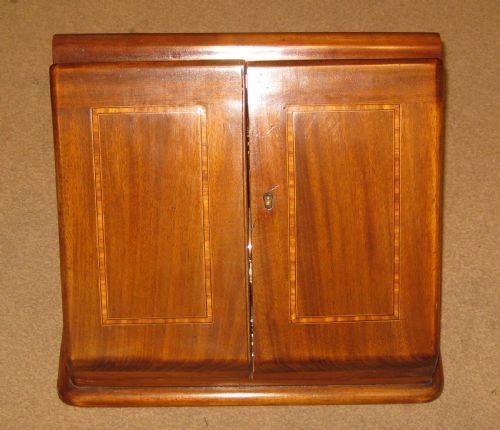
Cabinetmakers constructed these pieces primarily from solid and veneered timbers such as oak, mahogany, walnut, rosewood and coromandel. These woods were chosen for their rich grain and durability, often accented with satinwood and boxwood stringing.
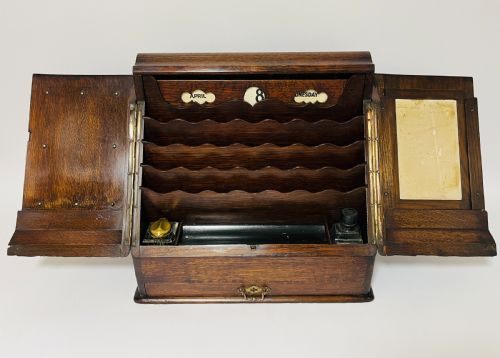
Metalwork played a key structural and decorative role, with brass hinges, locks, handles and galleries fitted to secure the contents. Glass components occasionally appeared in compartments, while leather provided durable lining surfaces for interior writing slopes and document slots.
Joinery methods of the period ensured robust construction for daily desk use, incorporating dovetailed joints and fitted internal divisions. Cabinet fronts frequently dropped open or swung outward on specialised brass hinges to reveal tiered stationery compartments.
The selection spans from mid-nineteenth-century Victorian designs through Arts and Crafts examples to Edwardian pieces from around nineteen hundred.
What varies in quality
Quality in a desktop letter compendium rests upon the selection of timber and the precision of the cabinetmaker's joinery. Superior examples utilise finely figured mahogany, quarter-sawn oak or exotic woods like coromandel, matched with careful attention to interior configuration.
The sophistication of the mechanism and internal layout distinguishes finer pieces from utilitarian boxes. Drop-front actions that operate smoothly, integrated calendar or date adjustments, and maker's labels signify superior workshop output.
Decorative embellishment separates standard boxes from exceptional ones, particularly through restrained inlay, quality brass hardware and well-executed Gothic Revival or Arts and Crafts detailing.
F Waller·Houghton & Gunn
The Desktop Letter Compendium Glossary
- Stationery cabinet
- A desk accessory designed with upright compartments for storing writing paper and envelopes. These enclosures protect correspondence from dust and keep the desktop tidy.
- Drop front
- A hinged panel on a cabinet that lowers to provide access to internal stationery racks and writing surfaces. This mechanism allows for compact storage while displaying the contents when opened.
- Arts and Crafts
- A design movement emphasising handcraftsmanship, simple forms and natural materials. Pieces from this style often display honest construction rather than excessive surface ornament.
- Victorian Gothic Revival
- An architectural and decorative style drawing inspiration from medieval design. Cabinets in this aesthetic feature pointed arches, heavy brass strapwork and dark timber.
- Stringing
- A narrow inlay of contrasting wood used to create decorative lines on cabinet surfaces. Craftsmen employed boxwood or satinwood to outline panels on mahogany and walnut boxes.
Desktop Letter Compendium: Frequently Asked Questions
What is a desktop letter compendium used for?
These pieces served as dedicated storage for writing paper, envelopes, ink bottles and correspondence tools on nineteenth-century desks. They kept personal and professional writing materials organised and secure behind locked cabinet doors.
Today, they function well for sorting modern mail, storing stationery, or housing small papers while adding period character to a workspace.
How do I date a stationery cabinet?
Dating relies on timber choice, construction methods, and stylistic cues such as Victorian Gothic Revival motifs or Edwardian simplicity. Brass hardware styles and maker labels also provide clear chronological markers.
Oak and mahogany pieces span the mid to late nineteenth century, while lighter satinwood accents and specific hinge designs often point towards the Edwardian era.
Are these cabinets secure?
Most original stationery boxes and cabinets featured working brass locks designed to keep private correspondence confidential. Many surviving examples retain their small keys, though the locks should be handled with care.
Even without locking them for daily use, the sturdy wooden doors and drop fronts naturally protect contents from light and dust.
How should I care for wooden desk accessories?
Keep wooden pieces away from direct sunlight and sudden temperature changes to protect the timber and prevent veneer lifting. Occasional dusting with a soft, dry cloth maintains the finish.
Applying a traditional beeswax polish sparingly helps nourish older woods like mahogany and oak, preserving their natural lustre without building up heavy residues.