

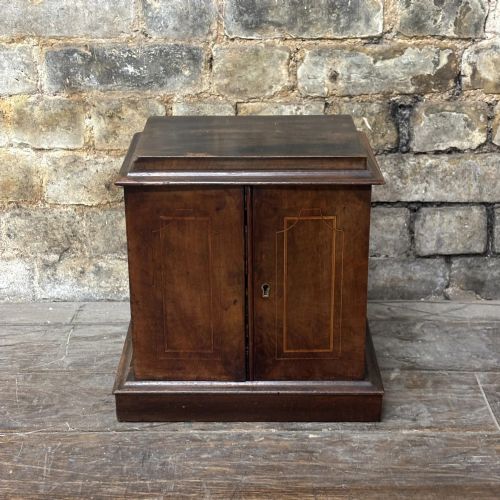

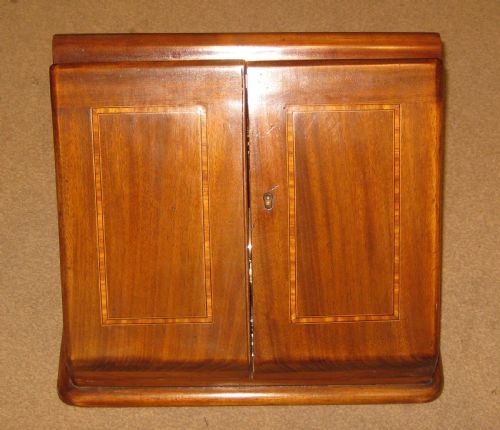


Desktop Correspondence Organiser
A desktop correspondence organiser sorts your daily post and stationery with period charm, bringing a tidy utility to the modern writing desk.
Desktop Correspondence Organiser
A desktop correspondence organiser comprises stationery cabinets, letter boxes and correspondence chests designed to keep writing paper, envelopes and incoming mail in order. When you search for a desktop correspondence organiser, you encounter Victorian and Edwardian examples intended for country house desks and study tables.
The selection here draws primarily from the nineteenth century, including Arts and Crafts pieces alongside formal Victorian designs. Forms range from compact letter boxes with answered and unanswered slots to larger stationery cabinets fitted with pigeonholes and doors.
Makers and cabinetmakers built these to sit squarely on a mahogany desk or a piano desk, managing the heavy flow of daily letter writing before the telephone became common. Each piece reflects the domestic routines of the Victorian and Edwardian periods, offering partitioned compartments specifically sized for folded correspondence and cards.
How they were made
Makers constructed these pieces using solid timbers such as mahogany, oak and walnut, often accentuating the surfaces with boxwood and satinwood inlay. Brass mounts, hinges and handles provide structural reinforcement while adding a metallic contrast to the dark woods.
Interior fitments frequently incorporate leather and glass alongside the primary timber frame to separate envelopes, stamps and nibs. Selected items employ clever mechanical actions, such as novelty drop fronts or dual compartments labelled for sorted mail.
Desktop Correspondence Organiser Retail Price Guide 2026
Typical asking prices for desktop correspondence organiser among the pieces listed under this phrase on Sellingantiques today, from the lower quarter to the upper quarter. They describe what is for sale here now, not the wider market.
Brass mounts, glass inserts and boxwood inlay appear across multiple forms, from simple letter boxes to large stationery cabinets.
What varies in quality
The distinction between ordinary and superior pieces rests on the choice of timber and the precision of the cabinetwork. Finer examples display carefully matched grain patterns, intricate marquetry inlay and robust brass hardware that withstands daily use.
Interior organisation also dictates grade, with higher quality boxes offering well-fitted pigeonholes, glass inkwell inserts and sophisticated locking mechanisms rather than plain nailed partitions.
The Desktop Correspondence Organiser Glossary
- Correspondence box
- A specialised desk box designed to hold writing paper, envelopes and incoming or outgoing mail. These often feature sloping lids or vertical compartments.
- Stationery cabinet
- An upright wooden cabinet with doors or a fall front concealing internal shelves and pigeonholes for paper storage. They represent a more formal evolution of the simpler desk box.
- Pigeonhole
- A small, open compartment within a desk or cabinet used for sorting papers and letters. Multiple stacked pigeonholes form the core of most stationery interiors.
- Marquetry
- Decorative veneer work forming pictures or geometric patterns using various coloured woods. Cabinetmakers applied this technique to elevate the visual appeal of mahogany and walnut surfaces.
- Arts and Crafts
- A design movement emphasising handcraftsmanship, simple structural honesty and natural materials. Pieces from this tradition avoid excessive ornamentation in favour of exposed oak grain and honest brass strapwork.
Desktop Correspondence Organiser: Frequently Asked Questions
What is a desktop correspondence organiser?
A desktop correspondence organiser is a period wooden box, chest or cabinet designed to hold stationery and sort incoming or outgoing mail. These pieces sat on writing desks in Victorian and Edwardian homes to keep paper and letters neat.
They range from simple oak letter boxes to elaborate inlaid mahogany cabinets with internal pigeonholes and drop fronts.
How were letter boxes used?
Letter boxes were used to receive daily post securely before distribution or to hold letters awaiting collection. Some featured dual compartments labelled to separate answered and unanswered mail.
Household members dropped correspondence through a top slot, ensuring the desk remained tidy throughout the day.
How do I date a correspondence box?
Dating relies on the prevailing style, timber choice and construction methods visible in the piece. Victorian examples often showcase rich mahogany and intricate inlay, whereas Edwardian and Arts and Crafts items typically highlight plain or golden oak.
Labels, brass lock plates and internal fittings also offer clues to the manufacturing decade.