



Victorian Desk Post Box
These Victorian desk post boxes are sturdy desktop containers built for sorting correspondence, offering a practical touch of nineteenth-century administration for the modern study.
Victorian Desk Post Box
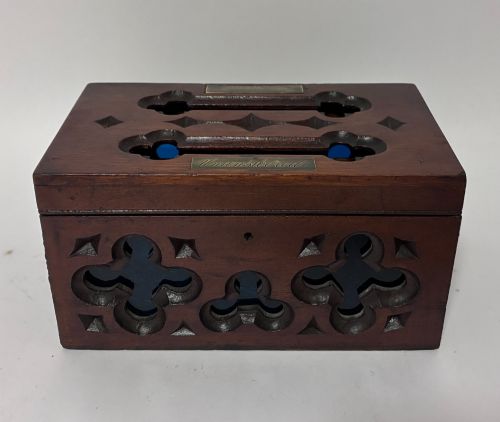
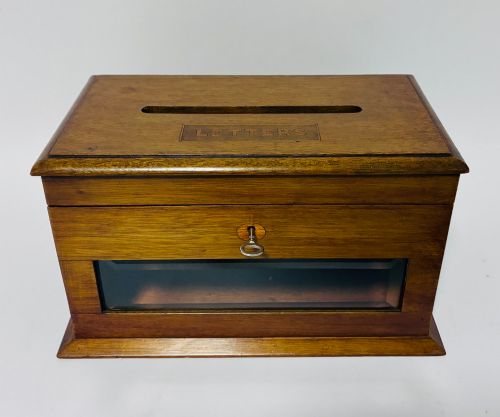
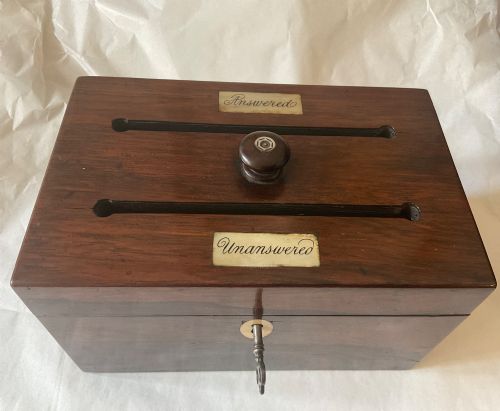
When you search for a victorian desk post box, you encounter robust desktop accessories designed to hold correspondence in country houses, hotels, and offices. The pieces appearing here span the nineteenth century into the Edwardian era, taking the form of letter boxes, stationery boxes, and desktop accessories.
The most common versions met on this page are country house letter boxes fashioned from oak or mahogany, often fitted with brass mounts. You also find specialised pieces such as novelty letters boxes, correspondence boxes, and occasional variants reflecting Gothic Revival or Arts and Crafts styles.
How they were made
These items rely principally on timbers such as oak, golden oak, and mahogany, shaped into desk boxes and correspondence holders. Woodworkers utilised these sturdy woods to withstand daily handling in busy household settings.
Metalwork forms a crucial secondary element, with brass mounts reinforcing corners, hinges, and slot surrounds. Some pieces incorporate glass panels or bone details alongside fabric linings to complete the interior compartments.
Victorian Desk Post Box Retail Price Guide 2026
Typical asking prices for victorian desk post box among the pieces listed under this phrase on Sellingantiques today, from the lower quarter to the upper quarter. They describe what is for sale here now, not the wider market.
Listings span from the mid-nineteenth century through the Edwardian period, utilising oak, mahogany, brass, and glass.
What varies in quality
The distinction between standard utility items and finer pieces rests on the selection of timber and the ambition of the design. Dense, well-figured mahogany or quarter-sawn golden oak with crisp joinery elevates a desk box above plain utilitarian versions.
Hardware and stylistic detailing further differentiate the range. Heavy cast brass mountings, thoughtful Gothic Revival or Arts and Crafts ornamentation, and integrated labeling such as answered and unanswered slots mark out the more thoughtful productions.
The Victorian Desk Post Box Glossary
- Correspondence box
- A desktop container specifically proportioned for holding writing paper, envelopes, and incoming letters. These boxes usually feature hinged lids and internal dividers.
- Gothic Revival
- An architectural and decorative style drawing on medieval forms, frequently identified by pointed arches, heavy chamfering, and ecclesiastical ironmongery.
- Arts and Crafts
- A design movement emphasising honest construction, visible grain, and simple hand-worked materials like solid oak and plain brass.
- Stationery box
- A desk accessory designed to stand upright or lie flat, organising paper stocks and envelopes within fitted internal partitions.
Victorian Desk Post Box: Frequently Asked Questions
What were desk post boxes used for?
These boxes served to organise incoming and outgoing mail within large households, country houses, and hotels before general postal collections became frequent.
Staff and family members placed letters inside to keep desks tidy and to sort correspondence awaiting attention.
How do I tell Victorian from Edwardian boxes?
Victorian examples generally lean towards heavier timbers like mahogany and stylistic flourishes such as Gothic Revival details. Edwardian pieces often display lighter oak construction and simpler Arts and Crafts influences.
However, stylistic crossover is common around the turn of the century.
Where should I place one today?
A desk post box sits naturally on a writing table, study desk, or hallway console where it can hold modern letters, mail, and stationery.
Its enclosed compartments keep small papers contained while adding period character to a workspace.
What woods are most common?
Oak and mahogany dominate the materials used for these desktop containers, reflecting the preference for durable hardwoods during the nineteenth century.
Golden oak appears frequently in pieces associated with the Arts and Crafts movement.