






Desk Tidy Writing Set
A desk tidy writing set organises correspondence essentials, bringing heavy brass, rich timber and cut glass directly to the working surface.
Desk Tidy Writing Set
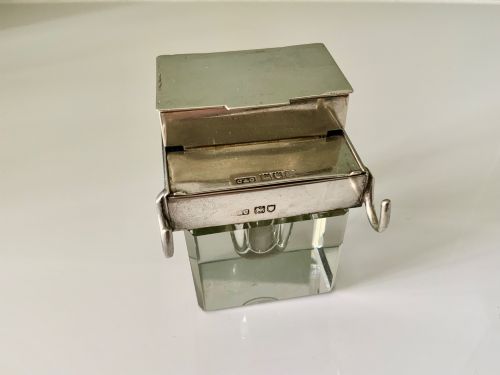
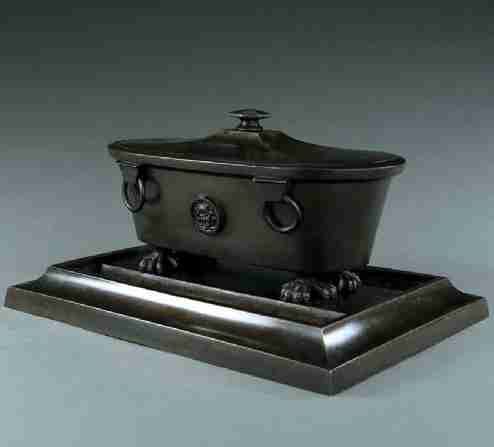
A desk tidy writing set gathers inkwells, pen rests, and stamp boxes into a single coordinated desk accessory. These functional objects served the writer before the arrival of the fountain pen and ballpoint.
The versions most commonly met on this page date from the nineteenth century, encompassing the Victorian and Edwardian periods. They appear in diverse regional styles, including French Empire, Art Nouveau, and Dutch Delft.
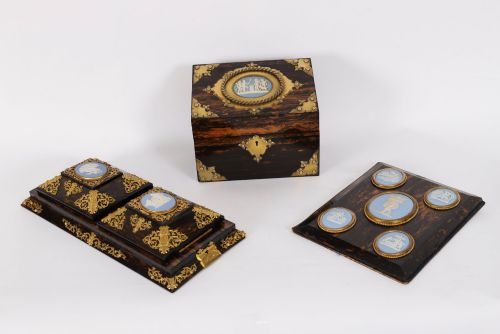
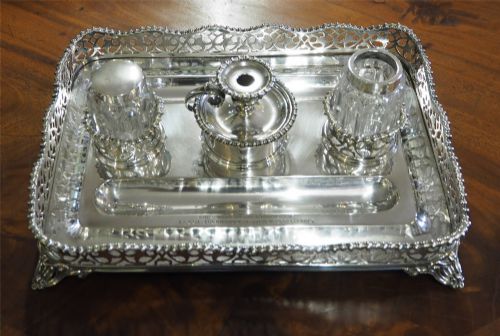
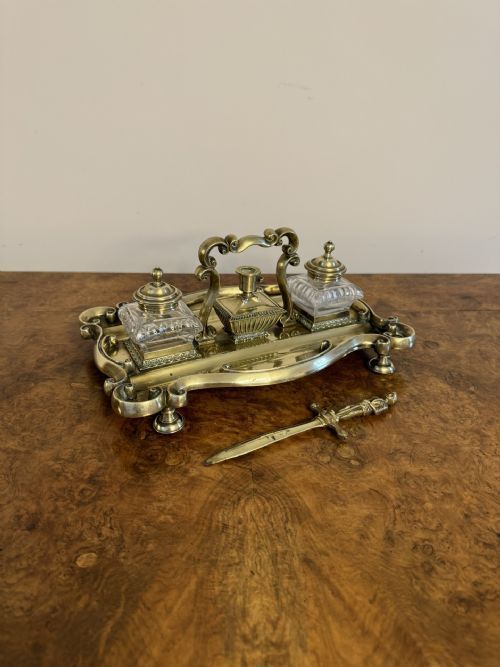
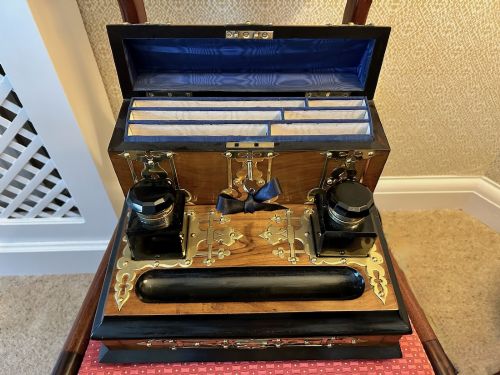
Forms range from compact single inkwells to elaborate double inkstands fitted with chambersticks, drawers, and matching cut glass bottles. Woods like coromandel and walnut frequently form the base for brass and ormolu mounts.
How they were made
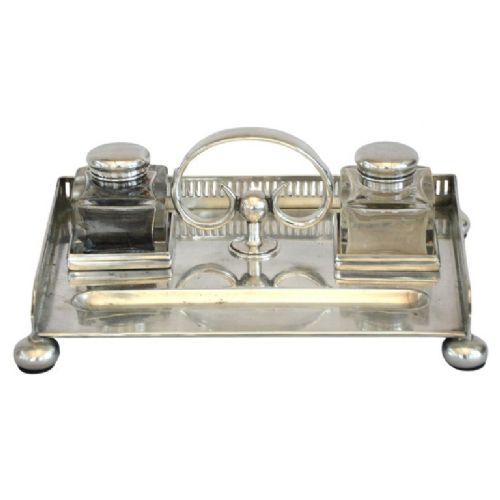
Casting and chasing dominate the metalwork, with brass, bronze, and ormolu providing heavy structural foundations and decorative mounts. Silversmiths formed sterling silver and silver plate for fitted inkstand trays and lid mounts.
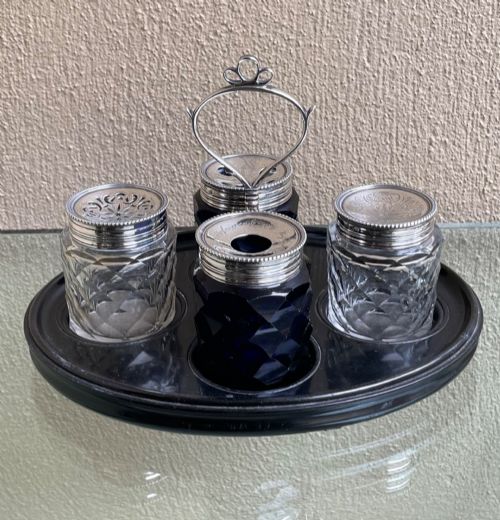
Cabinetmakers constructed timber bases from exotic and domestic hardwoods, incorporating tortoiseshell, Boulle marquetry, and inlaid brass stringing. Glassmakers blew and cut heavy crystal vessels to contain the ink without tipping.
Potters shaped ceramics like Dutch Delft faience and Jasperware, applying hand-painted blue and white scenes or contrasting reliefs. Papier-mâché provided a lightweight core for hand-painted Kashmiri ink and pen stands.
Desk Tidy Writing Set Retail Price Guide 2026
Typical asking prices for desk tidy writing set among the pieces listed under this phrase on Sellingantiques today, from the lower quarter to the upper quarter. They describe what is for sale here now, not the wider market.
Some nineteenth-century models included a chamberstick, ensuring the letter writer could maintain illumination when burning midnight oil.
What varies in quality
The weight and gauge of the materials dictate much of the distinction between standard and superior examples. Heavy cast ormolu and thick, polished cut glass indicate a higher standard of manufacture than thin pressed metals.
Complexity of construction and integration separate the ordinary from the exceptional. Fitted compartments with working drawers, original matched ink bottles, and meticulous marquetry or inlay elevate a piece significantly.
Edwards & Jones·Elkington·Walker And Hall·Robert Garrard·Lefebvre of Belgium
The Desk Tidy Writing Set Glossary
- Inkstand
- A portable tray or stand holding one or more inkwells alongside pen rests and sometimes a sander or bell. These were central to nineteenth-century correspondence.
- Standish
- An alternative term for an inkstand, frequently used for grander Georgian and Victorian examples with multiple compartments. It often includes lidded boxes for wafers and stamps.
- Ormolu
- Gilt bronze created by applying a mercury-gilding process to cast bronze. This technique produced a rich, durable golden finish popular in French Empire and Victorian pieces.
- Boulle
- A style of marquetry using brass inlaid into tortoiseshell, named after the cabinetmaker André-Charles Boulle. It appears on elaborate mid-nineteenth-century desk sets.
- Faience
- Tin-glazed earthenware, notably produced in Dutch Delft during the eighteenth and nineteenth centuries. It provides a bright white background for hand-painted blue decorative scenes.
Desk Tidy Writing Set: Frequently Asked Questions
What is a desk tidy writing set?
A desk tidy writing set is a portable stationery station designed to hold inkwells, pens, stamps, and blotting paper. It kept writing materials organised on the desktop.
These sets combine utilitarian purpose with decorative craftsmanship, often using fine woods, metals, and glass.
How were inkstands used?
Writers dipped quill or steel-nib pens into the central inkwells while resting spare pens in the integrated grooves. The accompanying boxes stored sealing wax, stamps, and nibs.
Most pieces remained stationary on a library or writing table, though heavier brass and silver versions could be moved.
How do I date a desk set?
Stylistic cues like Art Nouveau curves or Regency proportions offer initial chronological markers. Materials such as coromandel wood or ormolu frequently point to the nineteenth century.
Silver components often feature hallmarks that provide exact assay office years and maker marks.
How should I clean brass fittings?
Gentle dusting with a soft, dry cloth preserves the aged patina on nineteenth-century brass and ormolu. Aggressive metal polishes remove historic surface character and should be avoided.
Wooden bases benefit from occasional applications of neutral furniture wax to nourish the grain.