
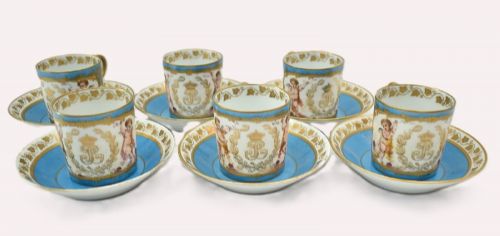


Demitasse Cups and Saucers
These demitasse cups and saucers are small-scale porcelain and silver vessels for after-dinner coffee, prized for their delicate painting and concise forms.

Demitasse Cups and Saucers
Demitasse cups and saucers are specialised vessels designed specifically for serving small portions of strong coffee after a meal. When you search for demitasse cups and saucers, you encounter objects spanning multiple centuries, from eighteenth-century porcelain to twentieth-century cased sets.
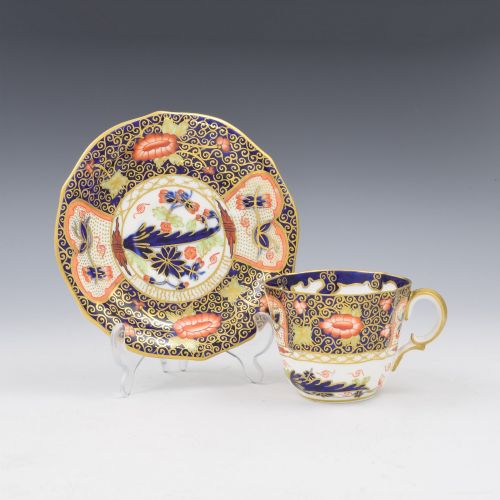
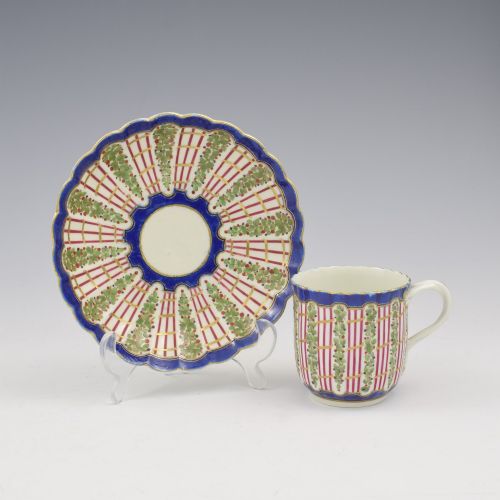
The pieces appearing on this page take various forms, including cabinet cups, miniature cups, coffee cans with saucers, and complete multi-person services. Many examples originate from renowned European and English factories, encompassing periods such as the Georgian, Regency, Edwardian, and Art Deco eras.
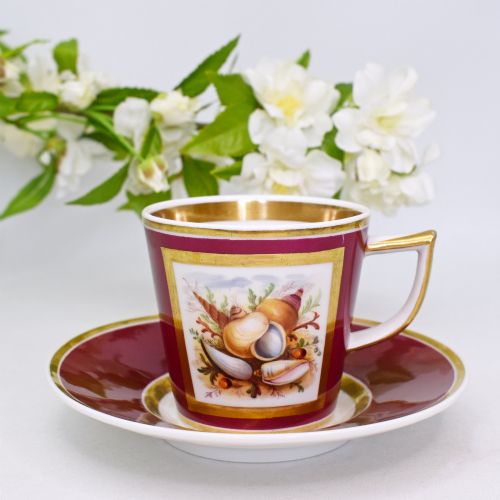
You are most likely to meet porcelain and bone china sets decorated with hand-painted floral motifs, gilding, and transfer patterns. The selection ranges from single cabinet display pieces to matched groups complete with silver mounts or spoons.
Materials and Techniques
Makers utilised fine porcelain and bone china as the primary body for these small vessels, shaping them on the potter's wheel or casting them in moulds. Artisans applied liquid gold leaf, enamel, and hand-painted pigments directly onto the glazed ceramic surface before firing.
Metal components such as silver plate, sterling silver, and satin linings appear in many sets to form protective holders, saucers, or accompanying spoons. These metal elements were cast, pierced, and engraved to complement the delicate proportions of the ceramic cups.
Listings feature porcelain, bone china, silver plate, and gold leaf across periods from the eighteenth century to the twentieth century.
Assessing Quality
Quality in these small vessels rests upon the crispness of the porcelain body and the precision of the hand-painted decoration. Superior pieces display finely rendered details, such as intricate botanical studies or gilding applied by hand rather than transfer.
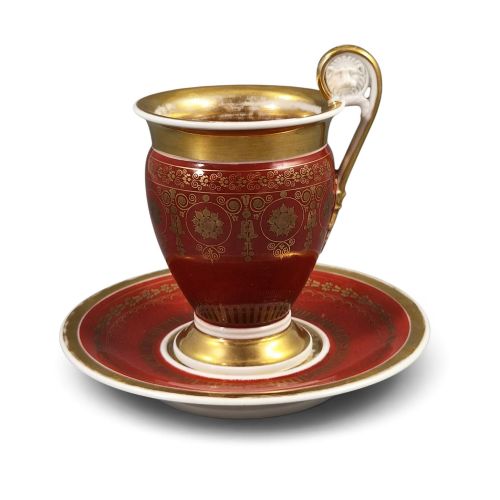
The refinement of the physical form and the balance between cup and saucer indicate the skill of the factory. Items featuring specialist additions like lion mask handles, pedestal bases, or bespoke silver holders demonstrate higher levels of craftsmanship.
Royal Crown Derby·Worcester Porcelain·Rockingham·Sevres·Elkington·Coalport·Meissen·Minton·KPM Berlin·Hutschenreuther·Royal Worcester·Spode Copeland·Ridgeway·Mappin and Webb
The Demitasse Cups and Saucers Glossary
- Demitasse
- A small cup used for serving strong black coffee or espresso after a meal. The term translates from French as half-cup.
- Coffee Can
- A cylindrical ceramic cup lacking the traditional curved bowl shape and footed base found on standard teacups. These pieces were popular during the Georgian and Regency periods.
- Cabinet Cup
- A decorative ceramic cup intended primarily for display within a cabinet rather than regular service at the table. These often feature elaborate painting or pedestals.
- Imari
- A decorative style originating in Japan and copied by European factories, characterised by a palette of underglaze blue, iron red, and abundant gold gilding.
Demitasse Cups and Saucers: Frequently Asked Questions
What is a demitasse cup used for?
These smaller vessels were designed specifically for serving concentrated black coffee or espresso at the conclusion of a meal. Their compact size kept the beverage hot.
Over time, many examples transitioned from functional dining ware into cabinet display pieces collected for their painted decoration.
How do I date an antique porcelain cup?
Dating relies heavily upon factory marks stamped or painted on the base, alongside stylistic clues such as handle shape and gilding techniques. Eighteenth-century pieces often feature unglazed foot rims and hand-pencilled factory symbols.
Later nineteenth and twentieth-century items incorporate printed registration numbers, decorator signatures, or specific factory ciphers that narrow down the exact decade of manufacture.
Can I use antique coffee cups for daily service?
While structurally sound, antique porcelain and delicate silver-plated components require careful hand washing rather than automated cleaning. Older gilding and enamel work can wear down with frequent abrasive contact.
Many collectors prefer to reserve these fragile sets for occasional use or display them safely within glass cabinets to preserve their hand-painted surfaces.
Why do some cups have metal holders?
Silver plate and sterling silver holders provided structural support and protected fingers from the heat of freshly brewed coffee contained within thin porcelain walls. These metal sleeves were often detachable for cleaning.
Sets featuring matched silver spoons and fitted presentation cases indicate higher status dining practices, particularly during the Edwardian and Art Deco periods.