





Deep Red Rug
A deep red rug brings warmth and grounded weight to a room through saturated tones and traditional weaving traditions.
Deep Red Rug
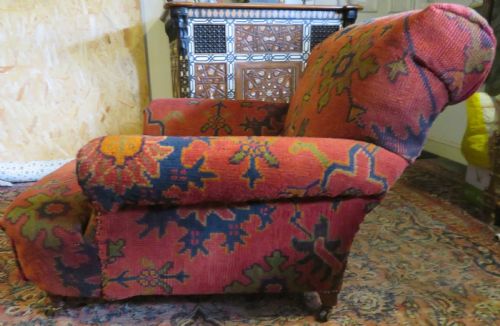
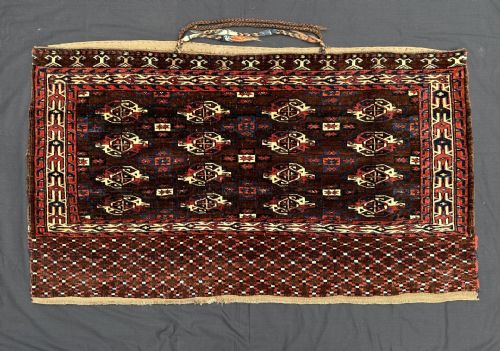
A deep red rug encompasses centuries-old weaving traditions from Persian, Turkmen, and Afghan makers, ranging from village carpets to tribal prayer rugs. When you search for a deep red rug, you meet pieces woven from the nineteenth century through to the early twentieth century, spanning eras like the Victorian period up to the 1930s. The selection includes runners, area rugs, storage bags, and armchairs upholstered with antique carpets or kilims.
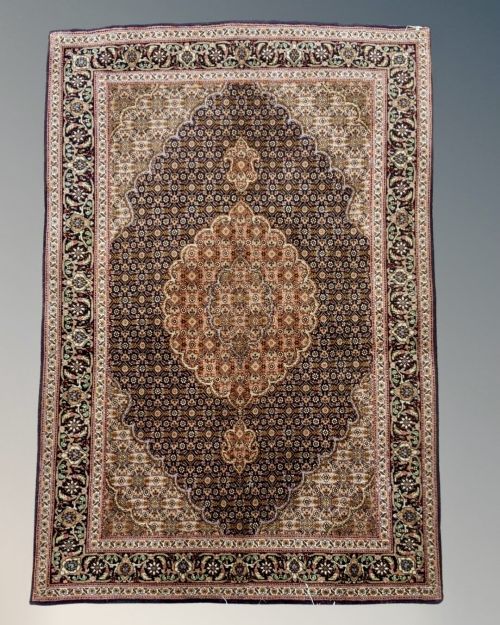
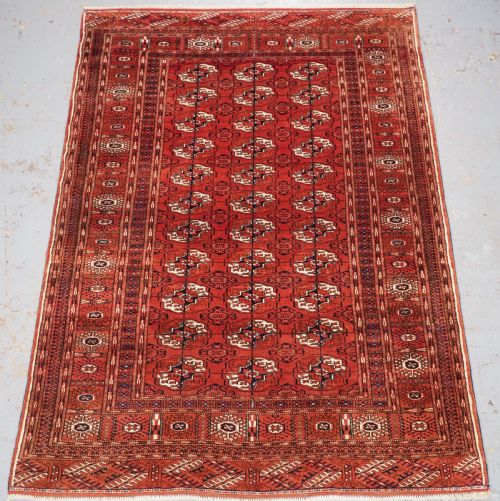
The most common versions on this page are Tekke Turkmen rugs, Isphahan pieces, and Baluch tribal weavings characterised by rich crimson and deep red colour palettes. These textiles display distinct regional motifs such as rams horn mihrabs, traditional geometric borders, and complex repeat patterns. They function as floor coverings or wall-hung tribal textiles that anchor a space with natural materials.
How they were made
These textiles are constructed using hand-spun wool and cotton foundations, often dyed with natural dyes that yield deep rich colours and soft glossy wool over decades of use. Village and tribal weavers knotted the wool by hand onto warps and wefts, producing dense pile carpets designed to withstand heavy wear. Some pieces incorporate structural elements of wood and brass where rugs are mounted or integrated into furniture such as club armchairs.
The weaving techniques vary from the tight knotting seen in Isphahan and Bidjar carpets to the resilient construction of Afghan village carpets and Yomut storage bags. Natural colour variation occurs across the surface due to the use of varied dye batches and hand-spun materials, which settle into deep crimson and dark red hues as the wool ages.
Some rugs doubled as tent doors, proving that nomads appreciated a stylish entryway just as much as Victorian homeowners.
What varies in quality
Quality in these rugs rests on the density of the knotting, the stability of the foundation, and the integrity of the wool pile. Finer urban workshops produced tightly woven pieces with precise geometric or floral layouts, while tribal weavers focused on durable structures using soft glossy wool.
The depth and saturation of the natural dyes distinguish the upper tier of pieces, where rich crimson and deep red tones retain their vibrancy. The preservation of the original borders and selvedges also separates standard examples from exceptional tribal main carpets and prayer rugs.
Howard And Sons
The Deep Red Rug Glossary
- Tekke Turkmen
- A weaving style originating from the Tekke tribe in Central Asia, frequently featuring gul motifs and deep crimson grounds.
- Mihrab
- A niche design element found in prayer rugs, often shaped like a dome or pointed arch representing a doorway.
- Chuval
- A large tribal storage bag made by Turkmen groups, featuring patterned face designs and plain-weave backs.
- Bidjar
- A Persian carpet type known as the iron rug of Khorasan due to its exceptionally dense and heavy foundation structure.
- Ensi
- A tribal wall-hanging or tent door hanging produced by Turkmen groups, marked by a cross-shaped panel design.
Deep Red Rug: Frequently Asked Questions
How do I identify a Turkmen rug?
Turkmen rugs often display repeating octagonal gul motifs set against a deep red or crimson ground. They are usually produced by specific tribal groups such as the Tekke, Yomut, or Ersari.
Look closely at the borders and the handling of the wool. Many examples feature soft glossy wool and dense geometric arrangements typical of Central Asian weaving.
How should I clean my rug?
Antique wool rugs require gentle care to preserve natural dyes and hand-spun pile. Vacuum with care, avoiding high-suction settings that can pull at older fibres.
For deeper cleaning, consult a specialist experienced in antique oriental carpets rather than attempting wet cleaning at home.
Can I place these rugs in high traffic areas?
Many tribal rugs and village carpets were constructed for daily practical use and hard-wearing conditions. Afghan and Baluch pieces often feature sturdy wool foundations suited to moderate foot traffic.
However, fragile nineteenth-century prayer rugs or fine antique runners benefit from placement in quieter zones to preserve their pile.