
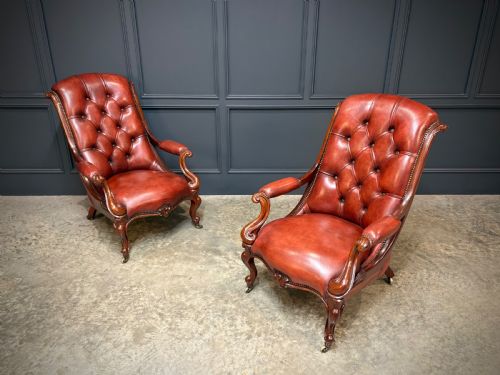


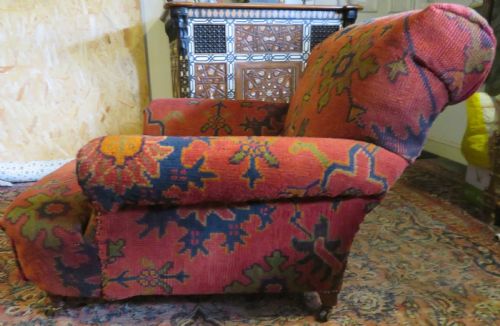


Deep Red Armchairs
Deep red armchairs bring rich colour and deep comfort to a room, ranging from library wingbacks to nineteenth-century buttoned library chairs.
Deep Red Armchairs
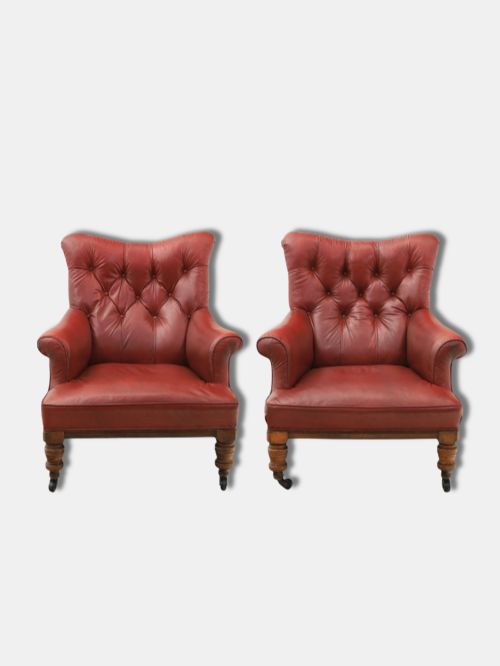
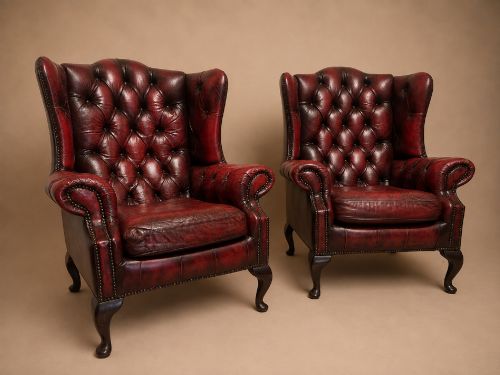
Deep red armchairs encompass robust library chairs, wingbacks, and desk chairs spanning the nineteenth century, the Victorian era, and the early twentieth century. When searching for deep red armchairs, buyers frequently encounter buttoned leather Chesterfields, mahogany-framed fireside seats, and upholstered club chairs.
The selection includes specific regional designs such as traditional British country house armchairs alongside George III and Queen Anne styles. Pieces range from grand salon chairs in burgundy leather to walnut-framed bergere easy chairs and mahogany captain's desk chairs.
How they were made
Frames rely on sturdy timbers such as mahogany, walnut, oak, and general wood construction, occasionally reinforced with iron elements. Joinery and carving support structural upholstery in fabric, wool, velvet, rexine, and leather.
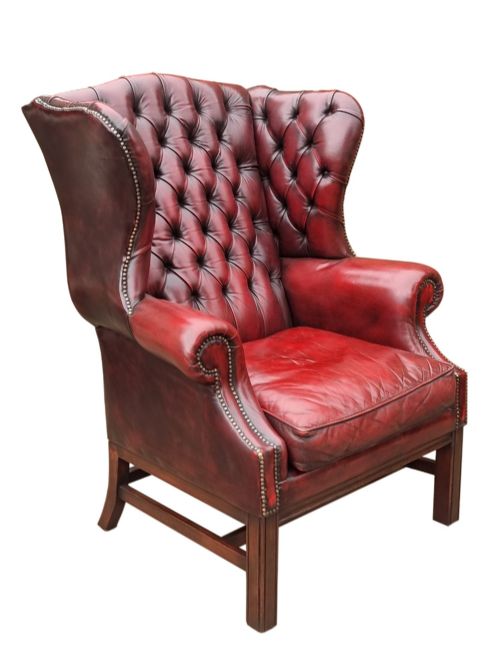
Surface treatments incorporate deep red, oxblood, and burgundy colourways on leather, alongside brass details such as castors and tacks. Traditional stuffing methods shape deep buttoned backs and sprung seats.
Chair forms on this page include library chairs, wingbacks, captain's desk chairs, and reclining armchairs with integrated writing slopes.
What varies in quality
Quality rests upon the integrity of the timber frame, whether walnut, mahogany, or oak, and the precision of traditional joinery. Maker attribution, particularly pieces bearing marks from established workshops like Howard and Sons or Gillows, distinguishes standard seating from premier examples.
The refinement of the upholstery materials, from supple oxblood leather to hand-woven kilim and carpet covers, elevates the execution. The depth of buttoning, the tautness of sprung edges, and the preservation of original castors or brass hardware define the standard of the piece.
Howard and Sons·Gillows
The Deep Red Armchairs Glossary
- Chesterfield armchair
- A deep-buttoned upholstered seat featuring arms of the same height as the back. This form is traditionally upholstered in leather or rexine.
- Bergere
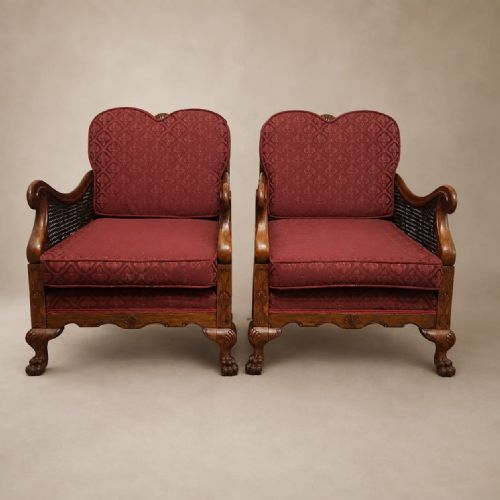
- An enclosed upholstered armchair with exposed wooden framing, often featuring cane work panels on the back and sides. Walnut and mahogany are typical frame timbers.
- Library chair
- A substantial armchair designed for reading rooms, frequently finished in dark leather with deep buttoning for prolonged comfort.
- Wingback
- An armchair featuring protective side panels or 'wings' designed to shield the sitter from draughts. These seats often stand on carved wooden legs with brass castors.
- Kilim
- A flat-woven carpet or rug material utilised for heavy upholstery on club armchairs. It provides a durable, textured textile finish.
Deep Red Armchairs: Frequently Asked Questions
What periods do these armchairs come from?
The listings span the nineteenth century, the Victorian period, William IV, Regency, and into the 1920s and 1930s. Styles range from George III style to Edwardian interpretations.
Each era brings distinct proportions and framing methods, with earlier pieces favouring solid mahogany and walnut while later twentieth-century examples introduce rexine and alternative textiles.
What materials are used for the upholstery?
Upholstery materials include traditional leather, oxblood rexine, burgundy leather, velvet, and wool. Certain club armchairs feature distinctive fabric coverings such as Ushak turkey carpets and kilim.
Underneath these coverings, traditional stuffing and springing provide support, while brass tacks frequently secure the edges.
Are these chairs suitable for a desk?
Certain forms within the selection function well at a desk, notably mahogany captain's desk chairs and nineteenth-century desk chairs. These offer supportive seating positions combined with appropriate arm heights.
Other larger wingbacks and library chairs are proportioned for fireside or reading room placement rather than writing desks.
How do I identify a Victorian button back chair?
Victorian button back chairs typically feature deep tufting secured with fabric or leather buttons across the backrest. They often utilise walnut or mahogany frames, sometimes paired with iron internal structures.
Turning on the wood and the presence of brass castors help place these pieces firmly within the nineteenth-century aesthetic.