




Decorative Wooden Tea Box
A decorative wooden tea box is a small, finely crafted chest designed to hold dried leaves safely away from damp and light.

Decorative Wooden Tea Box
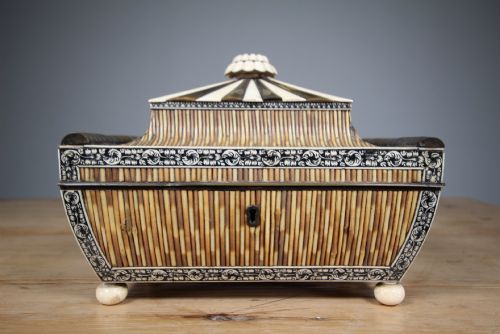
A decorative wooden tea box is typically encountered as a tea caddy or fitted box originating from the Georgian, Regency, or Victorian eras. These containers were essential household furnishings when tea was an expensive commodity requiring secure storage under lock and key.
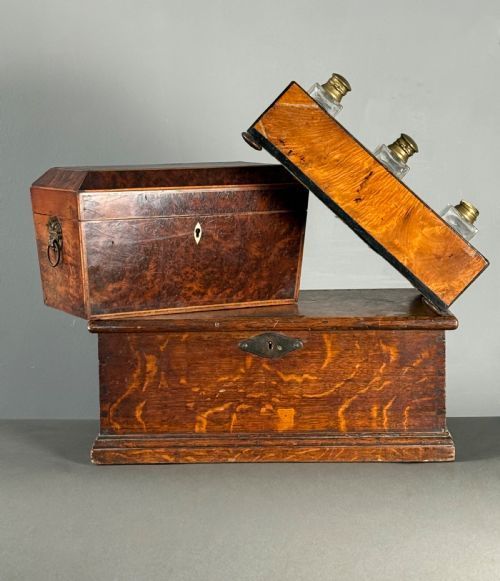
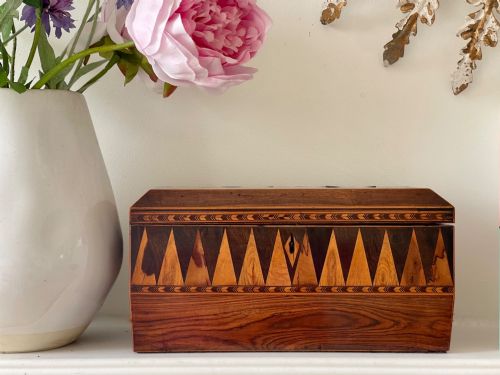
The pieces on this page appear in various timber forms, ranging from modest walnut and mahogany structures to elaborate sarcophagus shapes and inlaid specimens. Many retain interior compartments, mixing bowls, or metal canisters intended for storing different grades of leaf.
Beyond standard tea caddies, the selection includes related wooden receptacles such as keepsake boxes, sewing boxes, and decanter boxes sharing similar period construction methods. The prevailing styles encompass straightforward Georgian joinery, ornate Regency brass inlay, and later Victorian veneered finishes.
Materials and construction methods
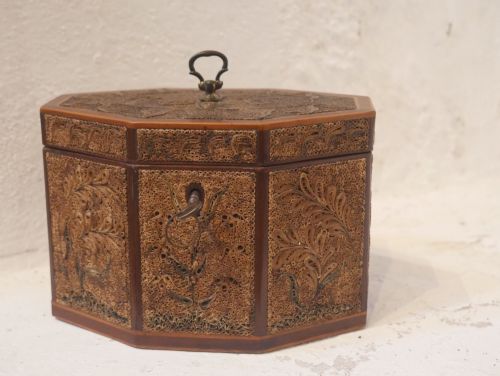
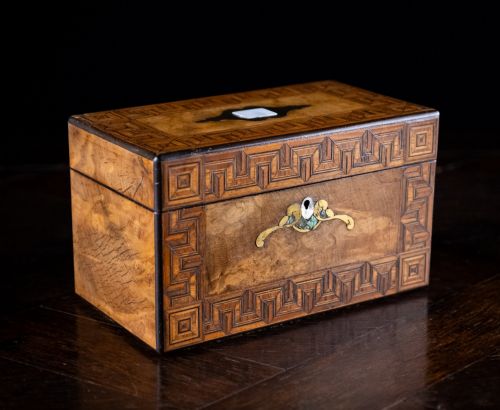
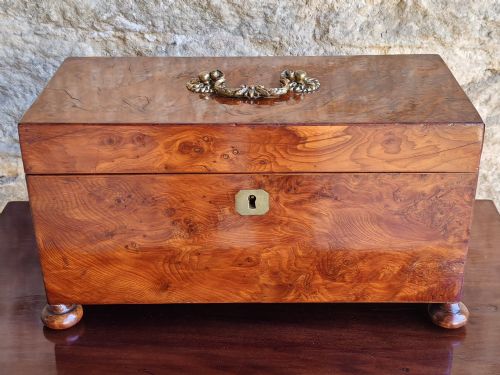
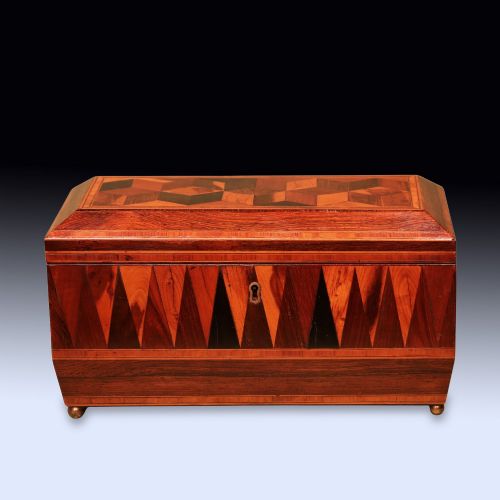
Cabinet makers built these boxes using a foundation of dense timbers like mahogany, walnut, or oak, frequently applying decorative veneers such as rosewood, satinwood, amboyna, or burr yew across the exterior surfaces. Boxwood and brass stringing often outlined the edges, while hinges, escutcheons, and handles provided functional metal accents.
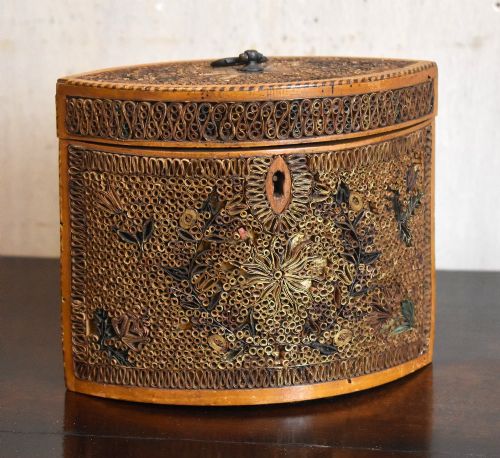
Surface decoration frequently involved intricate parquetry, marquetry, or paper filigree work, alongside contrasting details formed from bone, mother-of-pearl, or tortoise shell. Interiors were lined with papers, fabrics, or fitted wooden compartments designed to hold specific tea containers securely.
Some nineteenth-century makers cleverly concealed secret drawers inside tea boxes to hide extra tea keys and personal love notes.
Distinctions in quality and execution
Quality in a decorative wooden tea box rests upon the precision of the cabinet work, the choice of timber figures, and the integrity of the surface veneers. Pieces utilising highly figured burr woods, complex marquetry, or meticulous brass inlay demand greater skill from the maker and usually display a more refined silhouette.
The degree of original interior fitting further separates standard examples from superior ones. Boxes retaining their original glass mixing bowls, mixing sticks, or matching interior canisters demonstrate higher completeness and original craftsmanship.
Tahan of Paris·Chippendale
The Decorative Wooden Tea Box Glossary
- Tea caddy
- A box or container specifically made for storing tea leaves. The term derives from catty, a Chinese unit of weight.
- Marquetry
- The art of applying pieces of veneer to a structure to form decorative patterns or pictures. Craftsmen selected different coloured woods to achieve tonal contrast.
- Sarcophagus
- A box shape featuring a sloping lid and a pedestal base, popular during the Regency period. This architectural form lent a monumental presence to small tabletop objects.
- Parquetry
- Geometric mosaic woodwork arranged in regular patterns like cubes or herringbone. It differs from marquetry by relying on repeating angular shapes rather than pictorial designs.
- Escutcheon
- A flat plate surrounding a keyhole designed to protect the surrounding wood from wear. These fittings were frequently cast in brass and chased with decorative details.
Decorative Wooden Tea Box: Frequently Asked Questions
What was inside a decorative wooden tea box?
These boxes typically contained interior compartments for black and green teas, alongside a central well for a glass mixing bowl.
Owners used the bowl to blend different leaves together before brewing, keeping the dry stock secure under a locked lid.
How do I date an antique tea caddy?
Dating relies on observing the timber choices, hardware styles, and overall silhouette relative to known historical periods.
Georgian examples often display clean mahogany lines, whilst Regency boxes frequently feature brass inlay and sarcophagus profiles.
Are all these boxes intended for tea?
While the majority served the tea trade, the category also encompasses general keepsake boxes, sewing boxes, and decanter cases.
Makers employed similar decorative techniques across these various tabletop receptacles during the eighteenth and nineteenth centuries.
How should I clean a wooden tea box?
Maintenance requires gentle dusting with a dry cloth and avoiding modern liquid polishes that can damage fragile period veneers.
Preserving the original wax finish protects the underlying timber grain and maintains the historical patina.