




Decorative Urn Garniture
Decorative urn garniture sets bring symmetry and classical elegance to mantelpieces, combining sculpted metal and ceramic bodies.
Decorative Urn Garniture
A decorative urn garniture typically comprises a central mantel clock accompanied by matching side vases or urns, designed to create a balanced display on a fireplace or sideboard. These arrangements frequently emerge from nineteenth-century French and continental workshops, reflecting enduring classical tastes.
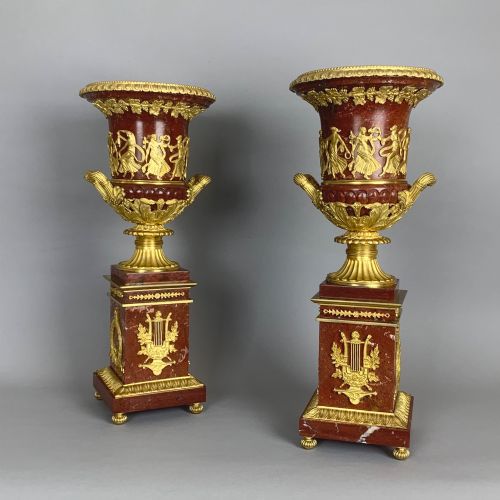
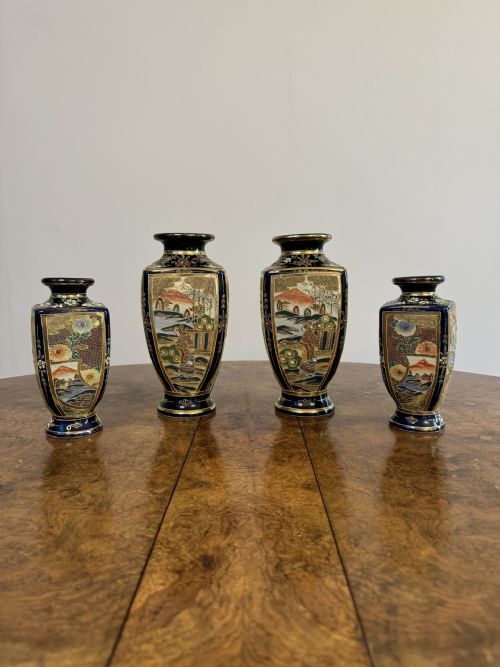
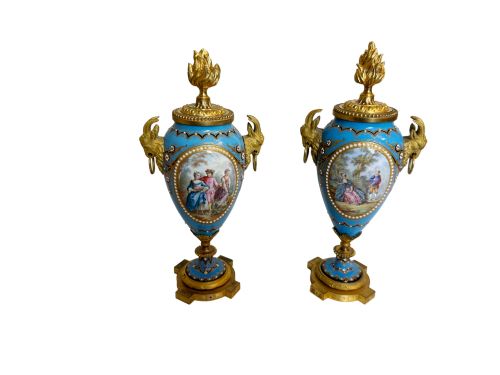
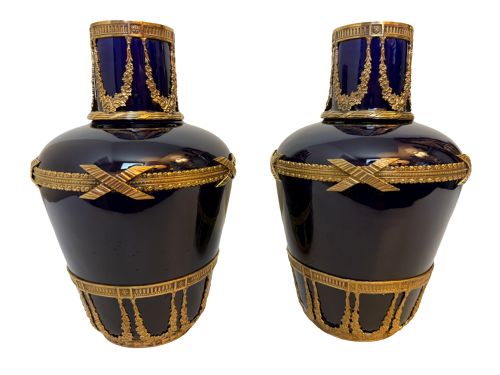
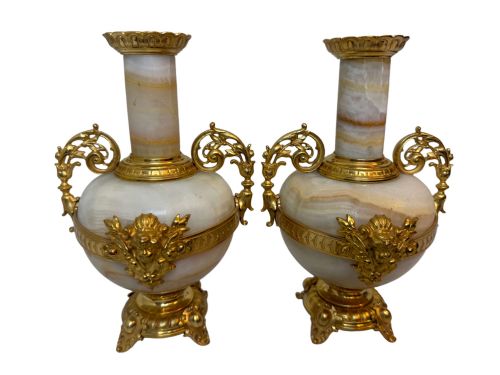
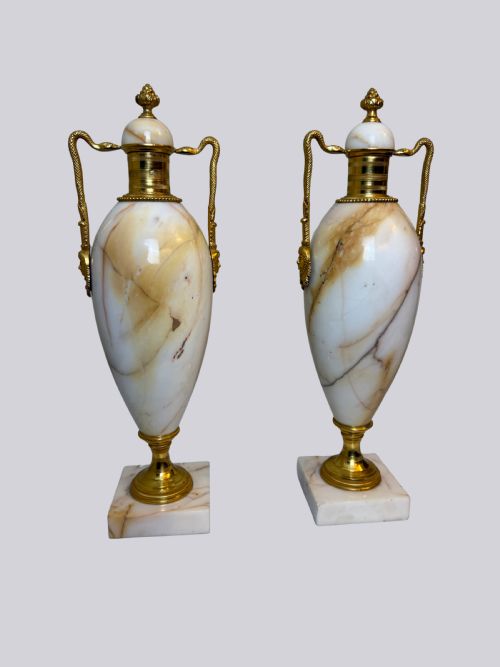
Buyers encounter matched pairs of urns and cassolettes far more often than complete clock sets. These standalone pieces utilise marble, porcelain, and ormolu mounts to achieve the decorative symmetry demanded by period interiors.
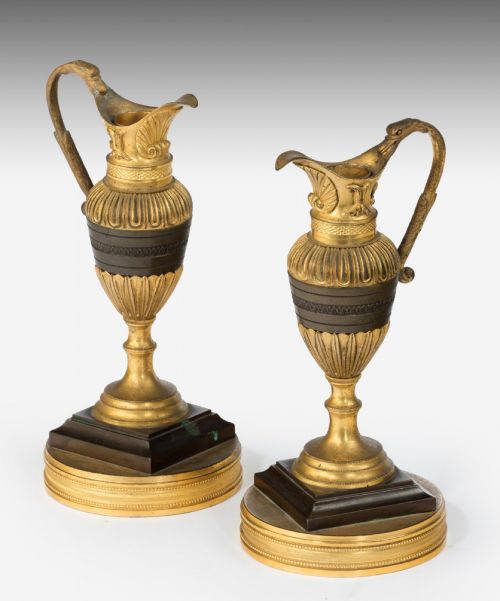
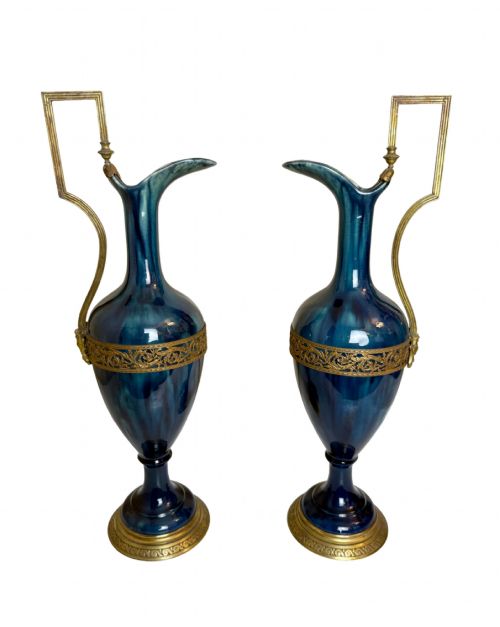
The objects span varied forms including amphorae, lidded vases, and ewers shaped by Neoclassical, Louis XVI, and Rococo Revival influences. Such variations demonstrate how nineteenth-century makers reinterpreted older classical vocabularies for contemporary domestic settings.
Materials and construction methods
Makers combined cast bronze, brass, and ormolu mounts with natural stones like white marble, porphyry, and white onyx. Metal components were cast, chased, and gilded with gold leaf to produce sharp relief against polished stone bases.
Ceramic bodies utilise porcelain, often painted in bleu celeste or decorated with enamel work, frequently paired with gilt bronze trim. Glass and toleware also appear as primary bodies, demonstrating the diverse material palette employed by period artisans.
White marble and gilt bronze dominate the listed mineral and metal combinations across the nineteenth-century selections.
Evaluating craftsmanship and detail
Quality rests in the crispness of the bronze chasing and the precision with which ormolu mounts fit the ceramic or marble bodies. Superior pieces exhibit deeply chiselled foliage and secure, well-fitted mounts rather than loose attachments.
The selection of materials dictates the standing of a piece, with fine white marble, rich porphyry, and hand-painted porcelain indicating ambitious production. Subtleties in enamel work and the weight of the cast metal distinguish standard decorative items from exceptional examples.
Sevres·KPM Berlin·Royal Vienna
The Decorative Urn Garniture Glossary
- Garniture
- A set of matching decorative objects designed to be displayed together, commonly consisting of a clock flanked by two vases or urns.
- Cassolette
- A dual-purpose decorative vessel featuring a reversible lid that transforms from a closed urn into a burner or open vase.
- Ormolu
- Finely ground high-carat gold applied to a bronze base using a mercury amalgamation technique, yielding a rich golden finish.
- Bleu Celeste
- A vivid light blue porcelain glaze popularised by French factories during the eighteenth and nineteenth centuries.
- Toleware
- Lacquered or enamelled sheet metal painted with decorative motifs, often shaped into floral arrangements or containers.
Decorative Urn Garniture: Frequently Asked Questions
What is a decorative urn garniture?
A decorative urn garniture is a coordinated set of ornamental vessels, sometimes including a mantel clock, designed for symmetrical placement on a shelf or fireplace.
These ensembles establish visual balance within a room by repeating forms and materials across two or three matching pieces.
How were garnitures displayed?
Garnitures were typically arranged on mantelpieces above fireplaces, with the central clock or taller urn flanked by smaller matching vases.
This tripartite arrangement reflected formal interior design principles that favoured symmetry and classical proportions.
What materials are common?
Common materials include gilt bronze, ormolu, porcelain, marble, onyx, and enamel, often combined within a single set.
Metal mounts secure ceramic or stone bodies, adding decorative contrast through chased surface details.
How do I identify periods?
Period identification relies on stylistic cues such as Neoclassical motifs, Louis XVI proportions, or Rococo Revival asymmetry, alongside material traits.
Nineteenth-century pieces frequently emulate earlier French court styles using industrial manufacturing methods of the era.