




Rococo Clock Set
A rococo clock set brings animated 19th-century French metalwork and porcelain into a room with striking asymmetrical flair.
Rococo Clock Set
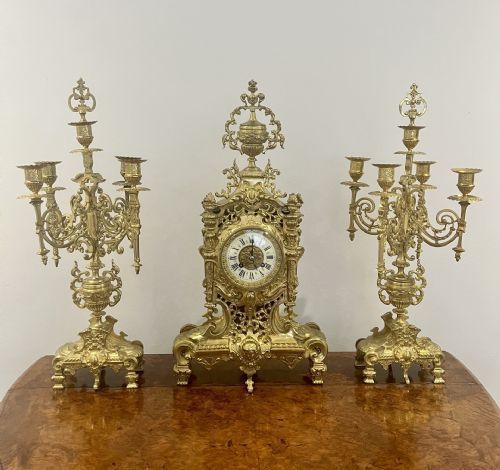
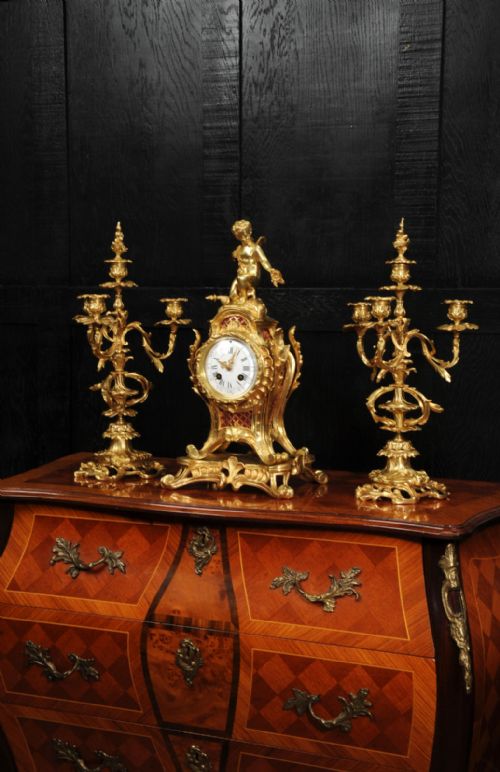
When you search for a rococo clock set, you find a centrepiece clock flanked by matching candelabras or urns, forming a complete garniture. These pieces trace back to 19th-century French workshops embracing Louis XV revival styles and exuberant natural motifs.
The versions most common on this page are mantel clocks paired with matching side pieces, fashioned in gilt bronze, ormolu, brass, and painted porcelain. They range from small boudoir setups to large, elaborate assemblies featuring cherubs, dolphins, and floral scrolls.
Makers and houses such as Japy Freres, A. D. Mougin, and Vincenti of Paris frequently signed the movements and housings behind these sculptural forms. Collectors encounter these assemblages grouped under descriptions of French rococo revival and Sevres style.
What varies in quality
The depth and crispness of the hand-chasing on the bronze or ormolu dictate the visual merit of the set, separating sharp, sculptural castings from softer, shallower impressions. Superior pieces display intricate undercutting and fully articulated figures rather than generalized mass-produced ornamentation.
The integration of the materials also drives distinction, where porcelain panels painted with delicate figures or floral reserves align seamlessly with the surrounding metal mountings. Furthermore, signed movements by established Parisian makers elevate the standing of the entire ensemble.
Listings feature pieces from the 19th century incorporating gilt bronze, ormolu, porcelain, and enamel.
Louis Japy·Japy Freres·Verger Freres of Paris·Emile Colin·Samuel Marti·A D Mougin·Vincenti of Paris·Louis Boname
The Rococo Clock Set Glossary
- Ormolu
- Gilded bronze produced by applying a mercury and gold amalgam to a bronze base and firing it in a kiln. This technique creates a rich, durable golden finish found on premium 19th-century French metalwork.
- Clock Garniture
- A matching set consisting of a central clock and two side pieces, such as candelabras or urns. These groups were designed to sit harmoniously on a mantelpiece or sideboard.
- Chasing
- The manual process of refining a metal casting with small punches and hammers to sharpen details and textures. Skilled chasing brings out the fine points of leaves and scrolls on rococo frames.
- Sevres Style
- Decorative porcelain ornamentation mimicking the soft paste wares and distinctive painted blue grounds of the royal French manufactory. Pieces often feature hand-painted pastoral scenes surrounded by gilded borders.
- Louis XV Revival
- A 19th-century design movement resurrecting the asymmetrical curves, natural shell motifs, and scrolling foliage of the 18th-century French court. It forms the primary aesthetic foundation for these clock assemblies.
Rococo Clock Set: Frequently Asked Questions
How do I identify the period?
Most pieces originate from the 19th century, reflecting the widespread Victorian and French revival movements of that era. Examining the style of the cast brass, the form of the dial, and any maker stamps on the movement helps confirm the date.
Signatures from known Parisian bronze-makers or clockmakers point directly to mid-to-late 19th-century production workshops.
Where should I place a garniture?
These sets are traditionally displayed on a mantelpiece above a fireplace, where the central clock and flanking candelabras create a balanced focal point. They also suit large sideboards, credenzas, or console tables in principal rooms.
Ensure the surface is stable and level, as the combined weight of the bronze and porcelain components is often substantial.
How do porcelain and metal combine?
Porcelain plaques and dial faces are integrated directly into the metal chassis, often held by ormolu bezels or pinned brackets. Painted panels adorn the front and sides of the clock body and the accompanying urns.
This combination pairs the warmth of hand-painted ceramics with the ornate, sculptural weight of gilded bronze mounts.