
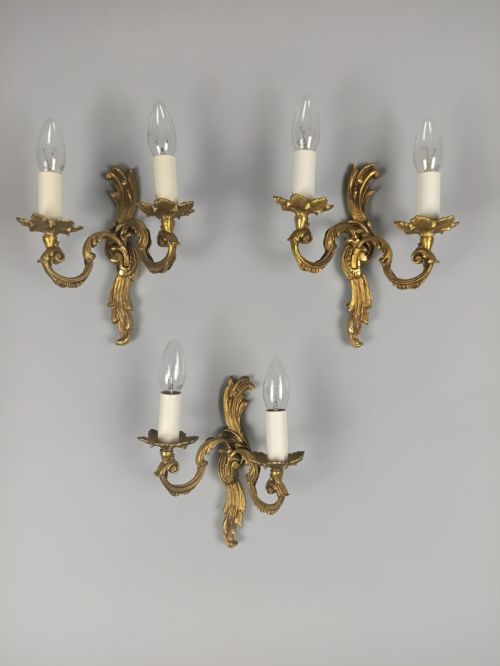


Decorative Twin Arm Sconce
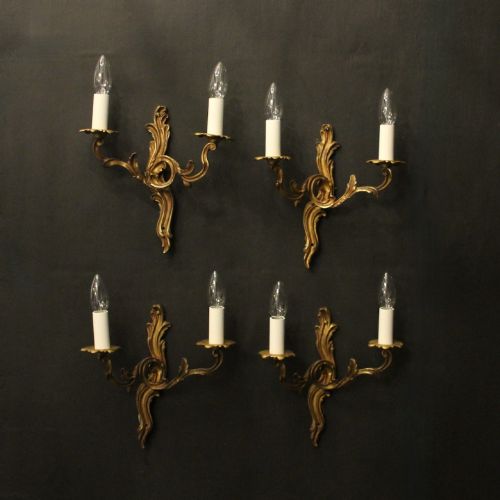
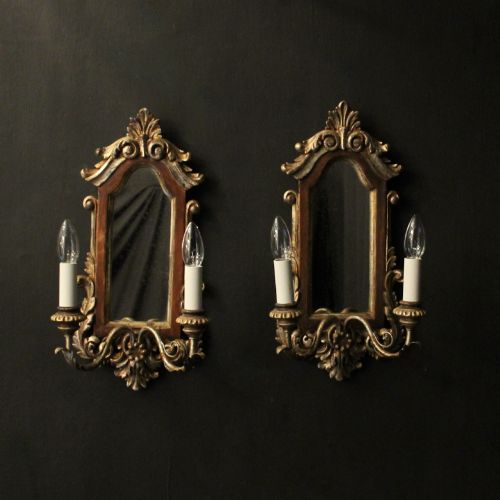
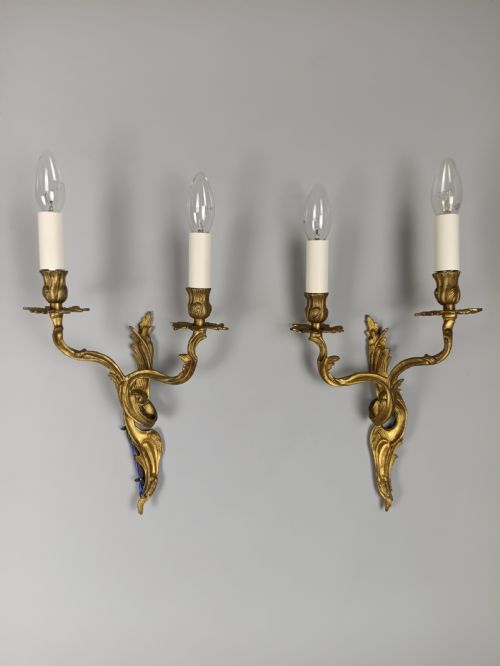
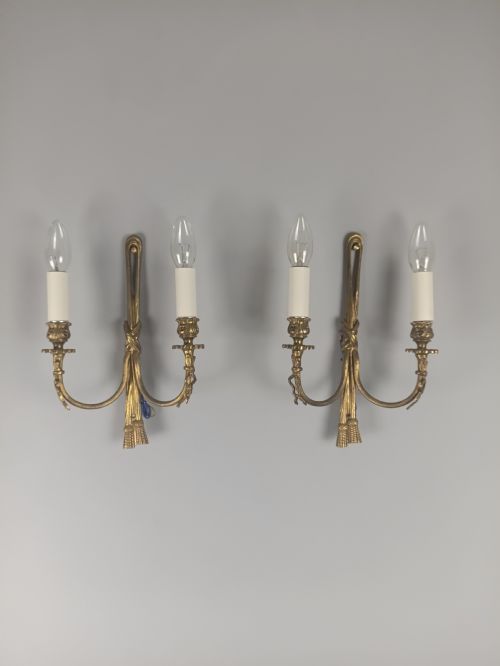
These decorative twin arm sconce pieces bring paired candle branches and rich gilt surfaces to your walls.
Decorative Twin Arm Sconce
A decorative twin arm sconce is a wall-mounted lighting fixture designed to hold two candles or bulbs, branching out to project light across a room. When you search for this phrase, you find wall lights, girandoles and wall sconces spanning the nineteenth century up through the nineteen-thirties.
The pieces on this page lean heavily towards French origins, with notable Italian examples appearing alongside them. You will frequently encounter pairs and larger sets rather than isolated single fixtures.
Stylistically, French Rococo, Louis XVI and Adam Revival forms dominate the selection. These designs utilise scrolling foliage, ribbon motifs and symmetrical branches to frame the twin arms.
How they were made
Makers shaped these fixtures using cast metals including brass, bronze, ormolu and gilt metal, alongside carved wood and gesso for wooden girandoles. The structural metal or timber forms provided a sturdy armature for the twin branches.
Surfaces received rich treatments of gilding, using gold leaf or gilt finishes to catch the candlelight, while polychrome finishes introduced painted colour to wooden and metal designs alike.
Keep an eye out for fierce feline expressions, as heavy nineteenth-century lion heads guard the base of certain wall lights.
What varies in quality
Quality rests in the crispness of the casting and the depth of the hand-carved detail in the wood or gesso. Finer pieces display sharp definition in acanthus leaves, ribbons and figural elements like lion heads, whereas simpler work appears soft and uniform.
The application of the gilt surface also separates tiers of production, with superior examples showing layered depth and burnished highlights against matte areas. Heavier gauge metals and robust construction of the twin arms distinguish the more substantial works from lighter, commercial outputs.
The Decorative Twin Arm Sconce Glossary
- Sconces
- Wall-mounted light fixtures designed to project illumination from a vertical surface. They often feature multiple candle arms.
- Girandoles
- Decorative wall mirrors fitted with candle branches, or ornate wall sconces with reflective backplates. The mirrored or gilt surfaces amplify the flickering light.
- Ormolu
- Finely chased and gilt bronze ornament applied to furniture and lighting. The technique involves creating a mercury amalgam with gold.
- Gesso
- A plaster-like mixture applied to wood surfaces as a base for gilding and painting. It allows craftsmen to carve intricate relief details before applying gold leaf.
Decorative Twin Arm Sconce: Frequently Asked Questions
How were sconces used historically?
These fixtures were mounted on walls in pairs or larger sets to illuminate rooms by candlelight. Their reflective gilt surfaces and mirrors helped to multiply the available light.
Over time, many of these pieces have been adapted for electricity while retaining their original decorative branches and wall plates.
How do I hang a heavy sconce?
Due to the weight of cast metals and carved wood, these fixtures require secure attachment to wall studs or appropriate wall anchors. Proper support ensures the bracket bears the load safely without pulling away from the plaster.
Professional installation is recommended, particularly for heavier nineteenth-century examples incorporating bronze or dense timber.
What periods do these pieces span?
The selection encompasses nineteenth-century works alongside early twentieth-century pieces dating from nineteen hundred up to the nineteen-thirties.
Stylistic revivals such as French Rococo and Adam Revival heavily influence the appearance of these later twentieth-century interpretations.
Are these fixtures wired for electricity?
Many examples on this marketplace have been converted for modern electrical wiring to function as functional wall lights. The conversion process preserves the outward appearance of the twin candle arms.
Buyers should inspect the individual listing details to confirm the current wiring status and compatibility with modern wall fittings.