



Decorative Tribal Woven Textile
These decorative tribal woven textile pieces are authentic nomadic weavings and wall hangings that bring rich texture and heritage into modern interiors.
Decorative Tribal Woven Textile
A decorative tribal woven textile represents the utilitarian art of nomadic and village cultures, created for daily life in tents and settlements. When exploring this selection, buyers encounter functional items repurposed as wall hangings and collector pieces, spanning from the mid-nineteenth century to the early twentieth century.
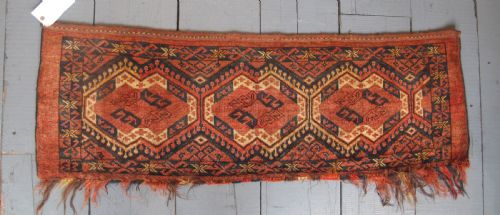
The inventory showcases specific regional forms including Turkmen torbas, storage bagfaces, tent bands, and bread sofrehs originating from Central Asia, Persia, and Afghanistan. These items reflect the distinct cultural identities and weaving traditions of groups such as the Tekke, Yomut, Ersari, Timuri, and Shahsavan.
Most examples take the form of compact bag faces, runners, and fragments rather than full-sized carpets, making them highly adaptable for domestic display. Each decorative tribal woven textile carries the visual language of its maker through traditional geometric patterns and banded designs.
How they were made
The construction relies primarily on hand-spun wool and cotton, occasionally enhanced with goat hair for structural durability and glass beads for ornamentation. Weavers utilised natural dyes to achieve deep, lasting colour palettes that mellow gracefully over time.
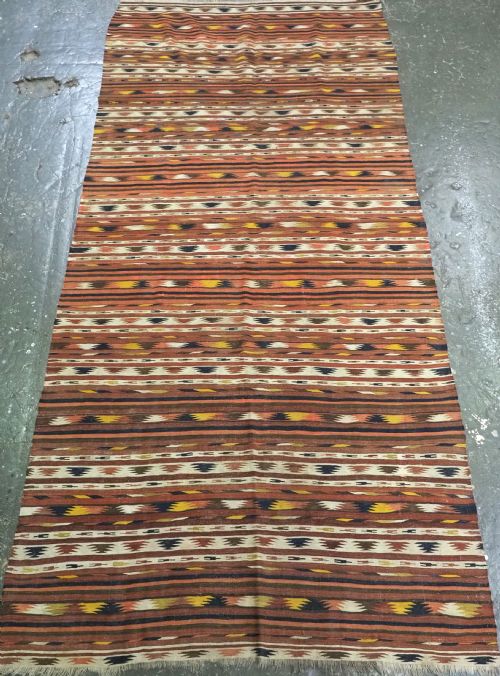
Techniques range from fine pile weaving to flat-woven kilim structures and patterned tent bands known as tegerich. The density of the weave varies according to the specific tribal tradition and the intended domestic function of the textile.
Decorative Tribal Woven Textile Retail Price Guide 2026
Typical asking prices for decorative tribal woven textile among the pieces listed under this phrase on Sellingantiques today, from the lower quarter to the upper quarter. They describe what is for sale here now, not the wider market.
Nomadic weavers frequently added glass beads to their storage bags to ward off the evil eye.
What varies in quality
Quality rests upon the tightness and precision of the weave, particularly visible in finer pieces with intricate motifs like the curled leaf design. The vibrancy and stability of the natural dyes also distinguish superior examples from standard work.
The completeness of the piece, the presence of original backs or borders, and the crispness of the tribal geometry elevate the overall merit of the textile.
The Decorative Tribal Woven Textile Glossary
- Torba
- A small Turkmen storage bag face traditionally used inside a yurt for household possessions. These pieces are frequently displayed today as decorative wall hangings.
- Sofreh
- A spreading cloth used for kneading bread or sharing meals in Persian and nomadic households. They often feature minimalist field designs distinct from pile rugs.
- Kapunuk
- A decorative doorway hanging placed around the entrance of a nomadic tent. They typically display a specific three-sided shape designed to frame the opening.
- Kilim
- A flat-woven textile produced without a pile by tightly interweaving warp and weft strands. This technique creates a lightweight, reversible fabric with sharp geometric patterns.
- Tegerich
- A long, narrow tent band woven by Kyrgyz nomads for structural and decorative use within a dwelling. Surviving fragments demonstrate complex supplementary weft-float patterns.
Decorative Tribal Woven Textile: Frequently Asked Questions
How were these bags used originally?
Nomadic communities used these woven pieces as practical storage containers for salt, bread, and household goods inside tents.
Over generations, the surviving bag faces and hangings transitioned into decorative items appreciated for their tribal artistry.
How do I hang a textile on the wall?
Collectors typically mount textiles using a concealed fabric sleeve stitched to the reverse, supported by a thin wooden dowel or metal rod.
This method distributes the weight evenly across the upper edge without piercing the antique fabric with clips or nails.
How do I identify a Turkmen weaving?
Turkmen weavings are characterised by deep madder red grounds, dense geometric layouts, and repeating guls or secondary motifs.
Pieces like torbas and chuvals often feature precise subsidiary borders and extremely fine knotting.
Are these textiles made with natural dyes?
The traditional pieces from this period were dyed using locally sourced plant and insect materials such as madder and indigo.
These natural colourants produce rich, nuanced tones that interact harmoniously as the wool ages.