




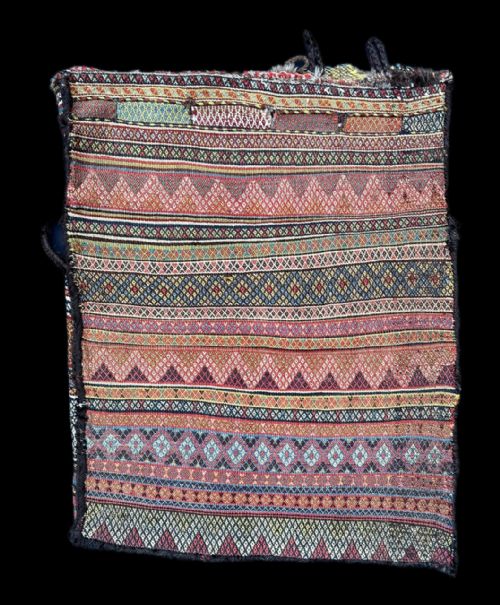

Flatweave Tribal Storage Bag
A flatweave tribal storage bag brings nomadic craftsmanship into the home through geometric patterns and durable wool construction.
Flatweave Tribal Storage Bag
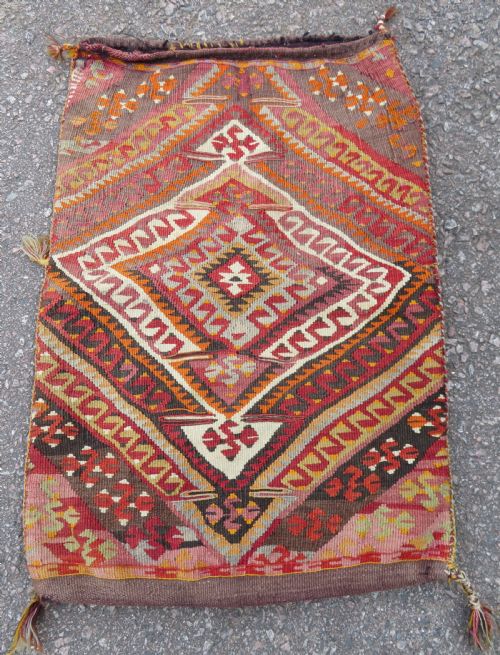
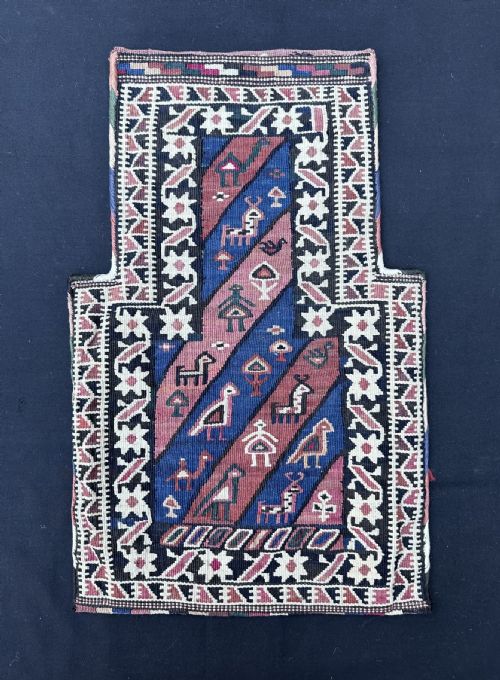
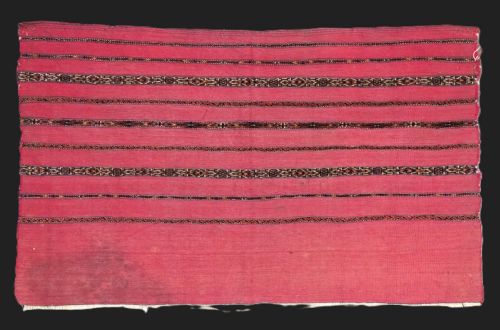
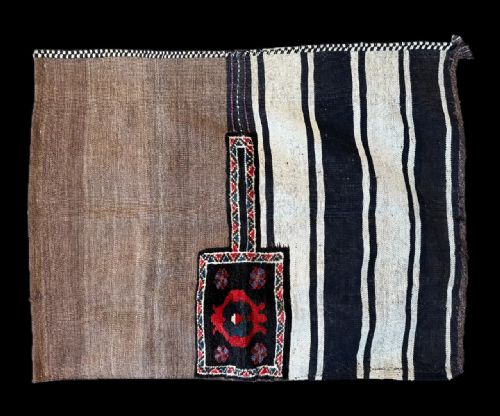
A flatweave tribal storage bag represents the utilitarian textile output of nomadic and village weavers across Persia, Central Asia, and the Caucasus. When searching for a flatweave tribal storage bag, collectors encounter various regional forms including salt bags, wheat sacks, and face pieces from chuval or mafrash containers.
The pieces available originate from distinct tribal groups such as the Tekke and Yomut Turkmen, Lori-Bakhtiari nomads, Shahsavan, Kordi, and Jaf Kurd weavers. These textiles served practical functions for carrying salt, wheat, and household belongings during seasonal migrations before entering the decorative market.
Dating primarily from the mid-nineteenth century through the early twentieth century, these storage bags display the specific weave structures and tribal iconography characteristic of their respective regions. Complete examples often retain their original plain weave backs alongside patterned front panels.
What varies in quality
Quality rests in the fineness of the weave and the clarity of the natural dye palette. Tighter knotting or more precise flatweave execution separates standard utility pieces from exceptional tribal examples.
The preservation of the original back panel and structural completeness determines the integrity of the textile. Pieces retaining their full construction demonstrate superior survival through decades of nomadic use.
Flatweave Tribal Storage Bag Retail Price Guide 2026
Typical asking prices for flatweave tribal storage bag among the pieces listed under this phrase on Sellingantiques today, from the lower quarter to the upper quarter. They describe what is for sale here now, not the wider market.
Listings feature pieces spanning from the mid-nineteenth century to the early twentieth century, utilising hand-spun wool and natural dyes across Persian and Central Asian tribal traditions.
The Flatweave Tribal Storage Bag Glossary
- Chuval
- A large Turkmen storage bag traditionally used for household goods and bedding. These pieces often feature gul motifs arranged in structured rows.
- Mafrash
- A rectangular storage bag or trapan side panel used in sets for camel or horse transport during migrations. They frequently display banded flatweave designs.
- Tacheh
- A Persian nomadic wheat sack or storage container associated with Lori-Bakhtiari weavers. These textiles combine practical utility with bold geometric ornamentation.
- Kizil
- A term denoting red ground colouration, frequently applied to specific Turkmen chuval types. The rich red tones derive from natural dye sources.
- Plain weave
- A simple interlace construction forming the back panels of many tribal bags. This unpatterned structure provides stability and support to the heavier decorative face.
Flatweave Tribal Storage Bag: Frequently Asked Questions
How were these storage bags used?
Nomadic families utilised these bags during seasonal migrations to pack clothing, bedding, and food provisions on pack animals. Specific forms served as salt bags or wheat sacks.
Inside the tent, they functioned as organised storage containers that kept contents protected from dust and dampness while displaying tribal status.
How do I identify the tribe?
Tribal attribution relies on the specific structural design, colour palette, and motif vocabulary present in the weave. Turkmen pieces often show guls, while Persian nomadic bags display regional geometric fields.
Examining the borders and auxiliary patterns reveals the working conventions of specific groups like the Yomut, Shahsavan, or Jaf Kurd.
How should I display a storage bag?
Complete bags with original backs can be placed on benches or used flat as decorative floor accents in low-traffic areas. Fragmentary faces are frequently mounted and framed for wall display.
Protecting the textiles from direct sunlight preserves the natural dyes and prevents the hand-spun wool from degrading over time.