



Decorative Timber Salvage
Decorative timber salvage brings historic woodwork and architectural fragments into modern interiors, offering authentic patina and hand-carved detail.
Decorative Timber Salvage
Decorative timber salvage encompasses architectural fragments, carved panels, doors, and columns spanning from the sixteenth century through the twentieth century. When searching for decorative timber salvage, buyers encounter elements originating from domestic buildings, chapels, and fairgrounds, executed in styles ranging from Georgian and Victorian to Renaissance Revival and Qing Dynasty.
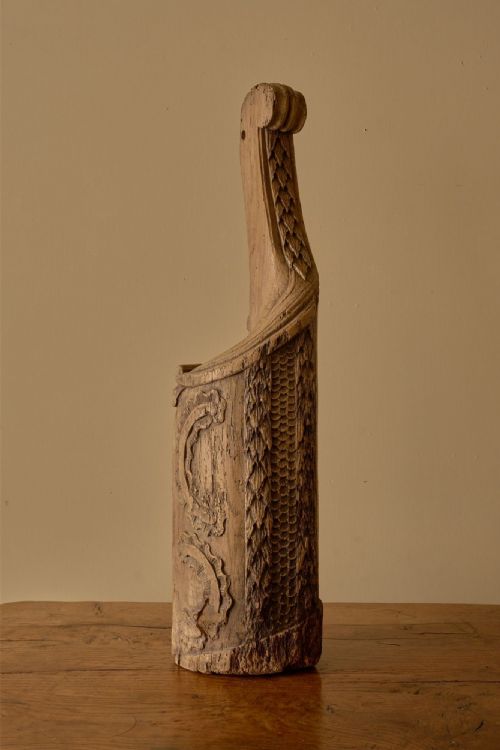
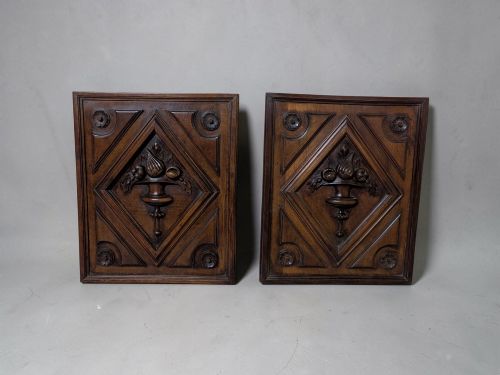
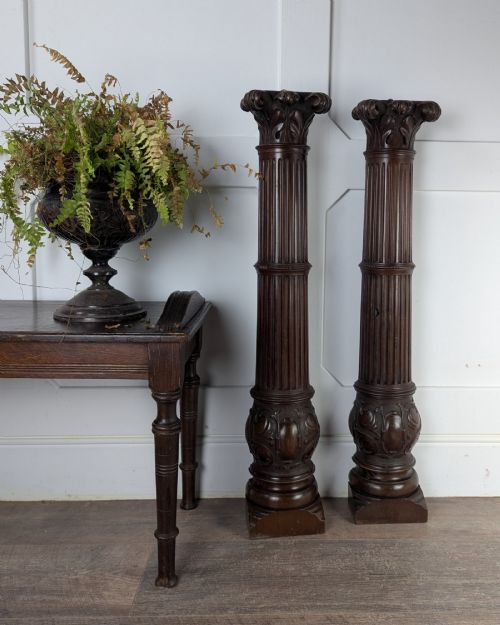
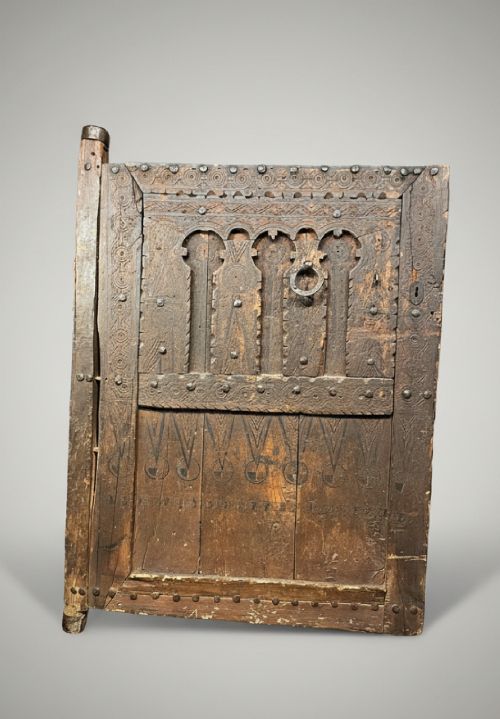
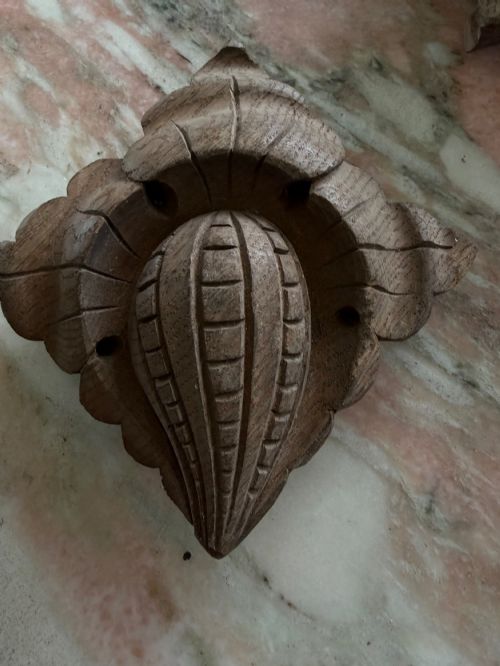
The pieces on this page lean heavily towards structural and decorative remnants, including oak ceiling bosses, pine corbels, mahogany half columns, and painted cart doors. These items transition from original architectural settings to wall art and interior focal points, retaining the marks of their working history.
Materials and construction methods
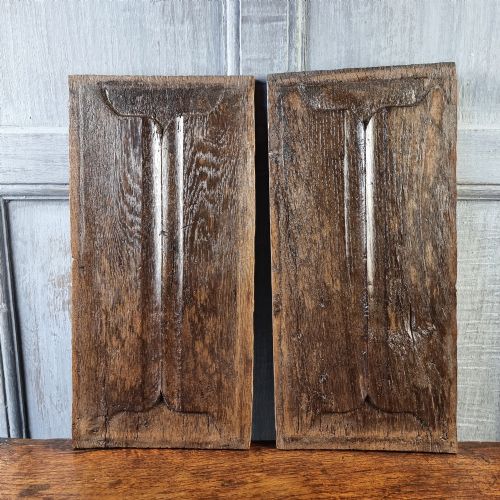
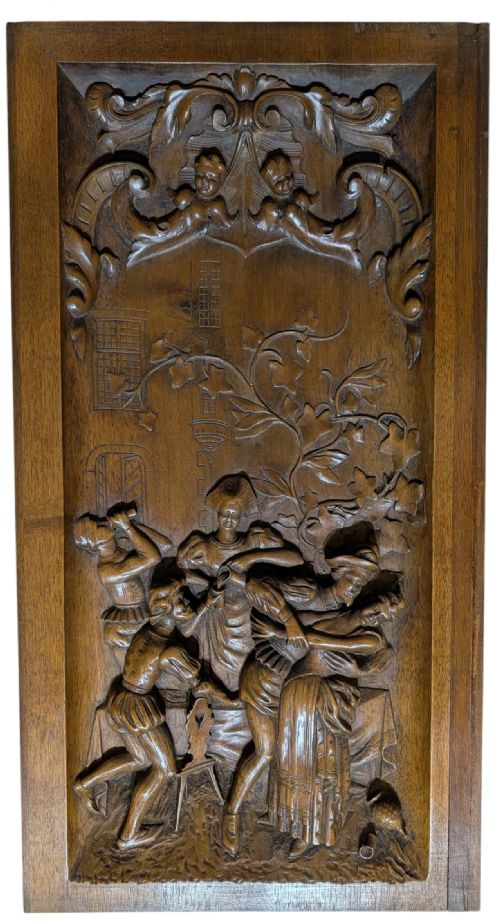
The physical evidence demonstrates a reliance on sturdy hardwoods such as oak and mahogany, alongside softer timbers like pine and general softwood. Carpenters and joiners utilised traditional hand-carving techniques to produce linenfold patterns, Corinthian capitals, and parchemin panels, often joining sections with pegged or dowelled joints.
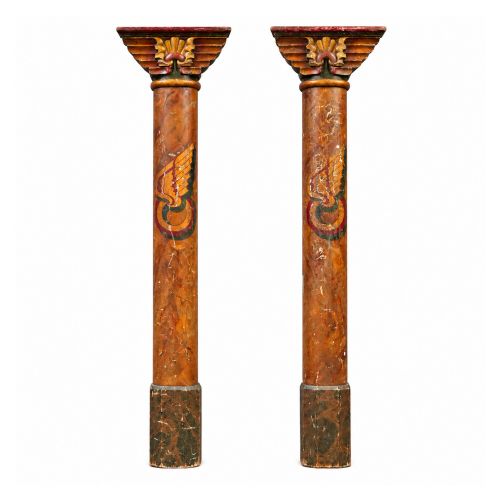
Surface finishes vary from bare wood retaining natural grain to remnants of historic paint, gesso, and hand-painted decoration. Ironwork hardware, wrought iron strapwork, and stone bases frequently accompany the timber components, showing the integration of multiple materials in architectural salvage.
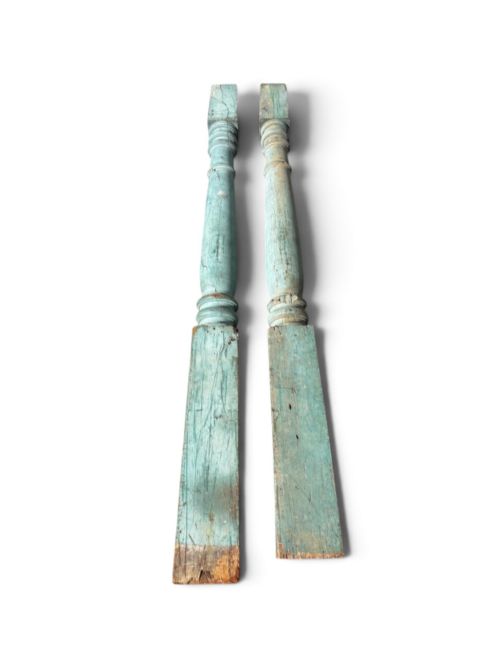
Some columns once watched over early twentieth-century fairground crowds before finding a second life indoors.
Assessing quality in historic woodwork
Quality rests in the depth, crispness, and artistic ambition of the hand-carving, distinguishing master workshops from standard architectural production. Pieces with intact original surfaces, such as early paint or unstripped patinated oak, command higher regard than those stripped bare in later decades.
The structural integrity of the timber, the complexity of forms like Corinthian capitals or linenfold panels, and the survival of matching pairs dictate the standing of individual items. Complete assemblies and well-proportioned architectural columns show superior design coherence.
The Decorative Timber Salvage Glossary
- Corbel
- A projected bracket supporting a weight, usually carved from wood or stone.
- Linenfold
- A style of wood panel carving that imitates folded linen, popular in Tudor and Renaissance periods.
- Ceiling Boss
- A decorative projecting block at the intersection of ribs in a ceiling.
- Parchemin
- A type of flat panel carving resembling rolled parchment or vellum.
- Newel Post
- The central supporting pillar of a staircase or the post at the turn of a stair.
Decorative Timber Salvage: Frequently Asked Questions
How do I hang heavy wood panels?
Heavy carved panels require robust wall fixings anchored directly into masonry or internal studs. French cleats or heavy-duty metal brackets provide secure support for dense hardwoods.
Ensure the weight distribution is even across the panel frame to prevent warping or structural stress over time.
Can exterior salvage go inside?
Exterior architectural salvage transitions successfully into interior spaces after thorough cleaning and conditioning. Acclimatising the timber to indoor humidity prevents sudden cracking or movement.
Sealing the wood with appropriate waxes or oils preserves historic finishes without creating an artificial shine.
How do I date antique timber?
Dating relies on tool marks, joint construction methods, timber species availability, and stylistic motifs. Hand-sawn surfaces and pegged mortise and tenon joints point towards earlier centuries.
Comparing decorative details like linenfold or Corinthian capitals with known architectural periods helps narrow down the decade of creation.
Should I strip old paint?
Original or historic paint layers often add significant character and historical value to salvage pieces. Removing these finishes is irreversible and generally discouraged by collectors.
If flaking paint poses a hazard, stabilizing treatments preserve the remaining pigment without stripping the surface down to bare timber.