


Decorative Silver Table Box
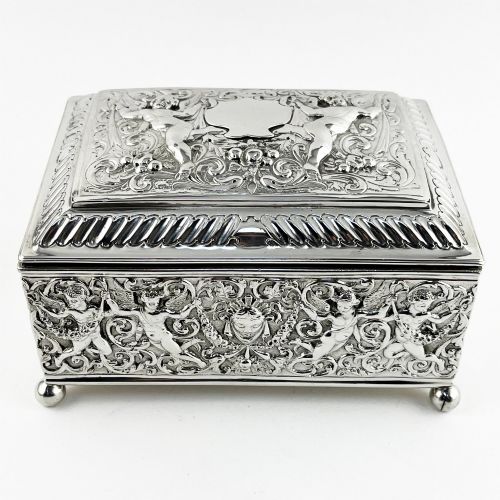
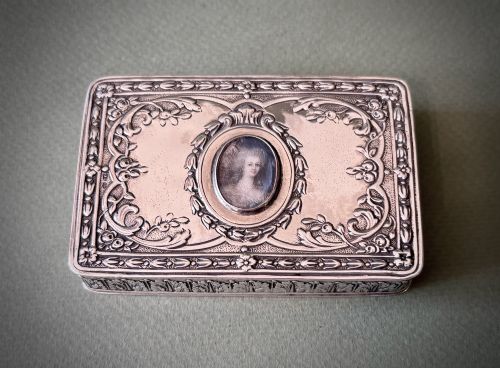
These decorative silver table boxes are striking small containers for desks and dressing tables, combining precious metal with enamel, glass, ceramic, and gilt.
Decorative Silver Table Box
A decorative silver table box is a receptacle designed for domestic use, spanning desk boxes, snuff boxes, trinket boxes, and biscuit barrels. These pieces emerge from periods including the eighteenth century, the Victorian era, the Regency period, and the nineteen-forties.
The most common versions on this page are solid and sterling silver boxes, alongside silver plate and silver-gilt examples. Many incorporate stylistic influences from Rococo, Renaissance Revival, Dutch Traditional, and French Second Empire traditions.
Makers utilised diverse materials beyond pure metal, combining silver with enamel, glass, ceramic, satinwood, and black lacquer. Forms range from small pocket snuffs to heavy desk boxes and picture castle top table boxes.
Materials and construction methods
Silversmiths employed techniques such as casting and chasing to form solid silver, sterling silver, and silver-gilt bodies. Structural weight varied from light trinket vessels to heavy desk boxes exceeding one hundred grams.
Decoration involved intricate applications like enamel work, cameo carving, gold appliques, and black lacquer. Artisans also combined silver with contrasting elements including glass, ceramic bodies, and satinwood.
One box includes a Meleager boar head scene, bringing ancient myth to the gentleman's snuff ritual.
Evaluating craftsmanship and design
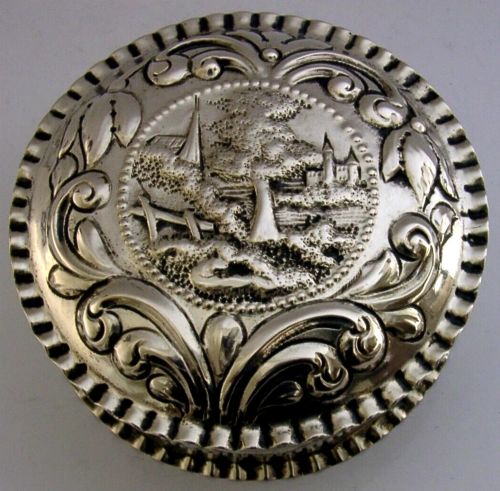
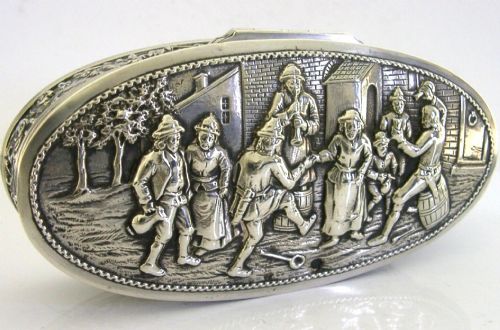
Quality rests in the crispness of chased motifs, such as Rococo scrolls or historical scenes, and the precision of fitted lids and hinges. Superior pieces feature substantial metal weight and detailed hand-worked appliques.
The integration of secondary materials like enamel, cameos, and gilt work distinguishes finer examples. Pieces showing deliberate stylistic cohesion across revivalist or traditional themes command greater attention.
The Decorative Silver Table Box Glossary
- Sterling silver
- A silver alloy containing 92.5 percent pure silver by mass, standard for quality British tableware and boxes.
- Silver-gilt
- Silver that has been plated with a thin layer of gold on its surface, creating a rich interior or exterior finish.
- Castle top
- A style of box lid featuring a detailed topographical engraving or cast relief of a famous building or landmark.
- Snuff box
- A small hinged container originally intended for holding powdered tobacco for inhalation.
- Rococo revival
- A nineteenth-century design style drawing on the asymmetrical scrolls, shell motifs, and exuberance of the French eighteenth century.
Decorative Silver Table Box: Frequently Asked Questions
What were decorative silver table boxes used for?
These boxes served practical and social functions in period homes, holding small valuables, letters, or tobacco on desks and entertaining tables.
Larger versions accommodated biscuits or potpourri, while pocket-sized examples kept snuff ready for use during social calls.
How do I date a silver table box?
Dating relies on stylistic clues like Rococo motifs or Renaissance Revival details, alongside manufacturing methods and applied ornamentation.
Assay marks and hallmarks, where present, provide the most precise indication of the year and place of creation.
How should I clean silver boxes with enamel?
Enamelled and gilt surfaces require gentle handling to preserve delicate glass pastes and thin gold layers from abrasive polishes.
Soft cloths and mild cleaning solutions maintain the metal without disturbing the integrated stones, lacquer, or ceramic panels.