







Decorative Pottery Pair
A decorative pottery pair brings balanced visual weight to a mantelpiece or side table through matching forms, shared glazes and paired motifs.
Decorative Pottery Pair
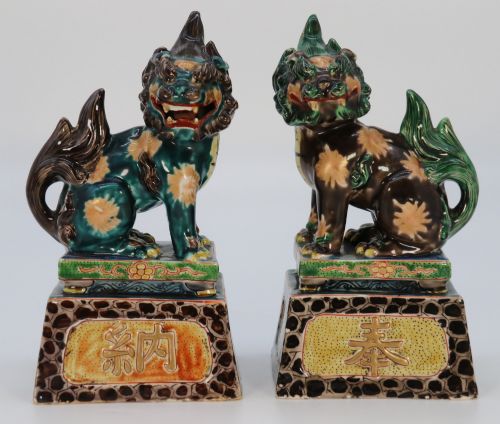
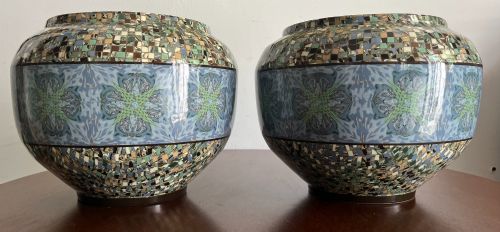
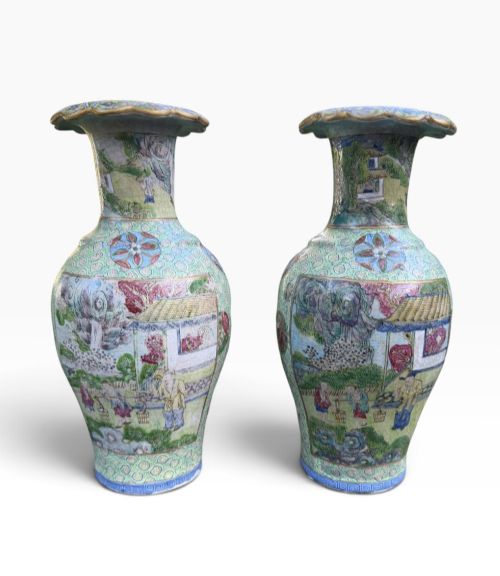
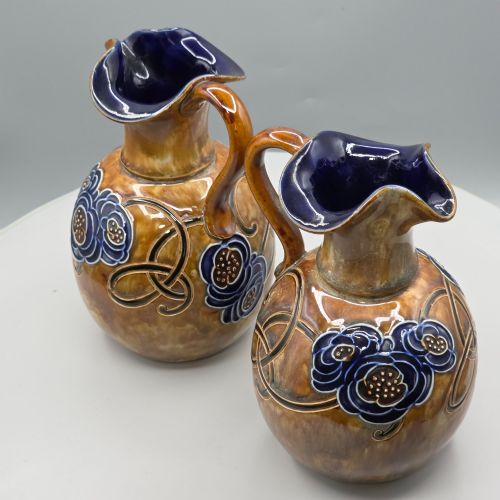
A decorative pottery pair consists of twin vessels, figures or chargers made to display together as a unified set. Buyers seek them to anchor symmetrical arrangements in traditional and eclectic interiors alike.
The selections span centuries of global ceramic production, originating from British potteries, continental European workshops and Asian kilns. Vases, jugs, ewers, and figurative groups dominate the available forms.
Dated examples stretch from the Victorian and Edwardian eras through the Art Nouveau and Art Deco periods, encompassing earthenware, stoneware, porcelain and faience.
Materials and methods
Potters shaped these bodies from clay ranging from dense stoneware and fine porcelain to porous earthenware and faience. Artisans then applied liquid glazes, enamels and occasionally gold leaf to the surfaces before firing.
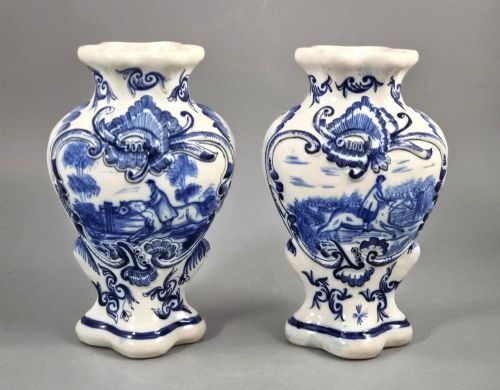
Decoration techniques included hand painting, transfer printing, moriage relief work and sculpted additions. Certain items received rich enamel palettes with blue and white designs or intricate polychrome scenes.
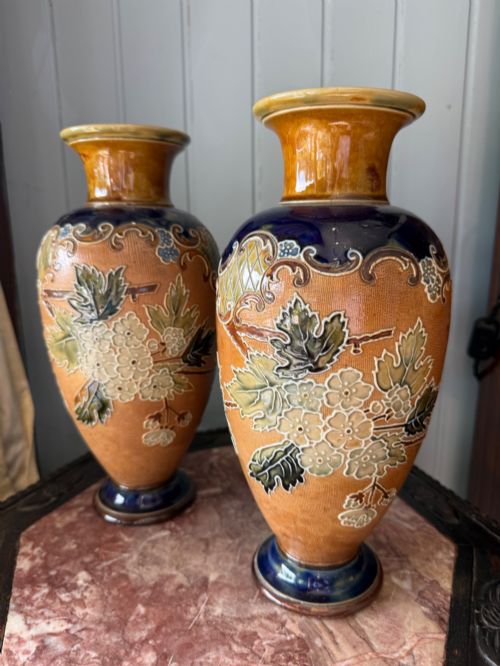
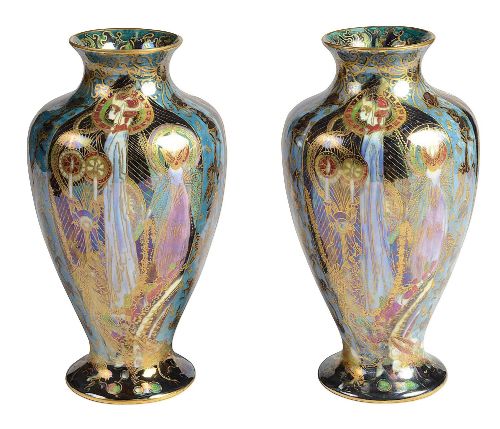
Some pieces combined thrown ceramic bodies with applied moulded elements, while others utilised specialised grounds like lustre glazes or cobalt blue pigments.
Decorative Pottery Pair Retail Price Guide 2026
Typical asking prices for decorative pottery pair among the pieces listed under this phrase on Sellingantiques today, from the lower quarter to the upper quarter. They describe what is for sale here now, not the wider market.
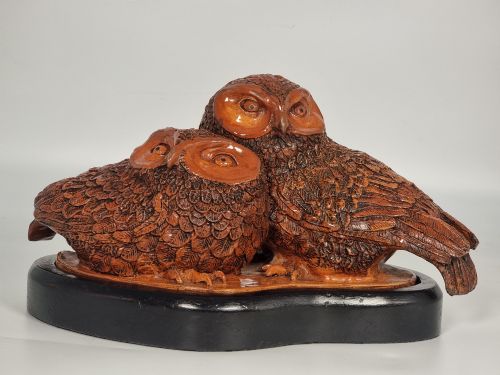
A pair of hand sculpted pottery owls keep permanent watch from their ebonised base.
Assessing quality and execution
The distinction between standard production and top tier pieces rests on the crispness of the moulding and the precision of the hand painting. Superior examples exhibit finely detailed brushwork, controlled glaze application and crisp relief ornament.
Matching symmetry defines a successful pair, where both items share equal proportions, consistent coloration and identical artistic signatures. Variations in height, kiln distortion or mismatched painting compromise the visual harmony expected of matched sets.
Provenance and studio attribution elevate specific pieces, particularly when signed by known makers or produced for international exhibitions.
Royal Doulton·Boch Freres·Carlton Ware·Fourmaintraux Courquin·Mettlach Pottery·Minton Hollins·Kinkozan·Hakusan
The Decorative Pottery Pair Glossary
- Baluster
- A vase form with a rounded body that tapers toward a narrow neck and spreads at the base. This silhouette appears frequently in nineteenth and twentieth century ceramic pairs.
- Moriage
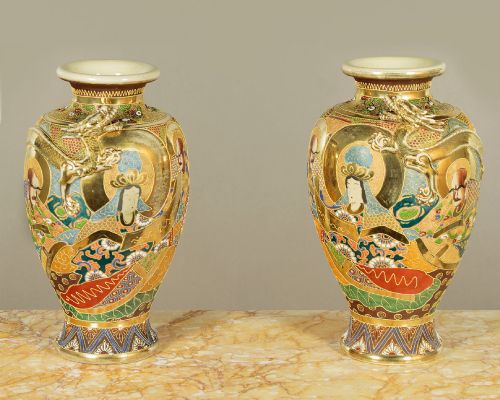
- A Japanese decorating technique where slip is piped onto the ceramic surface in raised dots or lines to create a tactile, textured design. It is often highlighted with gilding.
- Imari
- A style of Japanese porcelain featuring a distinct palette of underglaze blue, iron red, and gold. These pieces were widely exported during the Meiji period and earlier.
- Faience
- Tin glazed earthenware produced across continental Europe. The opaque white glaze provides a smooth ground for painted enamel decoration.
- Ewers
- Pitchers or jugs featuring a wide spout and an ornate handle. They were primarily decorative objects in Victorian and Edwardian interiors.
Decorative Pottery Pair: Frequently Asked Questions
How were decorative pottery pairs displayed?
Historically, matched pairs sat symmetrically on mantelpieces, flanking clocks or mirrors to create formal balance in a room. They also anchored sideboard arrangements and decorated large table surfaces in nineteenth century homes.
Today, owners place them on consoles, bookshelves and pedestals where twin objects can establish strong focal points. Keeping the pair together preserves their original decorative purpose and visual symmetry.
What is Satsuma ware?
Satsuma ware is a type of Japanese earthenware featuring an ivory crackle glaze decorated with polychrome enamels and gold. Originating in Kagoshima province, production expanded to Kyoto and Kobe for export during the Meiji period.
These pieces range from delicate cabinet vases to large temple jars and table lamps. The intricate painting often depicts figures, landscapes, flowers and religious scenes.
How do I care for antique pottery pairs?
Dust these ceramic objects gently with a soft, dry brush to prevent accumulation in crevices and raised glaze details. Avoid using water or cleaning solutions, particularly on pieces with enamel, gold leaf or porous earthenware bodies.
Display them away from direct sunlight and areas prone to heavy moisture or temperature fluctuations. Stable placement on flat, level surfaces prevents accidental tipping.
How do I identify the period of a ceramic pair?
Makers marks, stamps and impressed ciphers on the underside provide the most reliable clues for dating. Stylistic indicators, such as Art Nouveau floral motifs or Victorian colour palettes, also point toward specific decades.
Material composition and manufacturing techniques help narrow down the era of production. Comparing construction methods with documented examples from similar workshops confirms the timeframe.