


Decorative Panel Screen
A decorative panel screen divides a room or frames a hearth with painted leather, carved wood or beaten metal.
Decorative Panel Screen
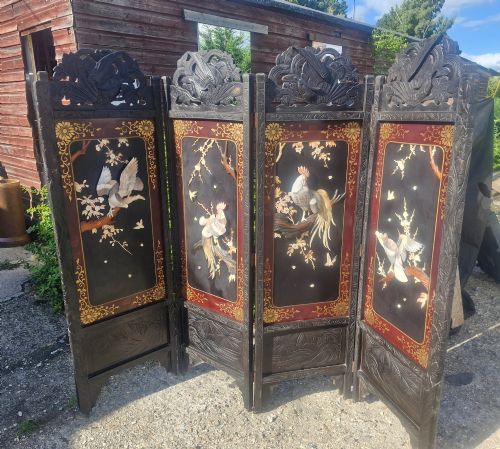
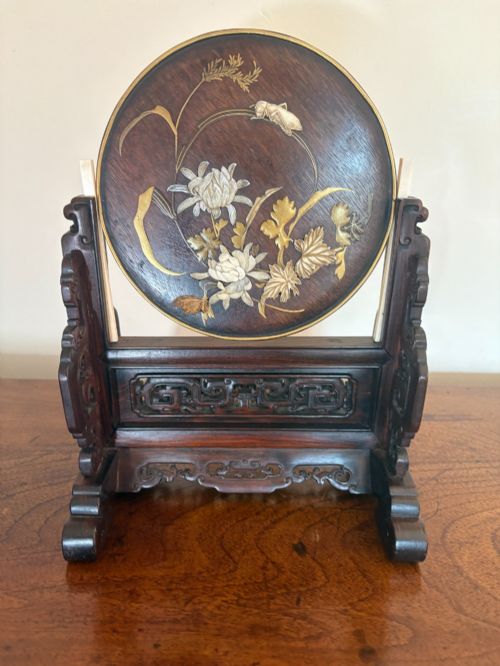
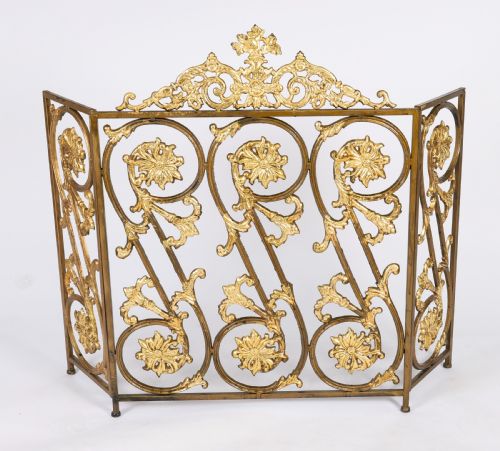
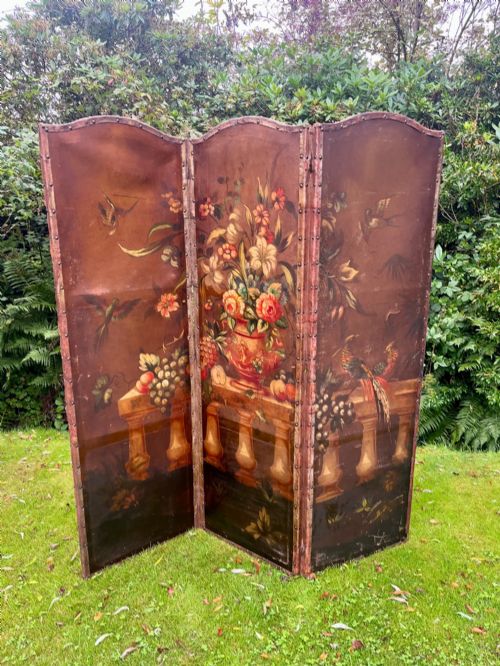
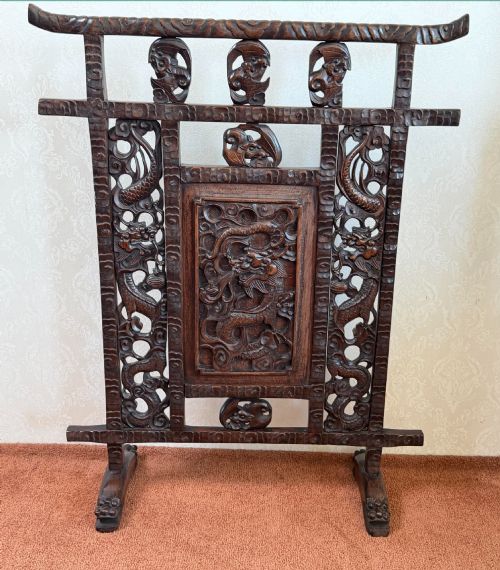
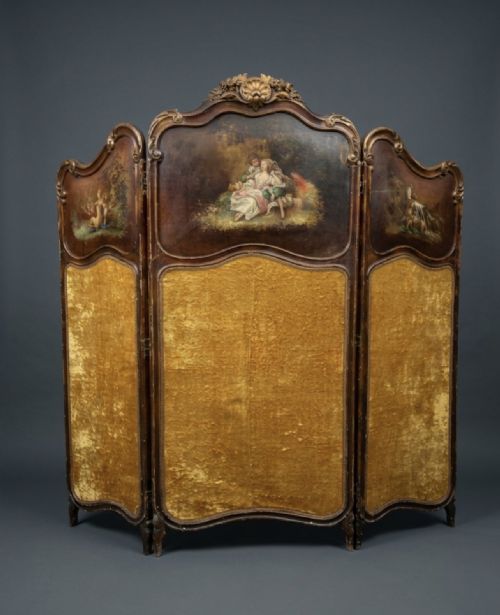
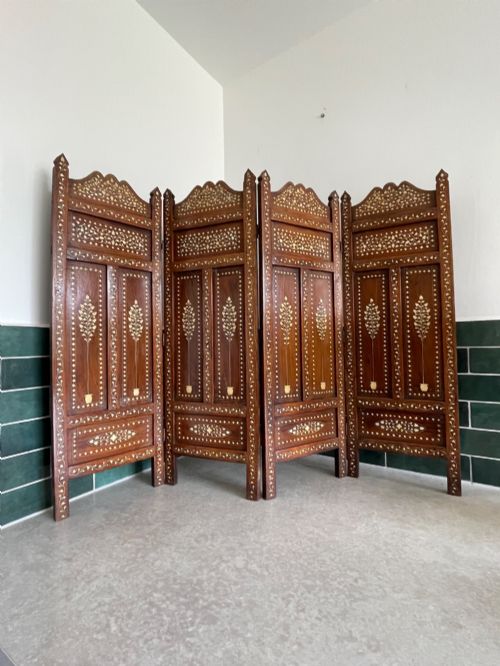
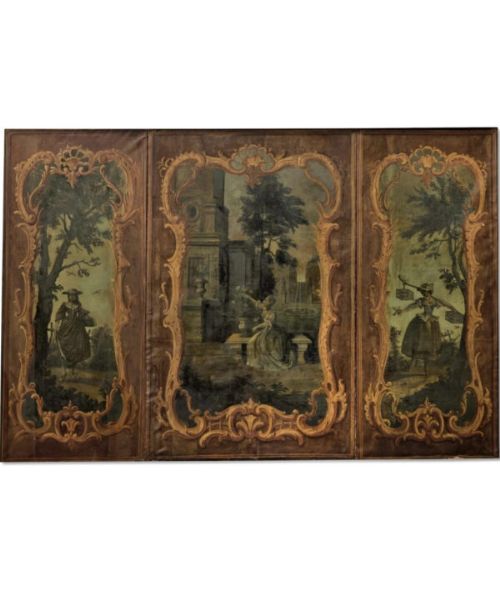
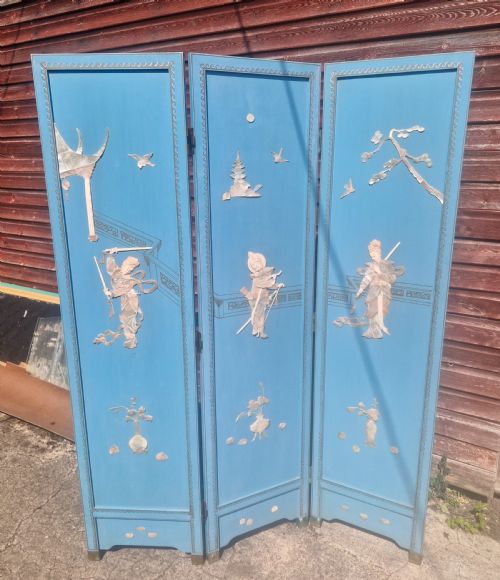
A decorative panel screen appears in several distinct forms across this selection, ranging from large folding room dividers and dressing screens to smaller tabletop screens, architectural salvage, and firescreens. The most frequently encountered pieces belong to the nineteenth and early twentieth centuries, with international influences spanning Chinese lacquered work, Japanese shibayama and bone inlay, and European painted leather or canvas.
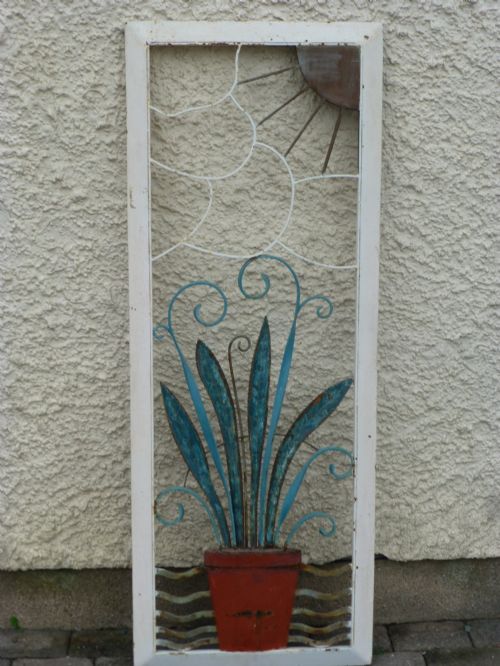
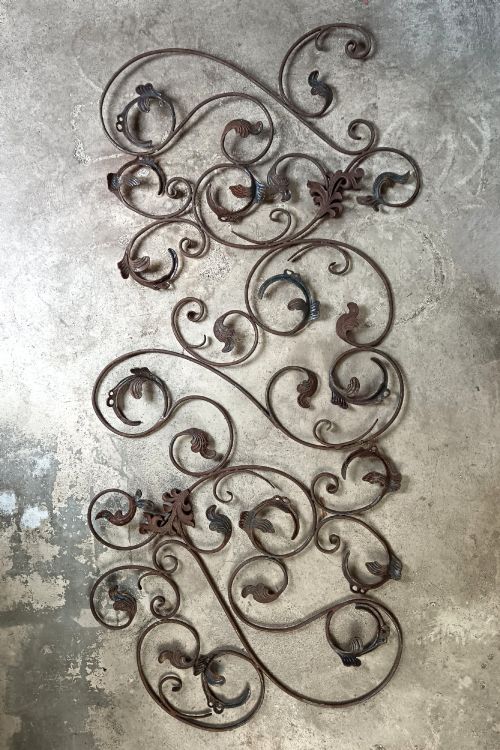
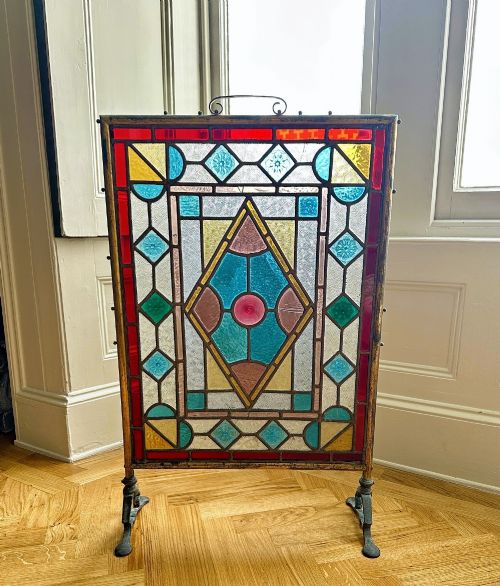
Room dividers operate as multi-fold pieces in hardwood, walnut, or canvas, while smaller variations serve specialised domestic roles such as modesty screens or fireplace guards. The architectural examples utilise weathered wrought iron and bronze, showing how functional barriers transition into purely ornamental wall art and plaques.
Materials and construction
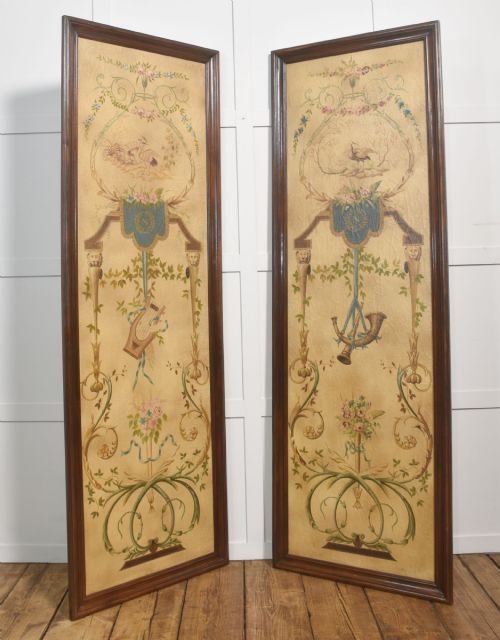
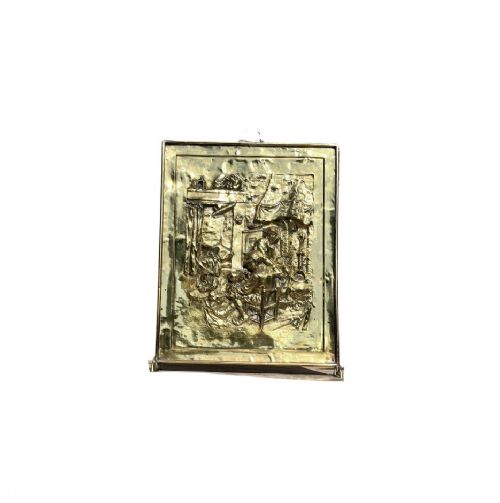
Makers constructed these panels using robust structural timbers such as oak, mahogany, walnut, and exotic hardwoods, alongside forged metals including brass, wrought iron, and bronze. Surface decoration relies on traditional craftsmanship, incorporating hand-painted leather, oil on canvas, stained glass, silk embroidery, and tapestry alongside intricate wood carving.
Eastern examples demonstrate specialised techniques such as coromandel lacquer, mother-of-pearl and abalone inlay, and deep carved bone figures mounted onto timber foundations. European pieces frequently employ gilt embossing, pastoral oil paintings, or needlework panels stretched across wooden frames.
One photographic prop screen survives in silk cotton, ready to transport an Edwardian portrait studio straight into a modern sitting room.
Judging quality
Quality reveals itself in the depth of hand-carving and the precision of inlaid materials such as bone, shell, and hardstone, where finer examples display immense detail and secure seating within the wood. Painted and gilt surfaces separate into those executed with subtle artistic control and those applied with simpler repetition.
The structural integrity of the folding hinges, the stability of heavy hardwood or iron stands, and the preservation of delicate textiles or painted leather dictate the distinction between ordinary utility items and exceptional decorative works.
Paul Sormani·Raymond Subes
The Decorative Panel Screen Glossary
- Shibayama
- A Japanese decorative technique involving delicate inlays of ivory, bone, mother-of-pearl, and tortoiseshell onto a wood or lacquer background. These panels depict natural scenes with high relief and varied textures.
- Coromandel
- A type of Chinese incised lacquer ware where the wooden surface is covered in layers of dark lacquer, carved away, and filled with colours or gold. These screens show intricate narrative or floral compositions.
- Pole screen
- A nineteenth-century domestic firescreen featuring an adjustable vertical wooden pole mounted on a base, holding a sliding panel of needlework or embroidery to shield the face from fireplace heat.
- Firescreen
- A decorative barrier placed in front of an unlit fireplace during warmer months, constructed from brass, wrought iron, glass, or embroidered fabric in a fixed frame.
- Triptych
- A piece consisting of three painted or carved panels hinged together or displayed side by side as a unified composition.
Decorative Panel Screen: Frequently Asked Questions
How were folding screens used historically?
Folding screens served to block draughts in large rooms, create private dressing areas within bedrooms, or conceal less attractive parts of a domestic interior.
Over time, they functioned increasingly as decorative backdrops, displaying intricate painted art or rich textiles to signal taste and wealth.
What is a firescreen used for?
A firescreen stood before the hearth to protect a person's face from the intense radiant heat of a coal or wood fire when sitting close.
When the fireplace was not in use during summer months, these screens remained in place to conceal the empty grate with ornamental needlework, brass, or painted panels.
How do I care for antique leather screens?
Leather screens require stable indoor humidity away from direct sunlight and strong heat sources, which can cause the painted surface to crack or flake.
Dusting should be performed gently with a soft dry cloth, avoiding liquid cleaners or harsh chemical polishes that might damage historic gilt and pigment.
Can heavy room dividers stand safely on carpets?
Heavy multi-fold screens require even support to prevent strain on the hinges and maintain stability when partially angled.
Placing them on thick carpets may cause the feet to sink unevenly, so checking the alignment of the folds ensures the piece remains balanced and secure.