


Decorative Painted Glass Panel
A decorative painted glass panel brings colour and narrative into a room, combining rich pictorial subjects with the luminous quality of leaded and stained glass.
Decorative Painted Glass Panel
When you search for a decorative painted glass panel, you encounter a varied selection of architectural salvage, windows, and wall mirrors spanning the Victorian period to the mid-twentieth century.
The most common forms on this page include leaded glass windows featuring hand-painted countryside scenes, winter landscapes, and floral designs, alongside gilt and painted trumeau wall mirrors.
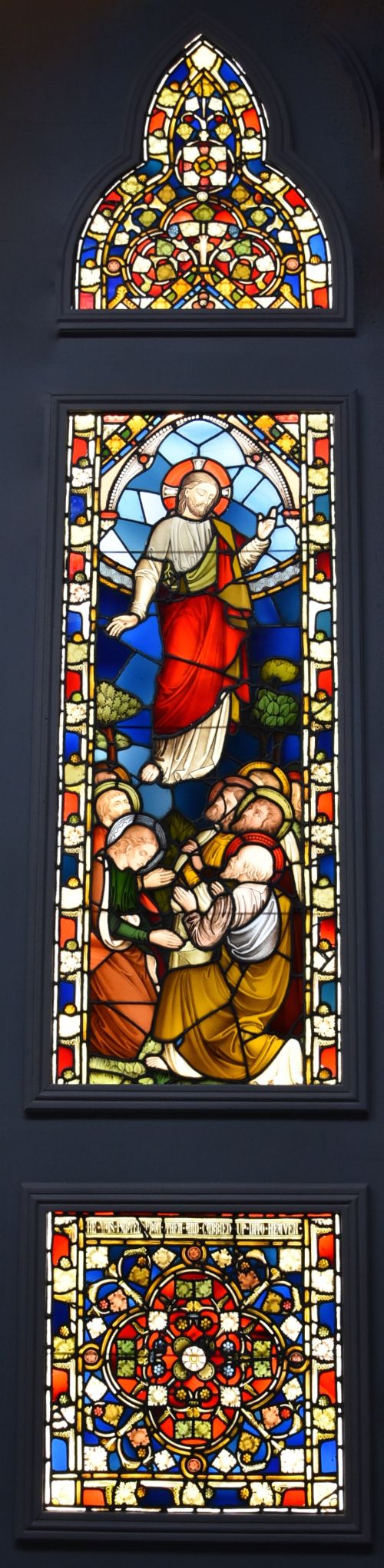
Pieces range from late nineteenth-century architectural panels with religious or heraldic emblems to reverse-painted glass signs and tempera paintings on panel.
Materials and construction methods
Craftsmen built these panels using clear and stained glass held within lead cames, integrating hand-painted details depicting flora, fauna, and figurative scenes directly onto the glass surface.
Many examples incorporate wood, timber, and giltwood frames, whilst wall mirrors frequently utilise parcel gilt finishes and carved wooden surrounds to house the painted glass elements.
Among the landscapes and floral motifs, a humorous reverse glass painted sign simply declares the word 'SNOB'.
Assessing quality in painted glass
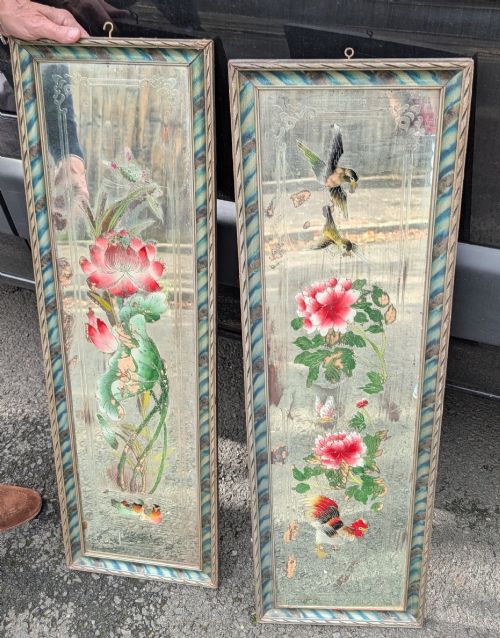
Quality rests upon the intricacy and execution of the hand-painted brushwork, whether depicting a detailed countryside scene, a botanical study, or an avian motif.
The integration of the glass with structural leadwork, timber framing, or giltwood surrounds dictates the physical integrity and visual cohesion of the piece.
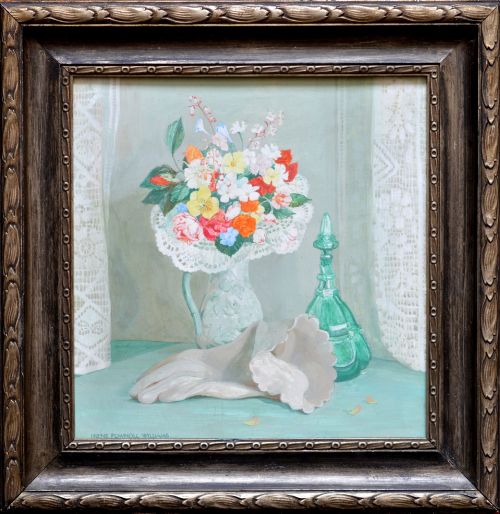
Irene Christobelle Pownoll Williams
The Decorative Painted Glass Panel Glossary
- Leaded glass
- Glass pieces joined together strips of lead known as cames to form a window or panel. This technique allows for complex geometric and pictorial designs.
- Reverse glass painting
- An art form where the image is painted on the back of the glass and viewed from the front. It yields a glossy surface and preserved pigments.
- Trumeau mirror
- A wall mirror featuring an inset painted or carved panel above the glass plate. These decorative items originated in eighteenth-century France.
- Stained glass
- Glass coloured by the addition of metallic salts during its manufacture, often combined with painted details. It creates vibrant coloured light effects when illuminated.
Decorative Painted Glass Panel: Frequently Asked Questions
How do I hang a heavy glass panel safely?
Ensure the timber frame or lead structure is reinforced and consult a professional restorer regarding weight distribution before mounting.
Secure the piece directly to wall studs using appropriate fixings designed to bear substantial loads safely.
Where should I place a decorative glass panel?
Position windows where natural light can pass through the stained and painted sections to illuminate the colours fully.
Mirrors and solid panels suit interior walls where reflected light enhances darker corners of a room.
What periods do these glass panels come from?
The listings span the Victorian and Edwardian eras, alongside pieces from the nineteenth and early twentieth centuries.
Mid-century examples and George I style reproductions also appear within the selection.