


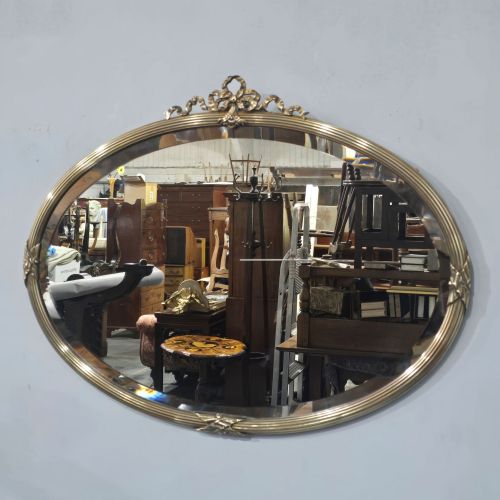


Decorative Oval Vanity Mirrors
These decorative oval vanity mirrors combine glass and carved frames to sit upon dressing tables or hang on walls.
Decorative Oval Vanity Mirrors
When you search for decorative oval vanity mirrors, you encounter dressing table pieces and wall mirrors spanning the Georgian, Victorian, and Edwardian periods. The selection covers forms originating from English and continental workshops, ranging in date from the nineteenth century into the nineteen-thirties.
Most examples present rounded glass plates held within frames shaped from wood, brass, gesso, or giltwood. You find styles drawing on French Neoclassical, Rococo Revival, Chinoiserie, and French Country aesthetics, offering simple hanging shapes alongside ornate table accessories.
How they were made
Frames take shape from carved wood, cast brass, and moulded gesso built over wooden foundations. Artisans applied gilt leaf, paint, and simulated wood finishes to decorate the surfaces.
Mirror glass sits within these surrounds, sometimes featuring bevelled edges and held securely by backing boards and metal fixings.
Decorative Oval Vanity Mirrors Retail Price Guide 2026
Typical asking prices for decorative oval vanity mirrors among the pieces listed under this phrase on Sellingantiques today, from the lower quarter to the upper quarter. They describe what is for sale here now, not the wider market.
What varies in quality
The finesse of the frame carving and the depth of the gesso or giltwood application define the upper tier of pieces. Hand-painted floral details and crisp cast brass show greater attention to design than simpler moulded substitutes.
The clarity and weight of the mirror glass, alongside the integrity of the original backing and hanging hardware, distinguish finer examples from standard production.
The Decorative Oval Vanity Mirrors Glossary
- Giltwood
- Wood carved and covered with a thin layer of gold leaf. This finish appears frequently on French Neoclassical and Rococo Revival frames.
- Gesso
- A plaster-like mixture applied to a surface as a base for painting or moulding. It allows makers to create intricate raised floral and ribbon decorations.
- Chinoiserie
- European interpretation of Chinese and East Asian artistic traditions. This style appears on select painted mirrors from the early twentieth century.
- Bevelled glass
- Mirror glass with edges cut and polished to an angle. This technique adds depth and catches the light at the perimeter of the plate.
- Rococo Revival
- A nineteenth-century design movement favouring asymmetry, scrollwork, and natural motifs. Mirrors in this style display curving frames and ornate ornamentation.
Decorative Oval Vanity Mirrors: Frequently Asked Questions
Where should I hang an oval mirror?
These mirrors suit hallways, living spaces, and bedrooms where an oval shape softens linear wall arrangements. They hang above mantelpieces, sideboards, or dressing tables.
Ensure the wall fixings match the weight of the frame, particularly for heavier giltwood and cast brass examples.
How do I clean a vintage mirror?
Use a soft cloth and a gentle glass cleaner applied to the cloth rather than directly onto the glass. This prevents moisture seeping behind the silvering.
Keep liquids away from giltwood, gesso, and painted frames, dusting them carefully with a dry brush.
Are these mirrors suitable for daily use?
Mirrors designed for dressing tables and walls function well for everyday routines. Their glass plates provide clear reflections for grooming and dressing.
Consider the original mounting points to ensure a wall hanging mirror remains secure during daily use.
How can I tell the period of a mirror?
Examine the materials, construction methods, and stylistic cues of the frame. Georgian and Victorian pieces show traditional joinery and hand-carving.
Later pieces from the nineteen-twenties and thirties often utilise gesso mouldings and painted finishes specific to those decades.