




Decorative Metal Pitcher
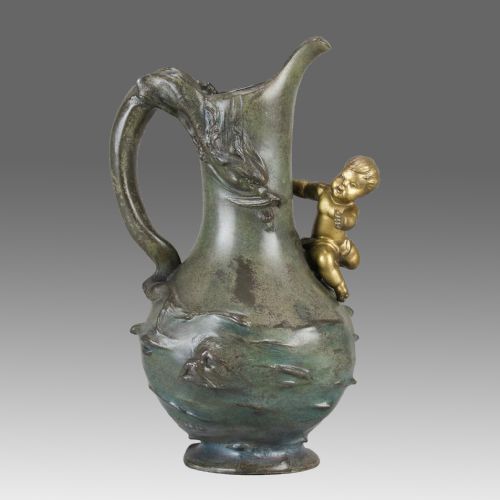
These decorative metal pitcher examples span the Victorian and Art Nouveau periods, offering substantial bronze, brass, and copper vessels for display.
Decorative Metal Pitcher
A decorative metal pitcher search encompasses historical ewers, jugs, and display urns spanning the nineteenth and early twentieth centuries. These pieces emerge in styles ranging from Victorian Renaissance Revival and Neoclassical to Arts and Crafts and Art Nouveau.
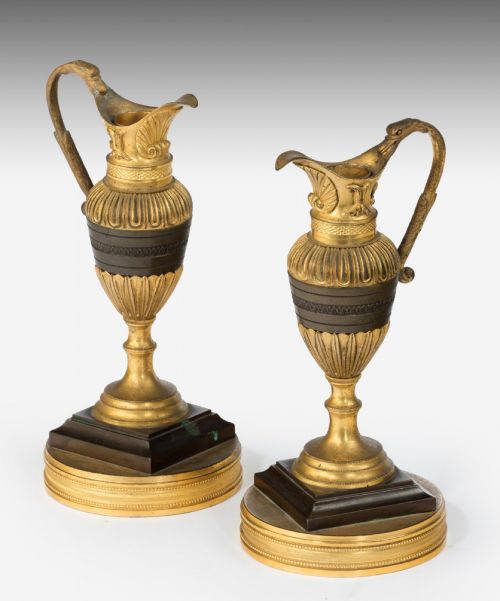
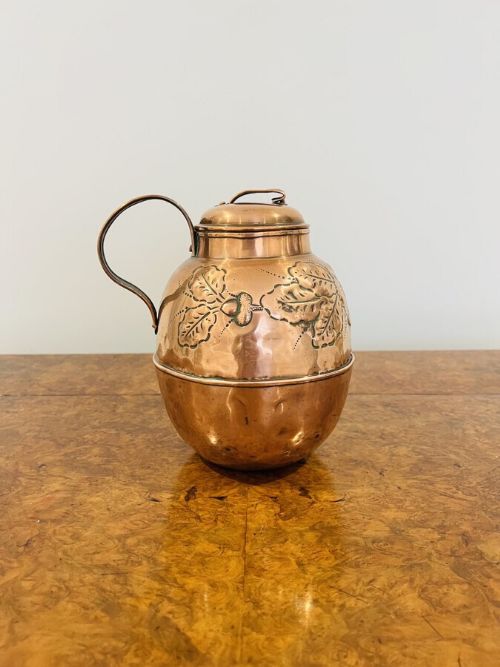
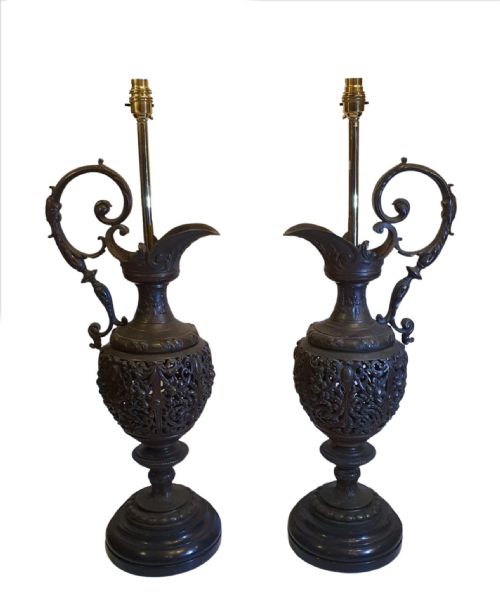
The most frequent forms found here are bronze and copper ewers or water jugs, often produced as pairs for display rather than utility. Examples include grand tour souvenirs, table lamps converted from ewers, and heavy kitchen or dairy vessels.
Origins span English, French, German, and Italian workshops, reflecting diverse regional tastes in metalwork during the Victorian era and the subsequent turn of the century.
How they were made
Makers utilised cast bronze, brass, and heavy sheet copper, often combining materials within a single vessel such as bronze handles on copper bodies or ormolu mounts. Casting allowed for intricate figural details, including handles shaped as dolphins, Bacchus, and Dionysus.
Surface finishes involved patination, heavy polishing, gilding, and the application of gilt bronze or ormolu highlights. Artisans working in the Arts and Crafts tradition favoured beaten copper finishes that displayed the physical marks of construction.
Several bronze pitchers feature handles shaped like Bacchus, dolphins, or Dionysus, ensuring the god of wine presides over every pour.
What varies in quality
Quality rests primarily in the crispness of the metal casting and the articulation of figural elements like handles and spouts. Superior pieces display deep, intentional patination and secure joins where handles meet the main body of the jug.
The weight of the metal and the presence of makers' marks or specific stylistic attributions distinguish standard production items from exceptional workshop examples.
Georges Van De Voorde·H F Fearncombe & Co
The Decorative Metal Pitcher Glossary
- Ewer
- A large jug with a wide spout and handle, historically used for water but frequently produced in decorative metal for display. Many nineteenth-century examples follow classical Greek or Renaissance shapes.
- Ormolu
- Finely ground high-carat gold applied to a bronze base, commonly used for decorative mounts on nineteenth-century decorative metal pitcher pieces.
- Patinated bronze
- Bronze that has been chemically treated to alter the surface colour, creating darker tones that highlight fine details and figures.
- Trefoil
- A three-lobed shape, often describing the mouth of an ancient Greek wine jug or oinochoe designed for pouring.
- Grand Tour
- Nineteenth-century travel souvenirs purchased by Europeans in Italy, frequently including bronze ewers and urns styled after classical antiquities.
Decorative Metal Pitcher: Frequently Asked Questions
What is a decorative metal pitcher used for?
These metal vessels function primarily as decorative interior objects, mantelpiece displays, or console ornaments rather than functional tableware.
Some period pieces have also been converted into table lamps while retaining their original form.
How do I tell Victorian styles apart?
Victorian Renaissance Revival pieces utilise heavy classical casting with figures like Bacchus and Dionysus, while Arts and Crafts examples feature hammered copper surfaces.
Art Nouveau items display flowing organic lines and natural motifs characteristic of the turn of the twentieth century.
Are these pitchers made of solid bronze?
Many ewers and jugs utilise solid cast bronze or brass, while others are constructed from heavy sheet copper with applied cast handles and mounts.
Gilt bronze and ormolu pieces feature gold finishes over a bronze substrate.
How should I clean a copper jug?
Historic metal pieces usually benefit from retaining their existing patination rather than aggressive polishing, which can remove original surface character.
Dusting with a dry cloth is generally sufficient for regular maintenance.