
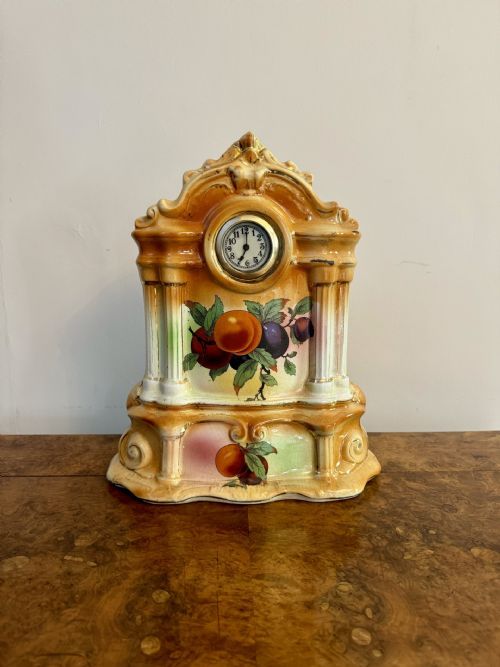


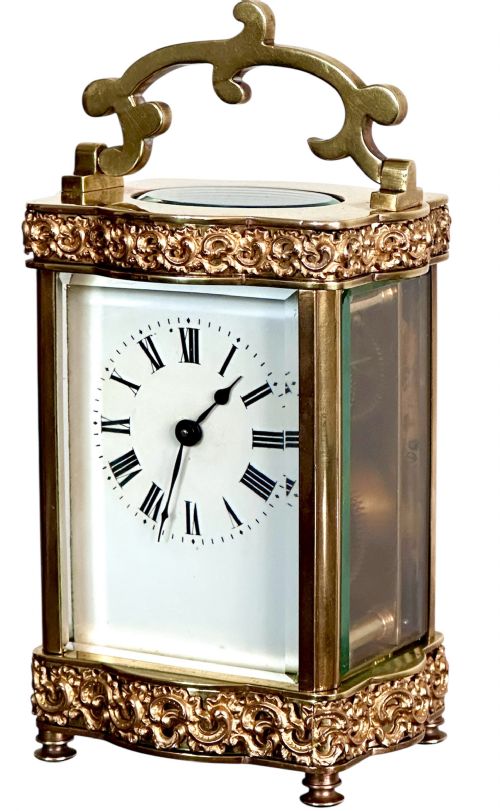




Decorative Mantle Timepiece
These decorative mantle timepieces bring brass, marble, and gilt bronze into the home, offering both precision and nineteenth-century style.
Decorative Mantle Timepiece
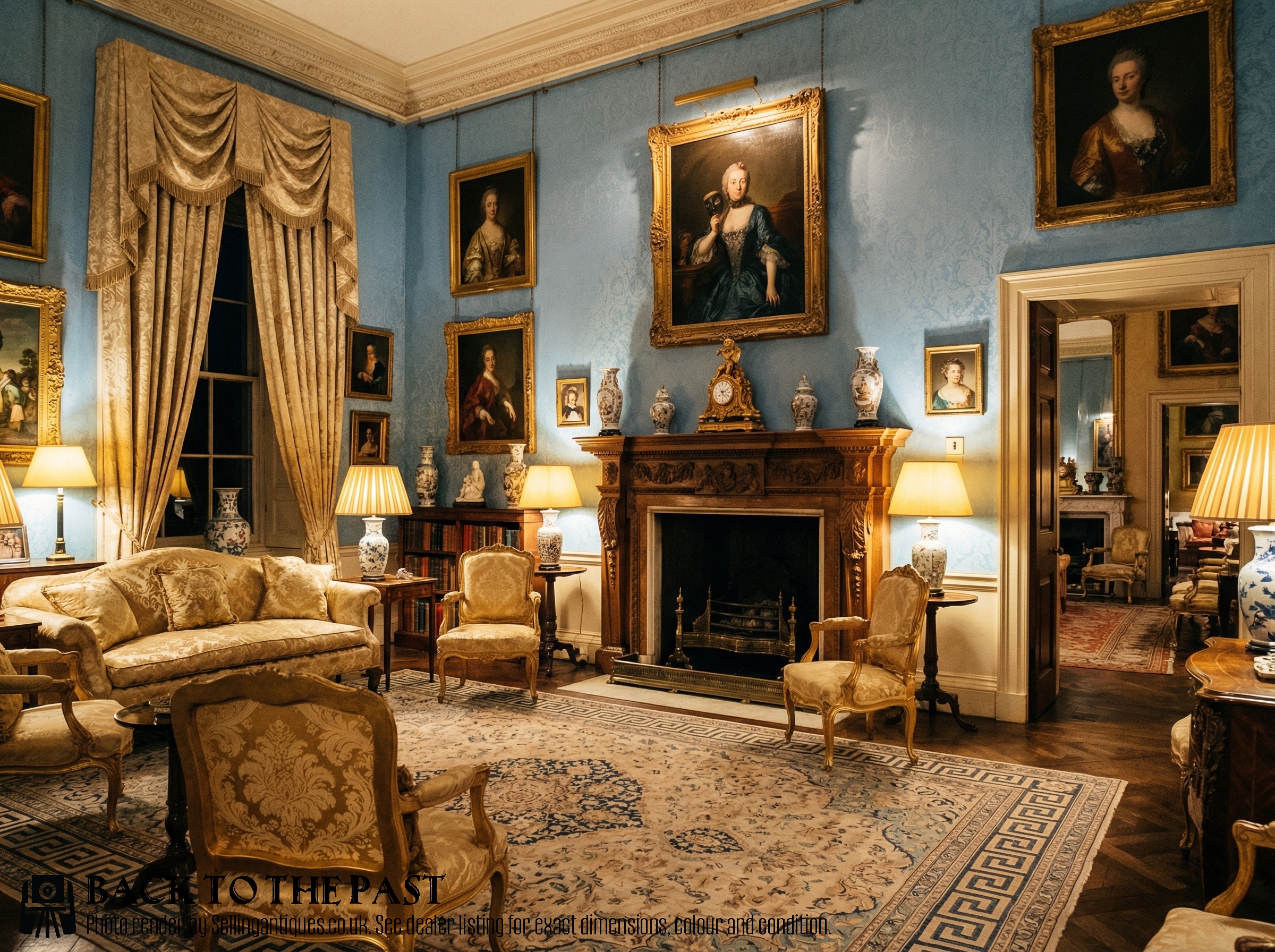
When you search for a decorative mantle timepiece, you are looking at domestic horology from the Victorian era and the late nineteenth century. These objects sit upon shelves and fireplace surrounds, combining timekeeping with sculptural metalwork, stone, and glass.
The pieces on this page span French carriage clocks, four-glass clocks, and heavier mantel clocks featuring marble, spelter, porcelain, and enamel dials. They originate predominantly from nineteenth-century French workshops alongside British makers.
Forms range from petite boudoir clocks and serpentine carriage cases to ornate architectural marble bodies and figurative bronzes depicting subjects like Cupid and elephants.
How they were made
Horologists and metalworkers utilised brass, gilt bronze, and ormolu to form the structural cases, often engraving surfaces profusely or casting them in revivalist styles such as Rococo and Louis XVI. Heavy clock bodies relied on solid marble or ceramic porcelain components.
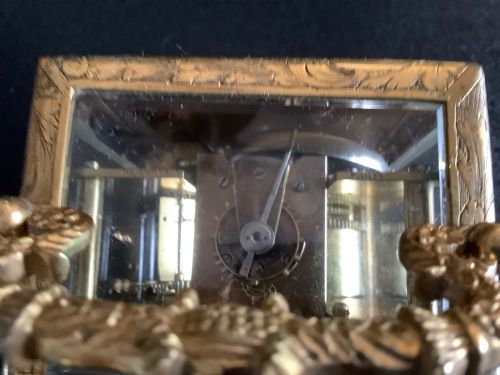
Dials frequently incorporate delicate enamel paintings and visible escapements behind glass panels, while specialised movements such as fusee and repeating mechanisms provided accuracy.
One petite boudoir clock carries an advertising inscription proudly presented by Sporting Sketches.
What varies in quality
Quality rests in the weight and finish of the materials, separating simple brass housings from deeply engraved gilt bronze and substantial marble plinths. The presence of hand-painted enamel details and fully restored repeating movements elevates a piece.
The sophistication of the design dictates distinction, moving from plain utilitarian timepieces to sculptural works involving figures like L'Aurore or complex four-glass enclosures.
Duverdrey & Bloquel·Tiffany
The Decorative Mantle Timepiece Glossary
- Carriage clock
- A portable timekeeper originally designed for travel, featuring a protective brass or gilt case with glass panels and a folding handle.
- Fusee
- A conical pulley mechanism used in older clocks to maintain even tension on the chain as the mainspring unwinds.
- Ormolu
- Gilded bronze, where a layer of gold is applied to a bronze base, popular in nineteenth-century French decorative arts.
- Spelter
- A zinc alloy commonly utilised as a less expensive substitute for bronze in decorative clock figures.
- Repeater
- A complication in a clock that strikes the hours and quarters upon demand when a lever is pressed.
Decorative Mantle Timepiece: Frequently Asked Questions
Where should I place a decorative mantle timepiece?
These clocks suit prominent flat surfaces where their mechanics and materials remain visible, such as a fireplace mantel, a living room shelf, or a study desk. Ensure the location is stable and away from excessive moisture.
Because many examples feature delicate glass panels or exposed enamel dials, placement should avoid high-traffic areas where accidental knocks might occur.
How do I wind an antique clock?
Winding requires a dedicated key matched to the square arbor of the movement, turning gently until you feel firm resistance without forcing the spring. Most nineteenth-century timepieces need attention once a week.
Consult the specific movement type, as striking or repeating mechanisms may require distinct care compared to standard time-only pieces.
How do I tell Victorian from French styles?
Victorian pieces often lean towards sturdy marble and brass constructions with restrained British sensibilities, though the category heavily overlaps with imported French aesthetics. Look at the hallmarks, engraving style, and materials.
French pieces from the same era frequently display Rococo Revival curves, elaborate ormolu, or specific carriage clock formats produced by continental workshops.
Are these clocks suitable for daily timekeeping?
Many nineteenth-century timepieces remain fully functional, especially those with restored movements. Regular servicing by a professional horologist keeps the gears running accurately.
Expect minor variances in daily timekeeping compared to modern quartz clocks, as these mechanical antiques respond to temperature and age.