



Tabletop Ormolu Clock
A tabletop ormolu clock brings gilt bronze, marble, and intricate French revival design to a mantelpiece.
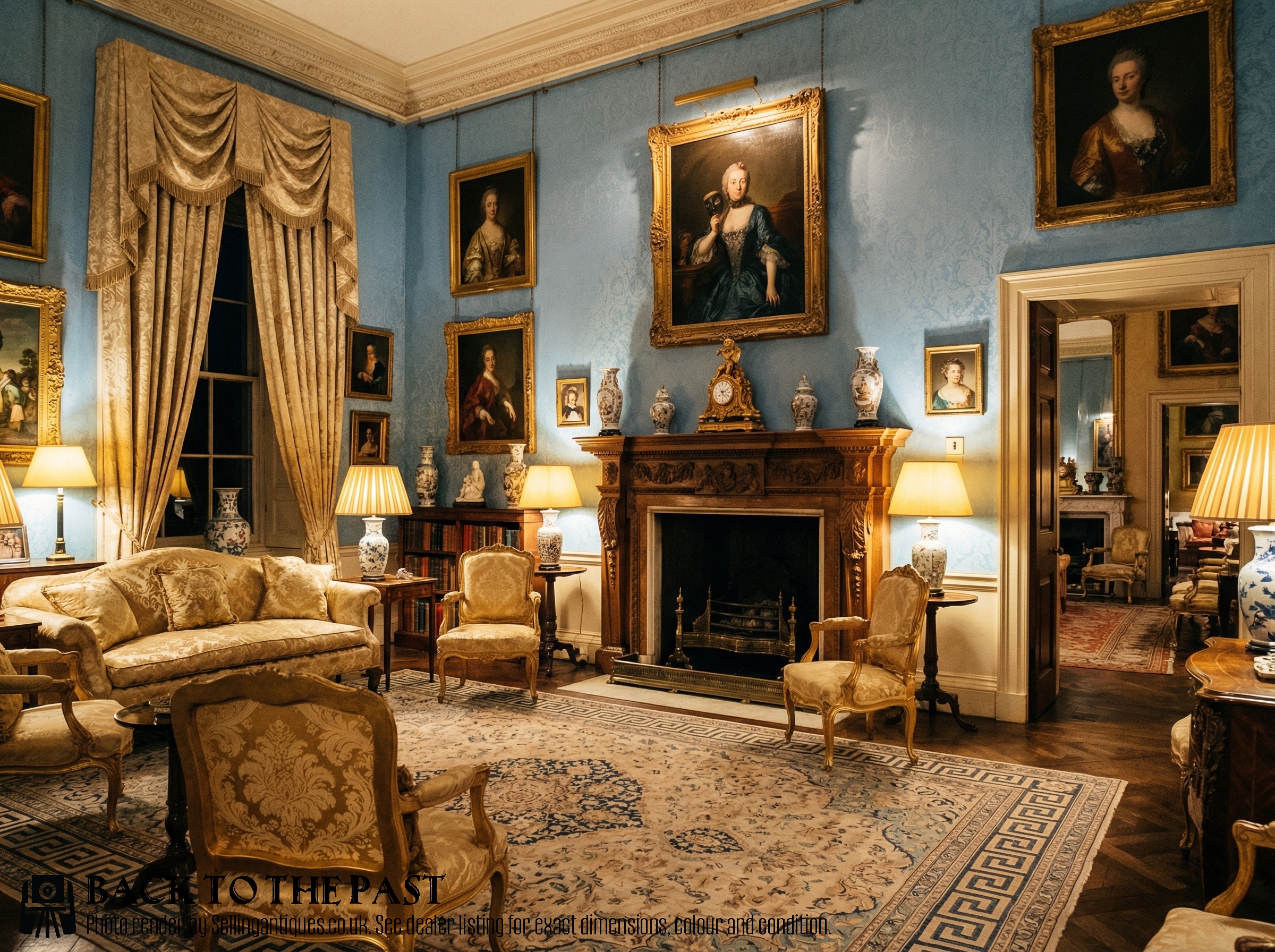
Tabletop Ormolu Clock
A tabletop ormolu clock is a decorative timepiece designed for display on a mantelpiece or surface, combining metalwork with a functional clock movement. These pieces originate predominantly from French workshops and span periods from the eighteenth century through to the early twentieth century.
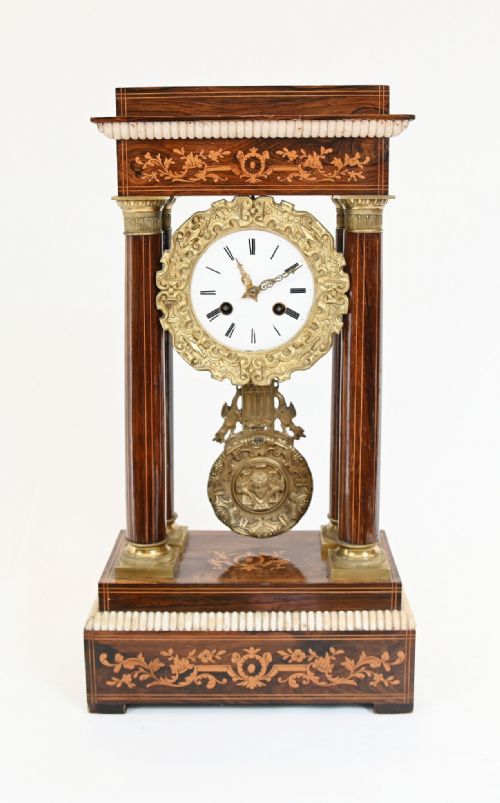
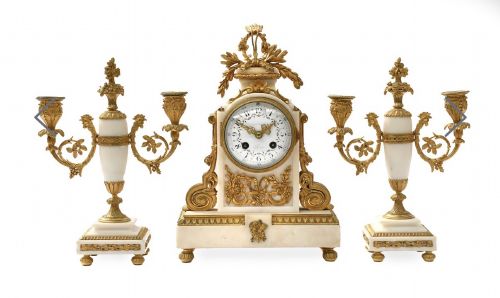
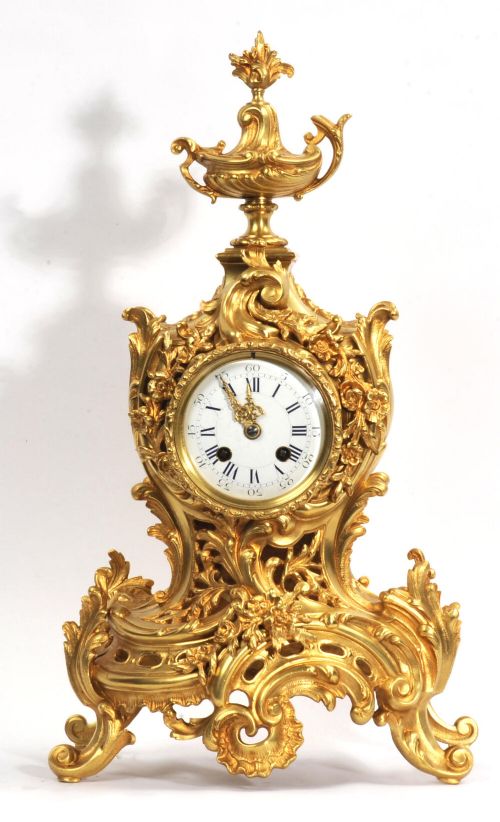
The most common examples encountered on this page belong to the nineteenth century, often reflecting French Rococo Revival or Louis XVI Revival styles. Forms range from classical portico shapes to elaborate architectural designs incorporating enamel dials and glass panels.
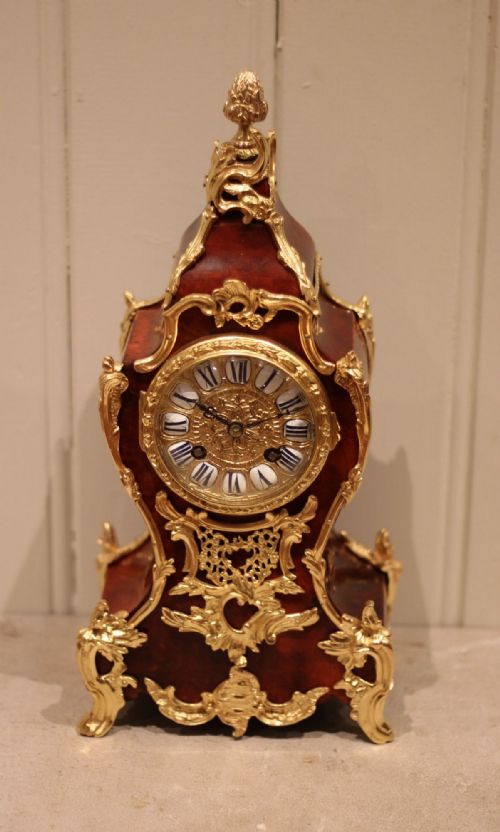
Makers utilised various decorative approaches, producing symmetrical classical arrangements alongside asymmetric scrolling shell motifs. Buyers will also find occasional manifestations in alternative materials like tortoiseshell and rosewood, alongside standard gilt bronze and brass.
Materials and construction
Construction relies upon cast bronze, brass, or gilt metal combined with decorative inlays and structural elements of white marble, glass, and rosewood. Ormolu surfaces require the application of finely ground gold to a base metal, creating a rich golden finish through traditional fire gilding or electroplating methods.
Dials frequently feature painted enamel numerals set behind protective glass bezels, while housings integrate champlevé enamel or tortoiseshell veneer. Movement housings are fitted securely within heavy metal or stone cases, often accompanied by matching garniture pieces.
Many a Victorian parlour was kept rigidly on time by a heavily gilded French clock ticking loudly beneath a glass dome.
Determining quality in these clocks
Quality rests upon the crispness of the bronze casting and the depth of the gilding across the decorative mounts. Finer examples display sharp relief in ornamental foliage and scrolls, whereas lesser pieces show softer contours and flatter surface finishes.
The integration of materials dictates overall refinement, distinguishing works with solid marble bases and detailed enamel dials from simpler brass constructions. The complexity of the architectural case and the fidelity to historical revival styles further elevate the standing of an individual clock.
The Tabletop Ormolu Clock Glossary
- Ormolu
- Gilded bronze, produced by applying a gold amalgam to a bronze base and heating it to drive off the mercury. This technique creates a durable golden sheen characteristic of fine decorative hardware.
- Garniture
- A set of ornamental objects designed to match a central piece, such as a mantel clock flanked by matching vases or candelabra. Such sets were popular for symmetrical fireplace displays.
- Champlevé
- An enamelwork technique where troughs or cells are hollowed out of a metal surface and filled with vitreous enamel before firing. It frequently decorates the dials and bezels of nineteenth-century French timepieces.
- Portico clock
- A monumental clock design supported by four or more architectural columns, resembling a classical temple facade. They often feature pendulum movements suspended centrally within the open structure.
- Rococo Revival
- A nineteenth-century design movement inspired by the curves, asymmetry, and natural motifs of the eighteenth-century Rococo style. It manifests in these clocks through shell work, scrolling foliage, and organic framing.
Tabletop Ormolu Clock: Frequently Asked Questions
What is a tabletop ormolu clock?
A tabletop ormolu clock is a decorative timepiece featuring gilded bronze mounts, typically housed in a case of marble, wood, or metal.
These pieces were created primarily in France across the eighteenth, nineteenth, and early twentieth centuries as functional domestic ornaments.
How do I identify the period of a clock?
Period identification relies on stylistic cues, such as the exuberant scrolls of Rococo Revival or the clean geometric lines of Art Deco.
Materials like white marble, champlevé enamel, and tortoiseshell veneer also point to specific manufacturing decades within the nineteenth century.
Where were these clocks displayed?
These timepieces were placed on mantelpieces, tabletops, and console tables within formal reception rooms and parlours.
They frequently formed part of a matched garniture set flanked by decorative ornaments to create a balanced focal point.
What styles are common in these clocks?
The listings feature French Rococo Revival, Louis XVI Revival, Charles X portico designs, and twentieth-century Art Deco interpretations.
Each style employs distinct architectural motifs, ranging from classical columns to asymmetric floral ornamentation.