








Decorative Mantle Clock
A decorative mantle clock brings nineteenth-century craftsmanship and architectural presence to a room, offering both reliable timekeeping and ornate historic style.
Decorative Mantle Clock
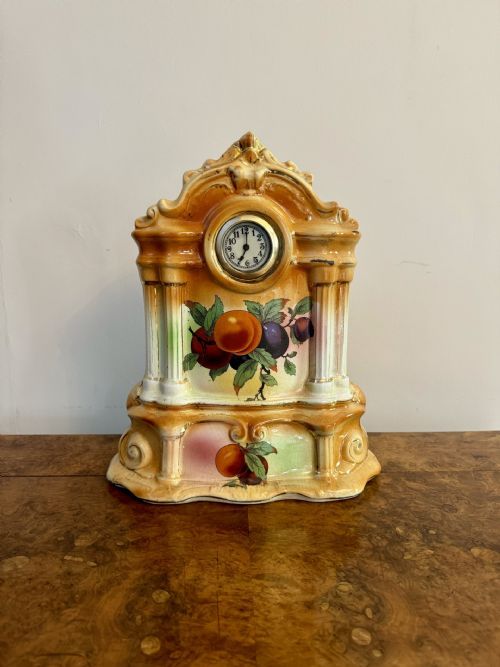
A decorative mantle clock serves as a focal point for a room, combining mechanical movement with sculptural presence. These timepieces range from compact carriage clocks designed for travel to large porcelain clock garniture sets intended for formal display.
Most examples found here originate from nineteenth-century France and Britain, spanning periods from the eighteen-fifties to nineteen-hundred. Buyers encounter styles heavily influenced by Rococo revival, Louis XVI revival, and Victorian tastes.
Common forms include freestanding mantel clocks housed in marble, gilt bronze, or ormolu, alongside delicate boudoir clocks and double-sided carriage clocks. Each piece reflects the domestic interior fashions of its specific decade.
How they were made
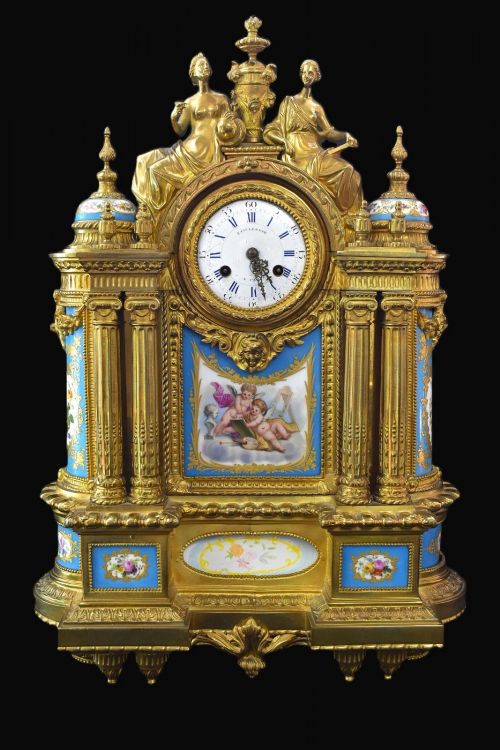
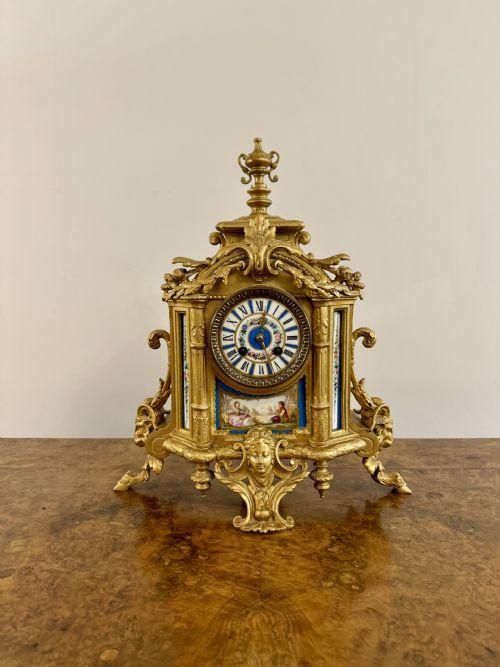
Makers utilised cast metals such as brass, gilt bronze, and ormolu to form elaborate Rococo and classical frames, often combining them with hand-painted porcelain panels and enamel dials. These metallic elements required skilled chasing and gilding to achieve deep lustre and sharp relief.
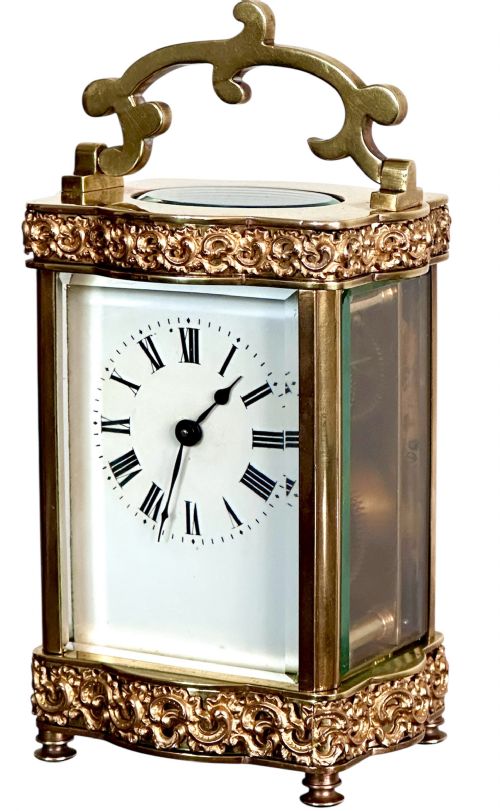
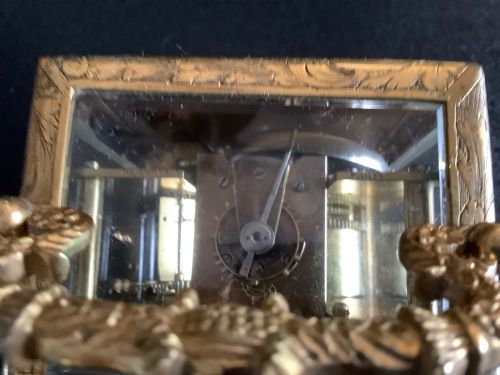
Enclosure materials included polished marble, green onyx, and bevelled glass panels held within brass frameworks, as seen in four-glass mantel clocks. Carriage clocks relied on compact, portable brass housings fitted with intricate escapements and repeater mechanisms.
Dials frequently featured individual enamel cartouches for numerals or fine hand-painted enamel scenes depicting figures and foliage. Movements were engineered for eight-day striking or fusee timekeeping, demanding precise calibration by master horologists.
Listings feature nineteenth-century French and British pieces utilising materials like gilt bronze, marble, porcelain, and enamel across various mantel and carriage clock formats.
What varies in quality
The refinement of the casting and chiselling on ormolu and gilt bronze mounts separates standard production from exceptional studio work. Superior examples exhibit crisp, deep detailing in foliage and figural motifs without softness in the metal.
The integration of decorative elements dictates overall harmony, from hand-painted porcelain panels matching the dial to fully engraved side panels on carriage clocks. Simpler timber or slate cases rely on architectural proportion rather than ornamentation.
Movement complexity also defines the piece, with twin-fusee systems, chimes, and repeating mechanisms representing higher tiers of clockmaking expertise compared to standard spring-driven timepieces.
Etienne Lenoir·Duverdrey and Bloquel·Tiffany·John Leroux·P H Mourey
The Decorative Mantle Clock Glossary
- Ormolu
- A gilded bronze finish achieved through a mercury amalgamation technique, common on nineteenth-century French clock cases. It provides a rich, warm gold appearance.
- Champleve
- An enamelling technique where troughs are dug into a metal surface and filled with vitreous enamel before firing. This method creates colourful, patterned designs on clock bezels and pillars.
- Fusee
- A conical pulley connected to the mainspring by a cord or chain, designed to equalise the torque as the spring unwinds. This mechanism improves timekeeping accuracy across the duration of the wind.
- Garniture set
- A decorative grouping consisting of a central clock flanked by matching side ornaments such as urns or candelabra. These sets were designed to sit symmetrically on a mantelpiece.
- Carriage clock
- A small, spring-driven timekeeper equipped with a handle and glass panels, originally built for travel by horse-drawn carriage or train. They often feature repeating mechanisms to sound the time on demand.
Decorative Mantle Clock: Frequently Asked Questions
What is a clock garniture set?
A clock garniture set comprises a central mantel clock accompanied by matching decorative side pieces, such as twin urns or candelabra. These matched groupings were created to form a balanced, symmetrical display on a fireplace mantel.
Such sets typically incorporate porcelain panels, gilt bronze mounts, or marble bases that echo the design of the main timekeeper.
How do carriage clocks differ from mantel clocks?
Carriage clocks are compact, portable timepieces fitted with a carrying handle and protective glass panels on all sides. They were originally designed for travel during the nineteenth century.
Standard mantel clocks are heavier, stationary pieces housed in marble, wood, or metal, intended to remain fixed in a single room.
How do I date a decorative mantle clock?
Dating relies on stylistic clues, materials, and mechanical signatures recorded in the case design. Victorian and nineteenth-century pieces often display specific revival aesthetics like Rococo curves or Egyptian motifs.
Inscribed signatures on enamel dials or backplates frequently identify the maker and operational period, helping narrow down the decade of production.
How should I care for an antique movement?
Antique mechanical movements require regular winding using the correct key, avoiding over-winding to protect the mainspring. Keeping the clock on a level surface ensures the pendulum or escapement beats evenly.
Professional cleaning and oiling every few years maintain the internal brass components and prevent wear on the gear train.