

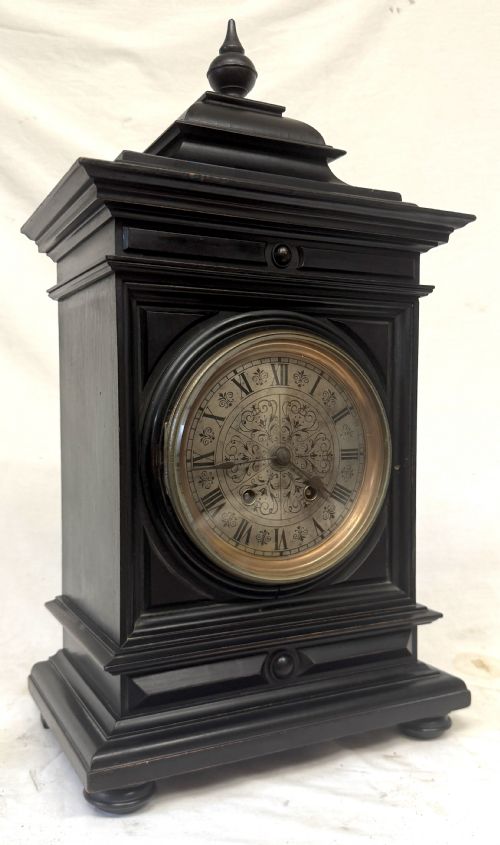


Black Wooden Bracket Clock
A black wooden bracket clock brings architectural weight and precision timekeeping into a room, combining dark timber cases with intricate dials.
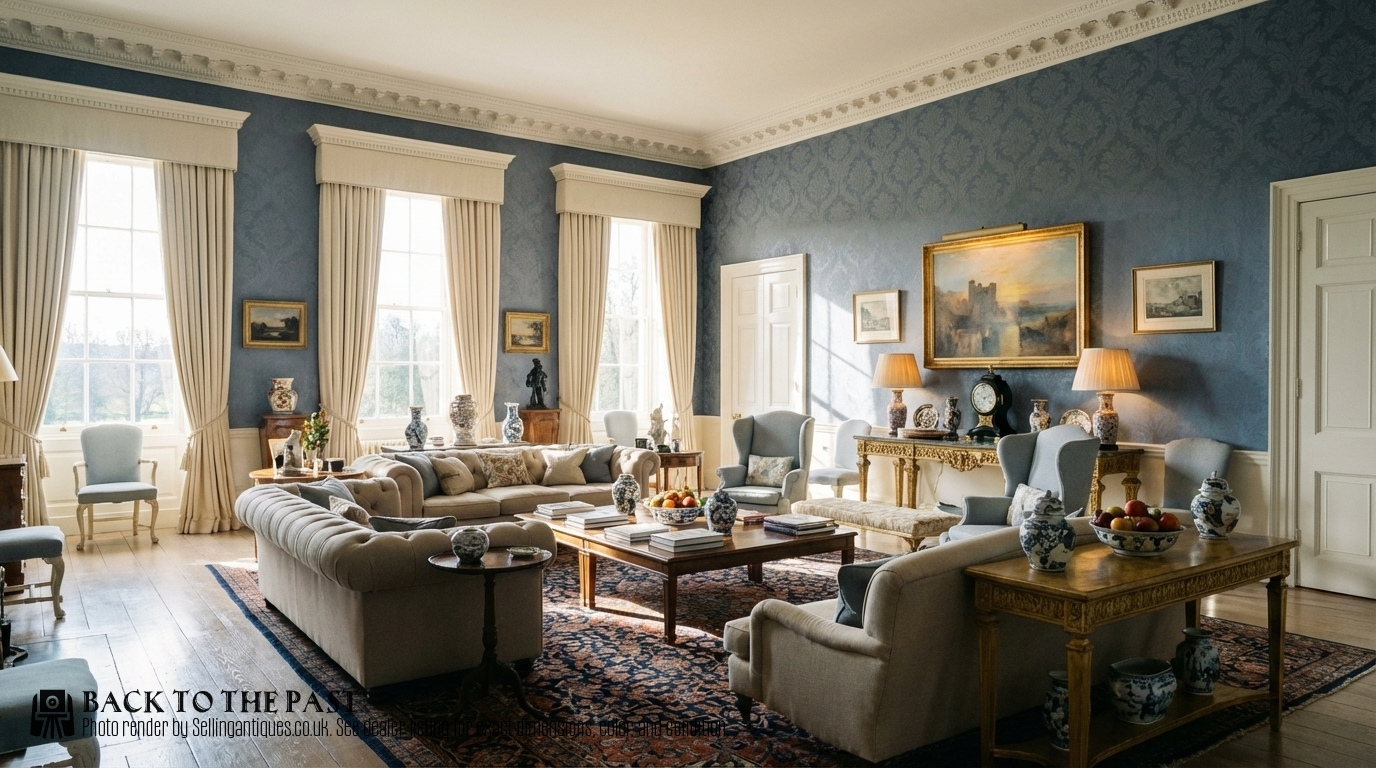
Black Wooden Bracket Clock
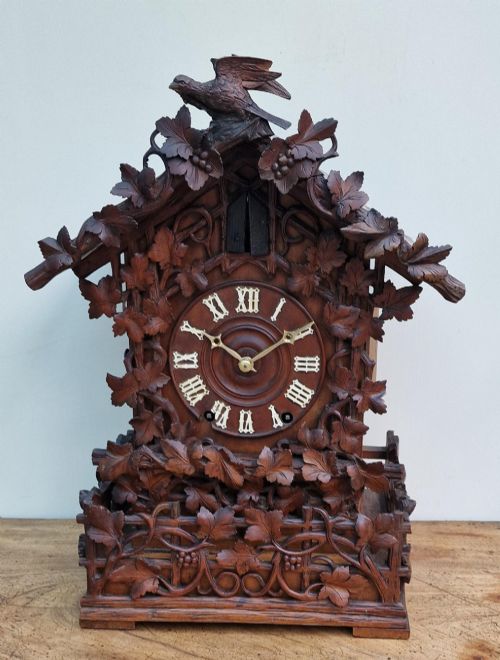
A black wooden bracket clock is a portable timekeeper housed primarily in ebonised wood or dark walnut, spanning periods from the eighteenth century through the Victorian era. These pieces appear in diverse regional forms, including English break-arch designs, German Black Forest models, and French Rococo interpretations.
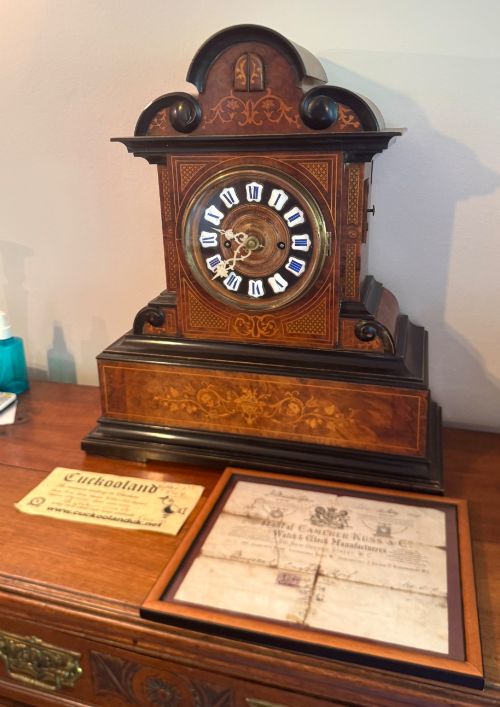
The objects listed range from library clocks and single or triple fusee movements to balloon clocks and quarter-repeating musical bracket clocks. Buyers will encounter styles varying from Georgian and Regency restraint to Gothic Revival, Aesthetic Movement, and elaborate French Rococo ornamentation.
Materials and construction
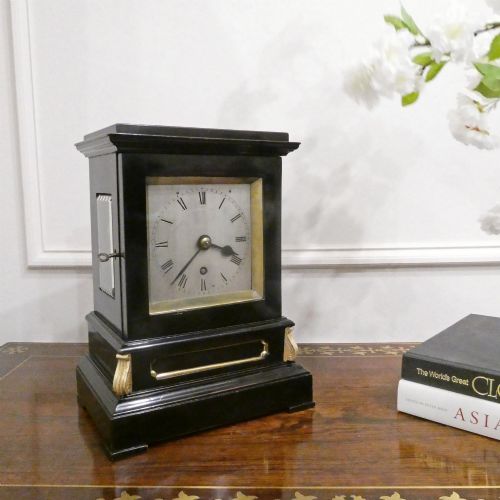
Cases are constructed from timber such as walnut or carved walnut, frequently finished with ebonisation to achieve a dense black appearance. Ormolu mounts, glass panels, and brass details complement the dark wooden bodies.
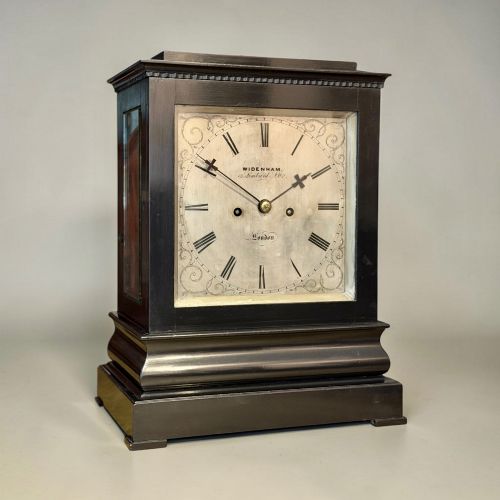
Internal mechanisms rely on fusee movements, verge escapements, and striking mechanisms. Dials are finished in materials including enamel and silvered metal to contrast against the dark timber.
Black Wooden Bracket Clock Retail Price Guide 2026
Typical asking prices for black wooden bracket clock among the pieces listed under this phrase on Sellingantiques today, from the lower quarter to the upper quarter. They describe what is for sale here now, not the wider market.
Movements range from simple timepieces to complex musical mechanisms featuring multiple bells and Westminster chimes.
Judging quality in black wooden bracket clocks
Finer examples display careful ebonisation, precise marquetry or carving in the walnut, and well-executed silvered or enamelled dials signed by established makers. The balance between case proportion and mechanical complexity defines the upper tier of these timekeepers.
Widenham of London·Des Granges of London·Andrew Marchant of London·John Leroux·Barraud & Lunds·Joseph Lum of London
The Black Wooden Bracket Clock Glossary
- Fusee
- A conical pulley used in clock movements to maintain an even pull as the mainspring unwinds. This device helps the clock maintain consistent timekeeping accuracy throughout its power reserve.
- Ebonised
- Wood treated with a dark stain or finish to imitate ebony. This technique creates a deep black surface popular in nineteenth-century case design.
- Verge escapement
- An early type of clock escapement mechanism that controls the release of power to the gear train. It is typically paired with a balance spring or pendulum in older movements.
- Quarter-repeating
- A mechanism that strikes the quarters of the hour on demand when a cord or lever is activated. It allowed owners to check the time audibly in the dark.
Black Wooden Bracket Clock: Frequently Asked Questions
How do I wind a fusee bracket clock?
Winding requires a matching key inserted into the dial winding square, turned gently until resistance is met. Care must be taken not to overwind the mainspring.
Most fusee movements require weekly attention depending on the train configuration and whether the clock incorporates musical or chiming complications.
Where should I place a bracket clock?
These clocks sit securely on sturdy furniture, mantels, or dedicated wall brackets away from direct sunlight and drafts. A stable surface ensures the pendulum or balance remains level.
Placing the clock at a comfortable viewing height allows proper access to the winding squares and any side glass panels.
What is the difference between a bracket clock and a mantel clock?
Bracket clocks historically originated to sit on sliding wall brackets to project sound and save table space, often featuring carrying handles. Mantel clocks are designed to rest directly on a fireplace mantel or shelf.
Over time the terms became interchangeable in trade descriptions, though traditional bracket clocks frequently retain higher-grade portable fusee movements.
How do I date a black wooden clock?
Dating relies on stylistic clues such as case silhouettes, dial materials, and architectural details characteristic of Georgian, Regency, or Victorian eras. Maker signatures provide the most reliable chronological anchor.
Internal movement construction, including the presence of verge or anchor escapements, further narrows the manufacturing period.