





Decorative Lidded Urns
Decorative lidded urns bring formal symmetry and weight to a room, drawing the eye with their sculptural covers and painted surfaces.
Decorative Lidded Urns
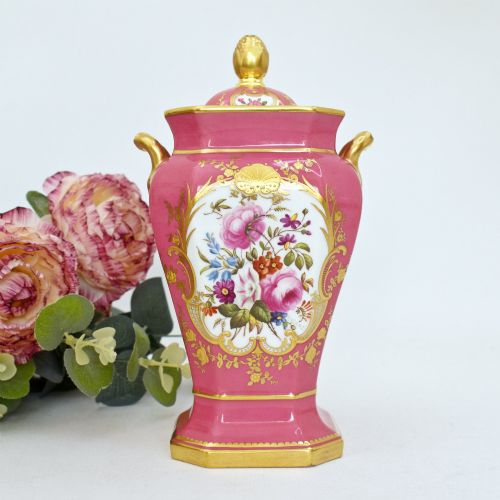
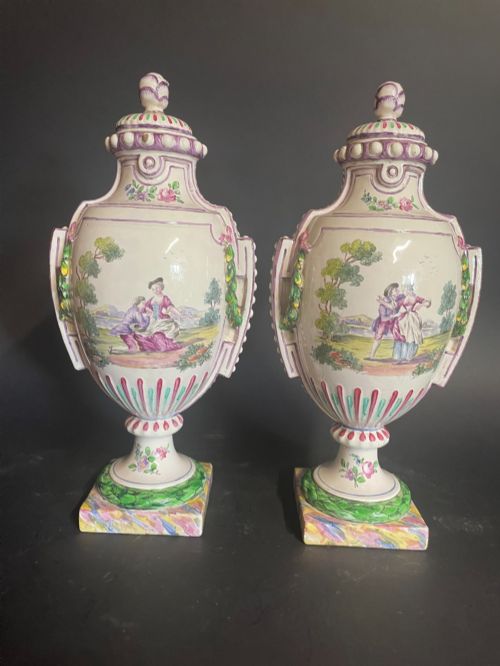
Decorative lidded urns encompass ginger jars, pot pourri vases, and classical vessels produced across the nineteenth and twentieth centuries in Britain, continental Europe, and Japan.
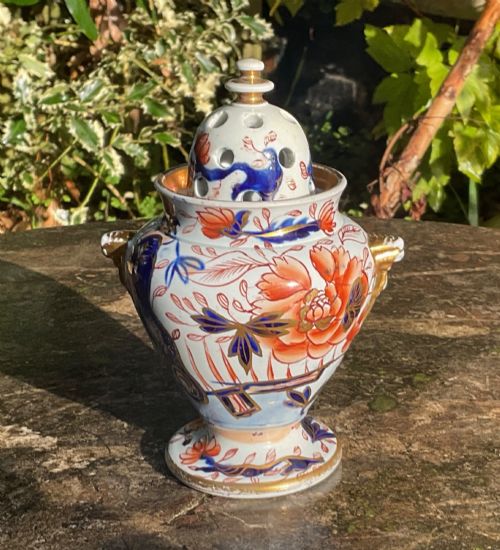
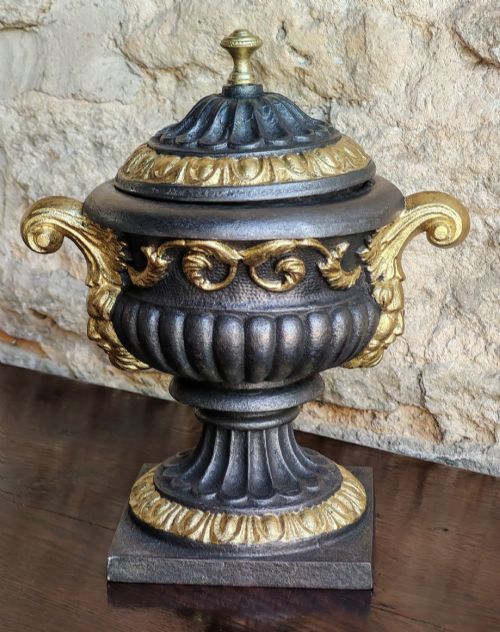
The material range spans porcelain and earthenware alongside metalwork such as brass and gilt bronze, often following Neoclassical, Rococo Revival, or Imari styles.
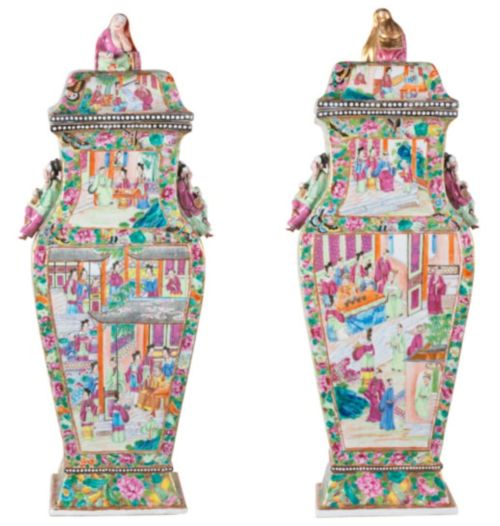
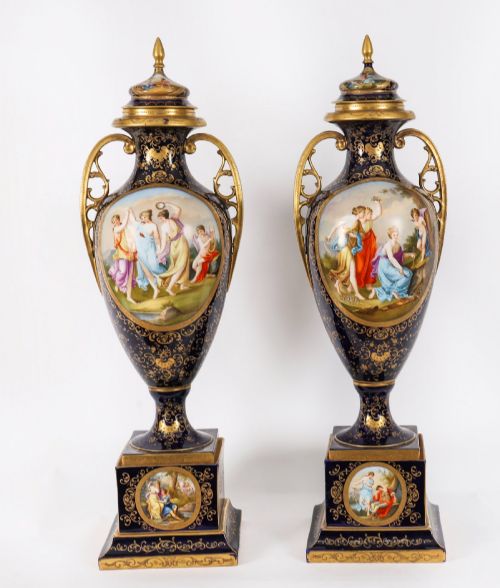
Buyers meet forms ranging from miniature hand-painted pot pourri vessels to large pairs standing over a metre tall, originating from factories including Royal Worcester, Minton, and Dresden.
Materials and Techniques
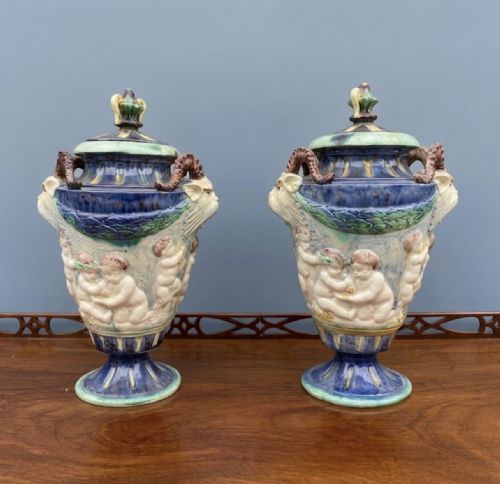
Ceramic bodies utilise porcelain, ironstone, faience, and majolica, shaped on the wheel or cast in moulds before receiving intricate hand-painted glazes, enamels, and gold leaf highlights.
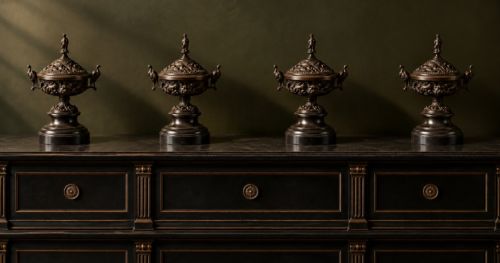
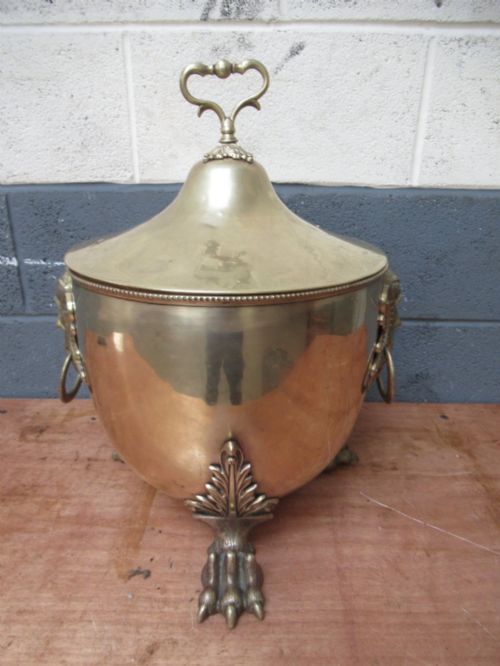
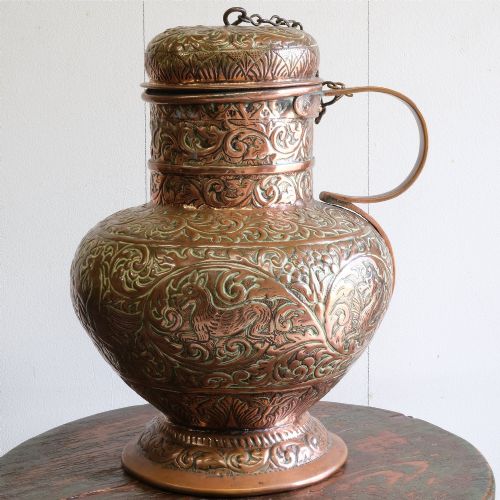
Metal vessels employ cast bronze, brass, and copper, frequently embellished with champlevé or cloisonné enamel work where wire compartments hold coloured glass pastes.
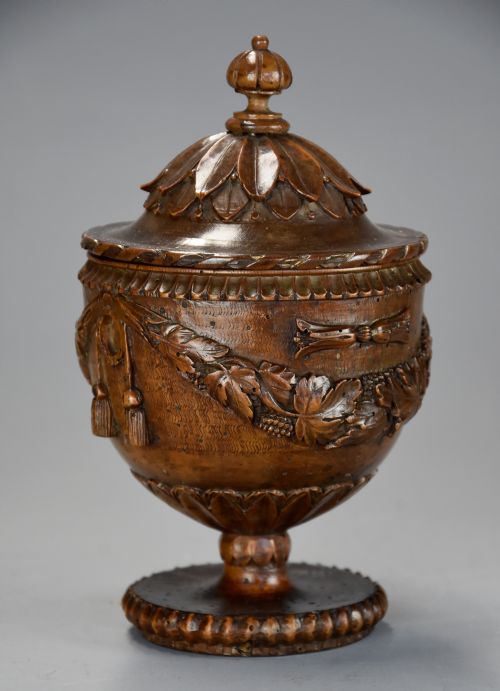
Carved wooden examples utilise timber such as walnut, while tin-ware surfaces receive japanned decoration to mimic oriental lacquer.
Decorative Lidded Urns Retail Price Guide 2026
Typical asking prices for decorative lidded urns among the pieces listed under this phrase on Sellingantiques today, from the lower quarter to the upper quarter. They describe what is for sale here now, not the wider market.
Storks feature intently on nineteenth-century pedestals, watching over porcelain covers with avian vigilance.
Assessing Quality
Quality rests upon the precision of the hand-painted detail and the clarity of the glaze or enamel, separating factory work painted by named artists from simpler commercial output.
The crispness of the casting in metal mounts, handles, and finials dictates the standard of bronze and brass pieces.
Original matching lids retained across the centuries dictate the integrity of the piece, as replacement covers diminish the sculptural balance of the vessel.
Jules Moigniez·Royal Crown Derby·Royal Worcester·William Moorcroft·Hadley's Worcester
The Decorative Lidded Urns Glossary
- Ginger jar
- A ceramic vessel with a broad shoulder and a domed cover, originally designed for storing spices but frequently made purely for display.
- Pot pourri vase
- A vessel featuring a pierced or perforated lid intended to release the scent of dried flower petals and herbs held inside.
- Cloisonne
- A metalworking technique where thin metal wires are soldered to a base to create cells filled with enamel paste before firing.
- Imari palette
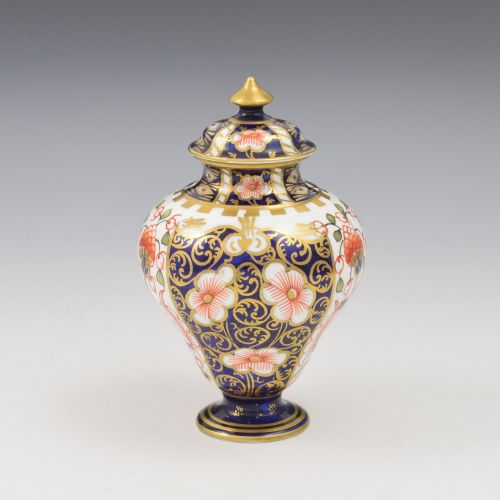
- A decorative scheme originating in Japan utilising deep underglaze blue, iron red, and gilt highlights on a white porcelain ground.
- Champleve
- An enamelling method where troughs or cavities are hollowed out of a metal surface to hold coloured vitreous enamel.
Decorative Lidded Urns: Frequently Asked Questions
What were decorative lidded urns used for?
These vessels served primarily as mantelpiece ornaments, garniture sets, and centrepieces in grand nineteenth-century interiors. Some variations held dried aromatics or spices, though many existed purely to display wealth and artistic taste.
Over time their function shifted entirely to decorative display, anchoring symmetrical arrangements on sideboards, cabinets, and tables.
How do I date a lidded porcelain urn?
Dating relies heavily on factory backstamps, glaze characteristics, and stylistic markers such as Neoclassical symmetry or Victorian ornamentation. Examining the wear on the base and the method of manufacture provides further clues.
Comparing the painting technique and colour palette to documented periods helps narrow down the exact decade of production.
Where should I display large urns?
Large urns command attention and require stable surfaces such as heavy sideboards, dedicated pedestals, or low mantelpieces where their height can be fully appreciated. Pairs work well framing a fireplace or balancing opposite ends of a long piece of furniture.
Keep them away from direct sunlight to protect enamel colours and hand-painted gilt highlights from fading.