


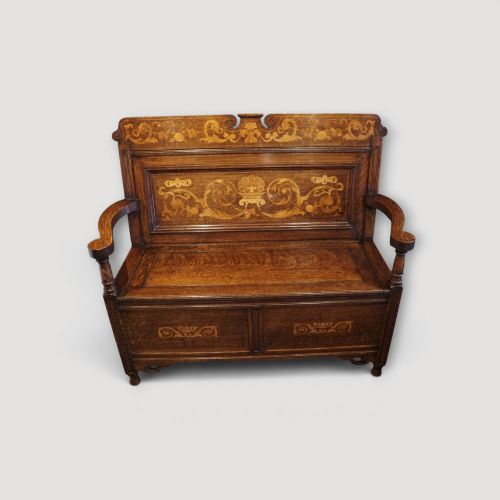

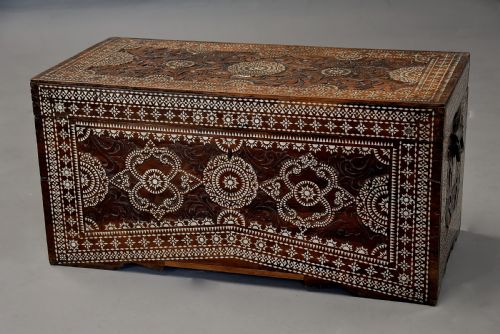
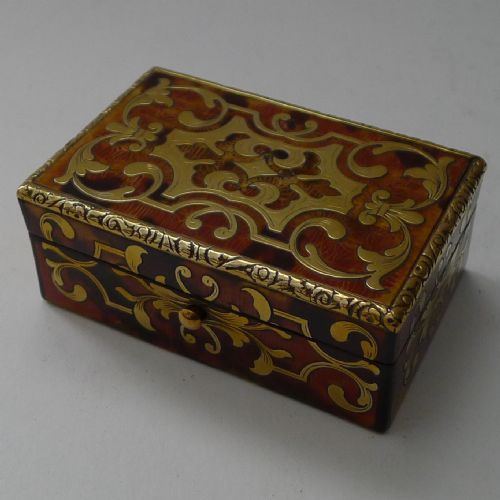
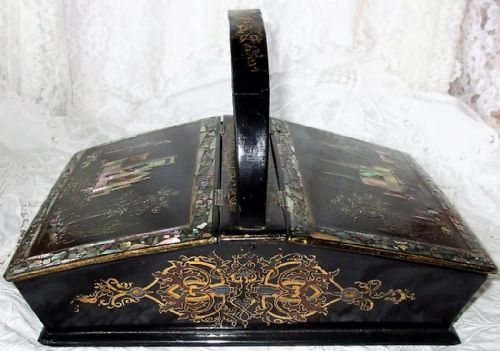
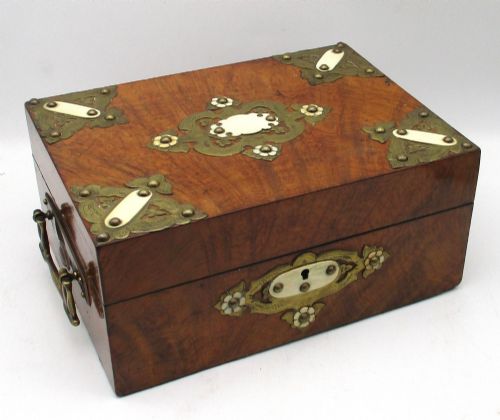
Decorative Inlaid Box
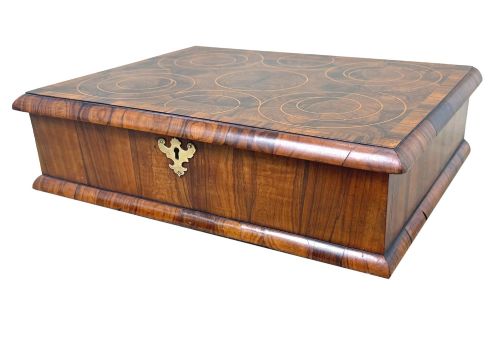
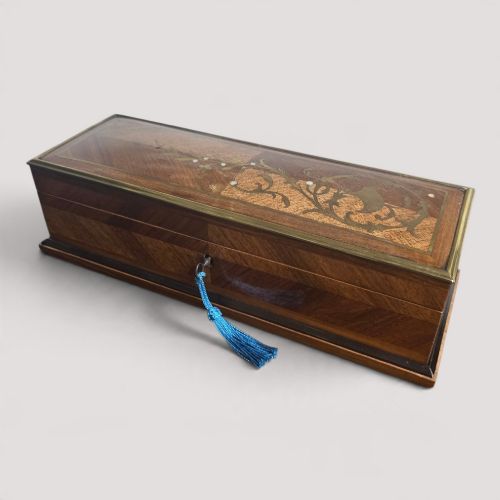
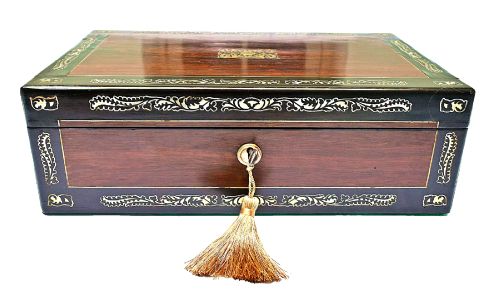
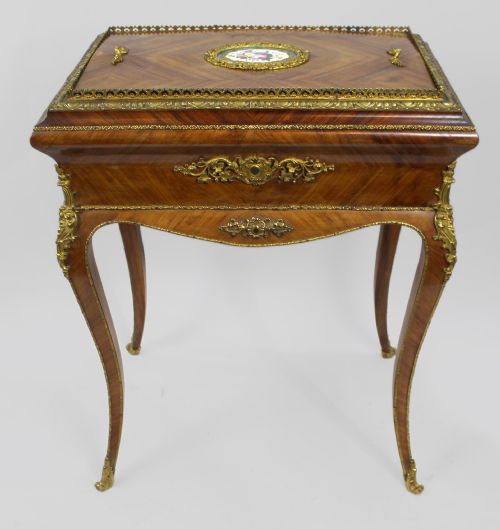
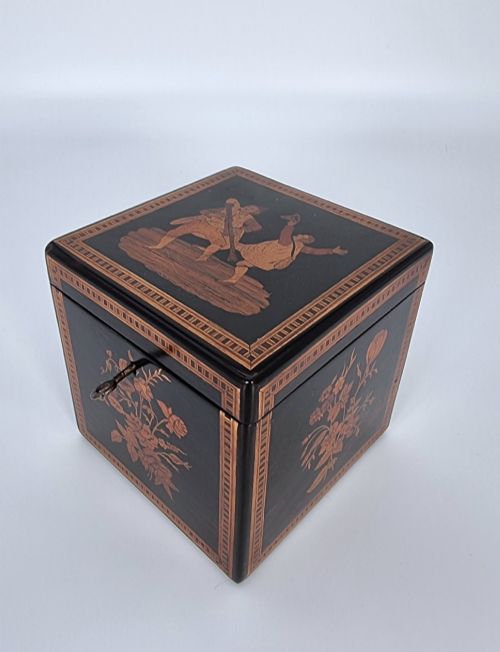
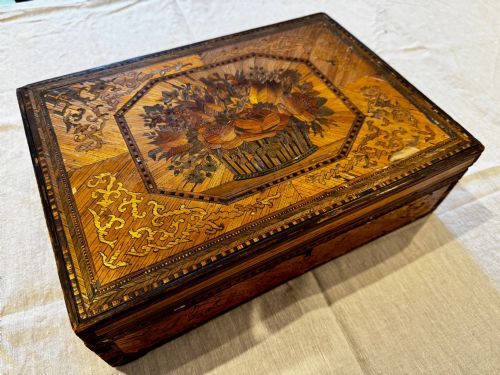
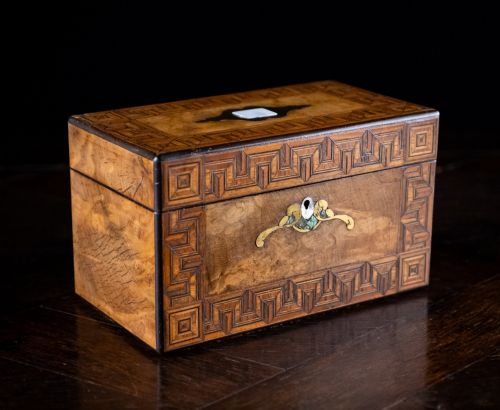
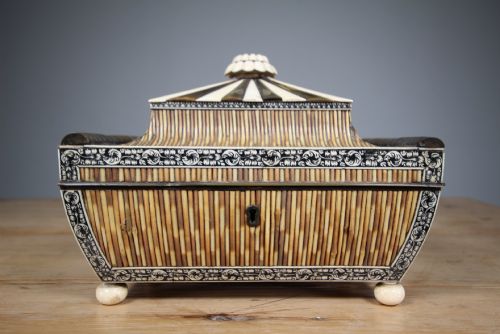
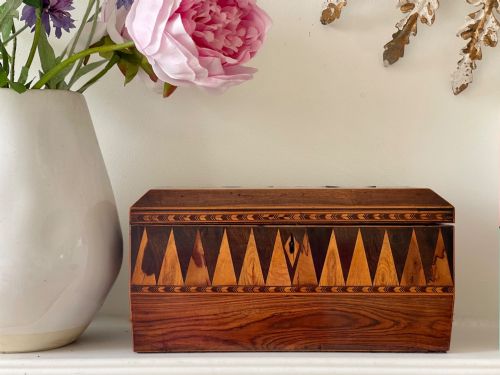
You are looking at a decorative inlaid box, a functional piece of craftsmanship designed to hold tea, letters, jewellery, or keepsakes.
Decorative Inlaid Box
A decorative inlaid box encompasses forms ranging from tea caddies and work boxes to music boxes, stationery caskets, and writing chests. These pieces span the 18th century, the Regency era, the Victorian period, and the early 20th century, drawing on Georgian, Victorian, and regional overseas styles.
Tea caddies and writing boxes dominate the earlier periods, often fashioned with sarcophagus or rectangular profiles to sit upon tables and sideboards. Trinket boxes, keepsake boxes, and sewing boxes appear frequently across the Victorian era, utilising diverse woods and ornamental motifs.
Regional variations include Anglo-Indian bone-inlaid chests, Middle Eastern hardwood trunks, and Qing Dynasty oriental cases. You will also encounter Tunbridge ware vessels and French boulle work alongside standard British forms.
Materials and technique
Cabinetmakers utilised dense timbers such as rosewood, walnut, mahogany, satinwood, and burr yew as foundations for intricate surface work. These woods provided stable surfaces capable of supporting complex veneering without warping over decades of use.
Decoration relied on contrasting materials inserted into the primary wood, incorporating mother-of-pearl, brass, bone, ivory, pewter, tortoiseshell, and boxwood. Specialised techniques like parquetry, marquetry, and Tunbridge ware created geometric patterns, floral panels, and mosaic pictures.
Decorative Inlaid Box Retail Price Guide 2026
Typical asking prices for decorative inlaid box among the pieces listed under this phrase on Sellingantiques today, from the lower quarter to the upper quarter. They describe what is for sale here now, not the wider market.
Listings feature 19th Century, Victorian, Georgian, Regency, and Edwardian periods, utilising rosewood, walnut, brass, and mother of pearl.
Judging the work
Quality rests in the precision of the joinery and the tightness of the inlay work where multiple materials meet. Superior examples maintain flush surfaces without lifting veneers, splintered edges, or visible gaps around brass and mother-of-pearl inserts.
Interior fittings dictate the standard of the piece, distinguishing utilitarian storage from luxury containers. Fine boxes retain original silk linings, fitted compartments, working locks with keys, inner canisters, and matching mixing bowls.
Erhard and Sohne
The Decorative Inlaid Box Glossary
- Parquetry
- Geometric mosaic woodwork formed by fitting small wooden blocks together to create repeating patterns. This technique frequently decorates the lids and sides of Victorian tea caddies.
- Marquetry
- Pictorial veneer work utilising various tinted woods, shells, and metals to compose pictorial scenes or floral arrangements. Artisans cut these delicate shapes from thin sheets before pressing them into the primary carcase.
- Tunbridge Ware
- Specific wood mosaic work originating from Kent, producing minute tesserae from natural timbers to form detailed pictorial designs. Collectors prize these pieces for their extreme microscopic precision.
- Sarcophagus
- A monumental container shape featuring a domed or peaked lid tapering toward a stepped base, popular during the Regency period. This architectural form lent gravity to small tea and quill boxes.
- Boulle
- Elaborate marquetry style combining tortoiseshell and brass inlay, named after the French cabinetmaker André-Charles Boulle. Nineteenth-century makers revived this technique for small tabletop caskets.
Decorative Inlaid Box: Frequently Asked Questions
What were tea caddies used for?
Tea caddies stored valuable loose-leaf tea under lock and key in Georgian and Victorian households. Servants kept the leaves secure because tea was an expensive commodity.
Inside, the boxes typically featured lidded compartments or separate canisters to keep different tea blends dry and fragrant. Some included a central glass bowl for mixing black and green teas.
How do I date an inlaid box?
Dating relies on the combination of timber species, construction methods, hardware, and stylistic motifs. Regency pieces often showcase brass inlay and rosewood, while Victorian examples frequently incorporate mother-of-pearl and walnut.
Examining the interior construction, secondary woods, and hinge types also helps narrow down the decade of manufacture. Hand-cut dovetails and original locks offer further clues to the period.
How should I clean a wooden box?
Dust the exterior gently with a dry, soft microfibre cloth to remove surface particles. Avoid liquid cleaners, modern polishes, or harsh solvents that can damage fragile veneers and old French polish.
Feed dry timbers occasionally with a specialist microcrystalline wax to preserve the finish. Keep the box away from direct sunlight and radiators to prevent the wood from splitting and the inlay from lifting.
What is Tunbridge ware?
Tunbridge ware is a specialised form of mosaic woodworking that creates detailed pictures using thousands of tiny timber squares. Craftsmen glued natural woods together and sliced them transversely to produce uniform pictorial tiles.
These pieces typically depict castles, butterflies, or geometric borders set into the lids of small trinket boxes. The finest examples display remarkable colour variation without using artificial dyes.