





Decorative Gilded Clock
A decorative gilded clock brings nineteenth-century French metalwork and porcelain dial faces into a room, offering both reliable timekeeping and ornate mantel presence.
Decorative Gilded Clock
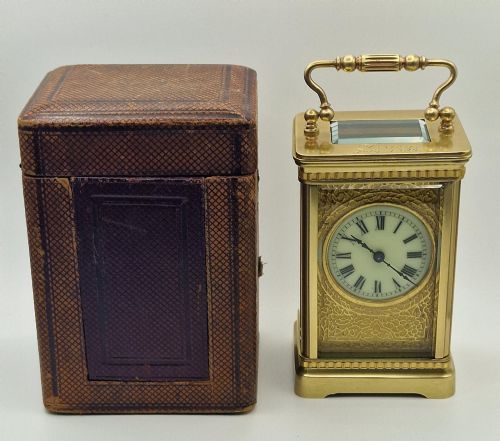
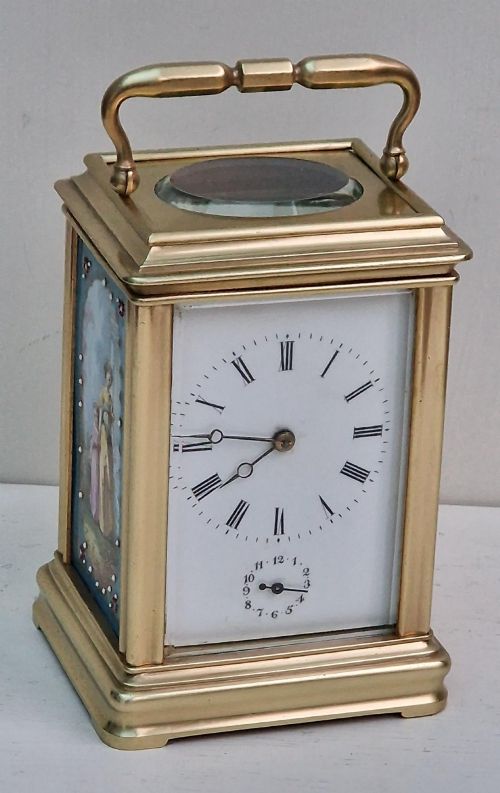
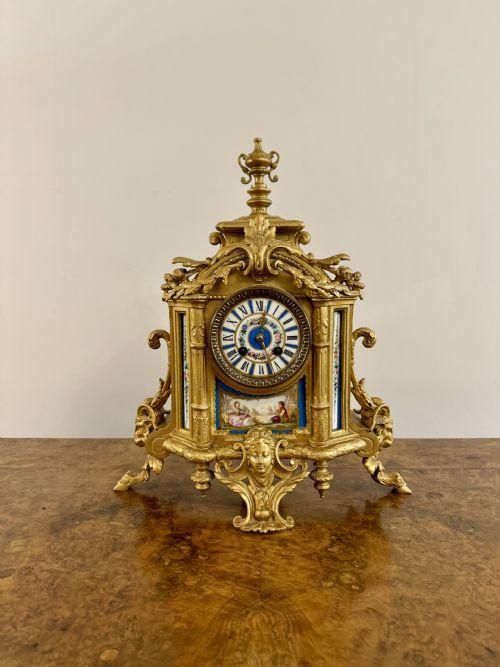
A decorative gilded clock encompasses mantel pieces, wall brackets, and carriage clocks originating predominantly from nineteenth-century France. Buyers encounter substantial bronze, brass, and ormolu cases styled in Rococo Revival, French Empire, and Neoclassical motifs.
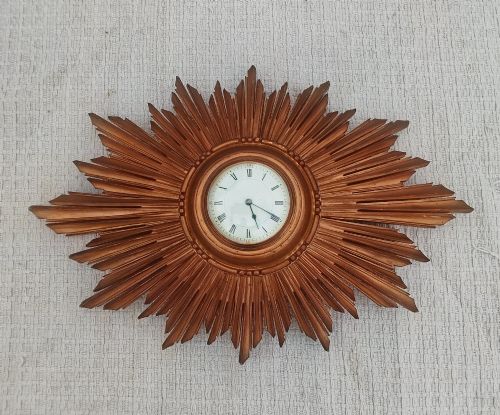
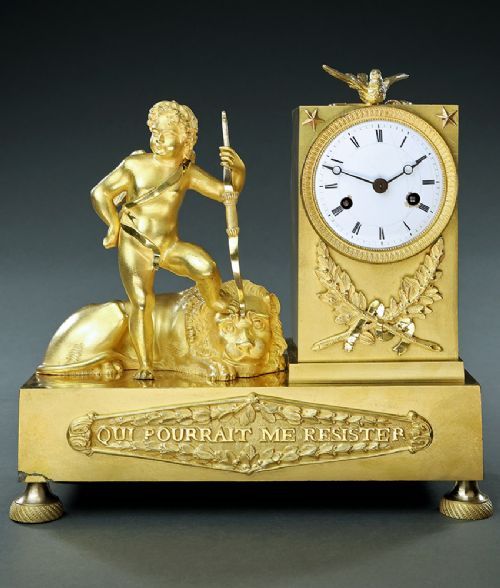
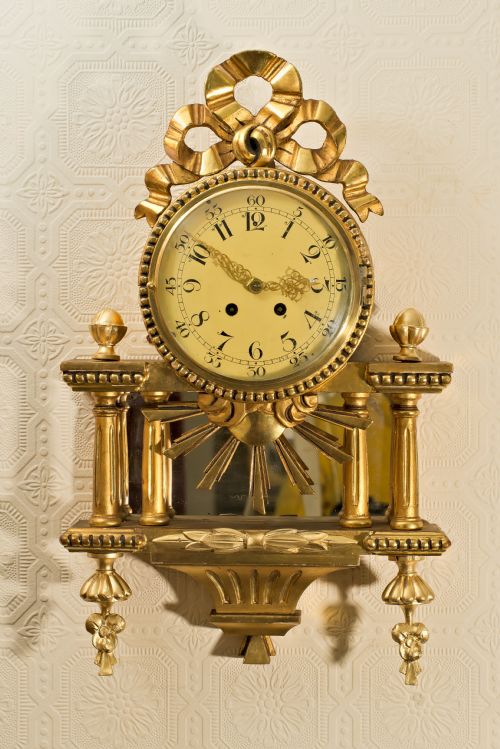
Mantel clocks dominate the selection, frequently paired with porcelain panels, enamel dials, or figural subjects such as doves and putti. Variations range from glass-encased crystal regulators to heavy gilded wood sunburst wall pieces.
Materials and construction
Makers utilised solid bronze and brass chased by hand, applying mercury gilding or modern ormolu finishes to achieve deep lustre. Cases incorporate cast ornament welded or screwed to heavy frames, supporting mechanical movements driven by springs or weights.
Dials and decorative panels feature fired porcelain and white enamel with painted Roman numerals, protected behind bevelled glass panes fitted into cast metal doors.
Some nineteenth-century French mantel clocks feature porcelain poodles and enamelled doves keeping permanent watch over the pendulum.
Factors of quality
Quality rests in the crispness of the bronze chasing and the depth of the ormolu surface, where sharper relief and heavier metal denote superior casting. Finer examples retain original mercury gilding with distinct matte and burnished areas.
The sophistication of the movement and the integration of hand-painted porcelain panels or tortoiseshell veneer separate standard production pieces from master workshop output.
Le Roy Paris·Thuret·PH Mourey·Wetterstrands·Tiffany·Hessen Paris·Henri Jacot·Paul Garnier
The Decorative Gilded Clock Glossary
- Ormolu
- Gilded bronze produced by applying an amalgam of gold and mercury to a bronze base, then heating to evaporate the mercury. This technique creates a durable, warm metallic finish seen on nineteenth-century French cases.
- Cartel clock
- A wall clock housed in an ornate, asymmetrical frame of gilt bronze, brass, or carved giltwood. These pieces mount directly to the wall rather than resting on a mantel.
- Crystal regulator
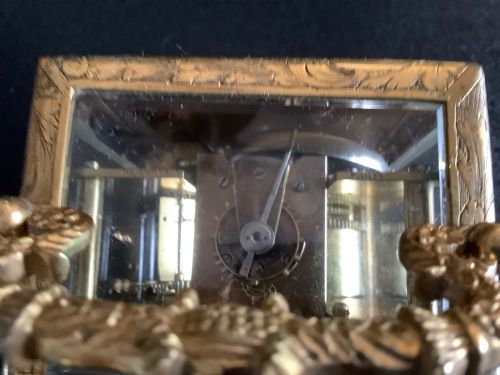
- A mantel clock enclosed entirely within bevelled glass panels held in a brass or gilt frame. The arrangement exposes the mechanical movement from all sides.
- Fusee
- A conical pulley connected to the mainspring by a cord or chain, designed to equalise the torque as the spring unwinds. This mechanism improves timekeeping accuracy over the course of an eight-day run.
Decorative Gilded Clock: Frequently Asked Questions
How do I wind an eight-day clock?
Insert the winding key into the dial apertures and turn clockwise until resistance is felt, taking care not to over-wind the mainspring.
Most nineteenth-century mechanical movements require this attention weekly to maintain accurate timekeeping across the pendulum or balance wheel.
What is a repeater carriage clock?
A repeater carriage clock includes a mechanism that chimes the last hour and quarters on demand when a button or plunger on the case is pressed.
Travellers utilised this function during the nineteenth century to check the time in darkness without striking matches.
How do I clean gilt bronze safely?
Dust the gilded surfaces gently with a soft, dry brush to remove particles without disturbing the delicate metal finish.
Avoid liquid cleaners, polishes, or abrasive cloths entirely, as harsh chemicals strip ormolu and mercury gilding permanently.
Where should I place a heavy mantel clock?
Position the clock on a stable, level surface such as a fireplace mantel or heavy sideboard to ensure the pendulum swings evenly.
Unlevel placement causes the escapement to tick unevenly and eventually halts the movement.