
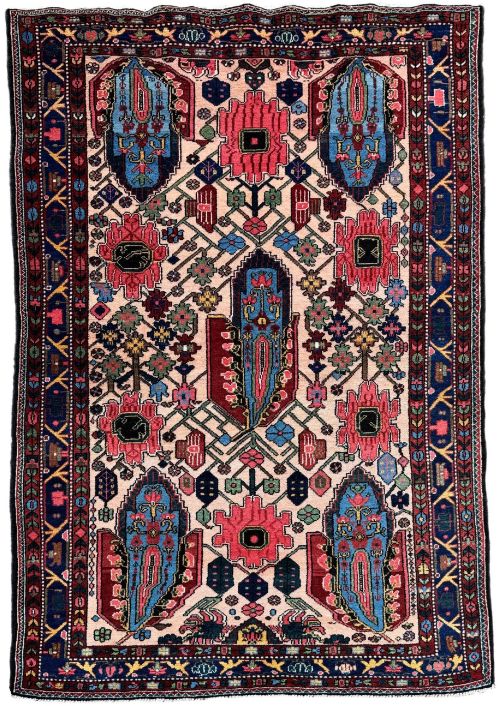
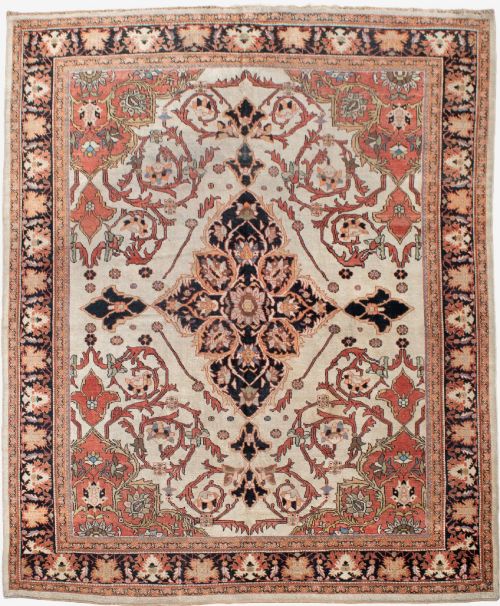
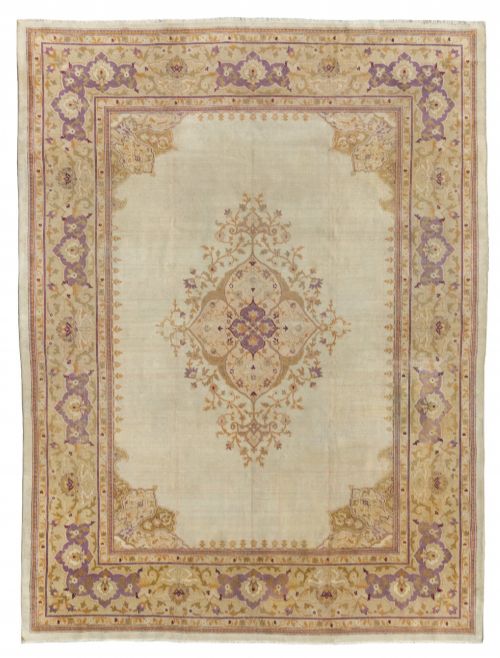
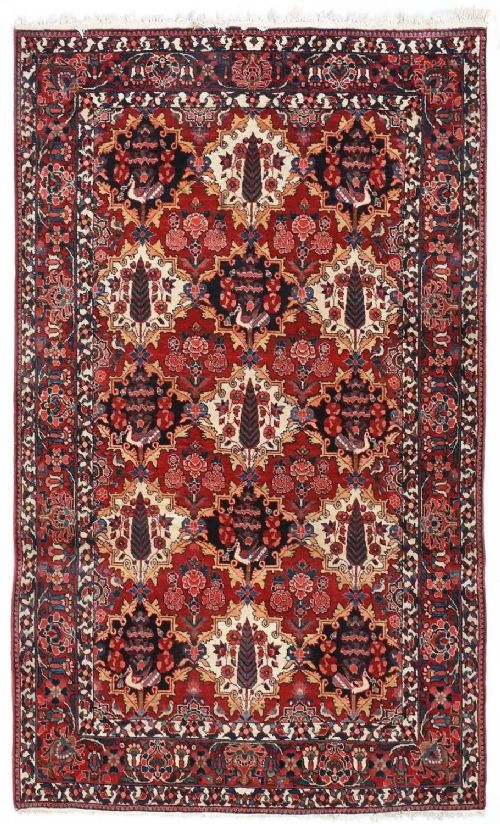


Decorative Floral Area Rug
A decorative floral area rug brings centuries of woven artistry into a room, grounding the space with botanical motifs.
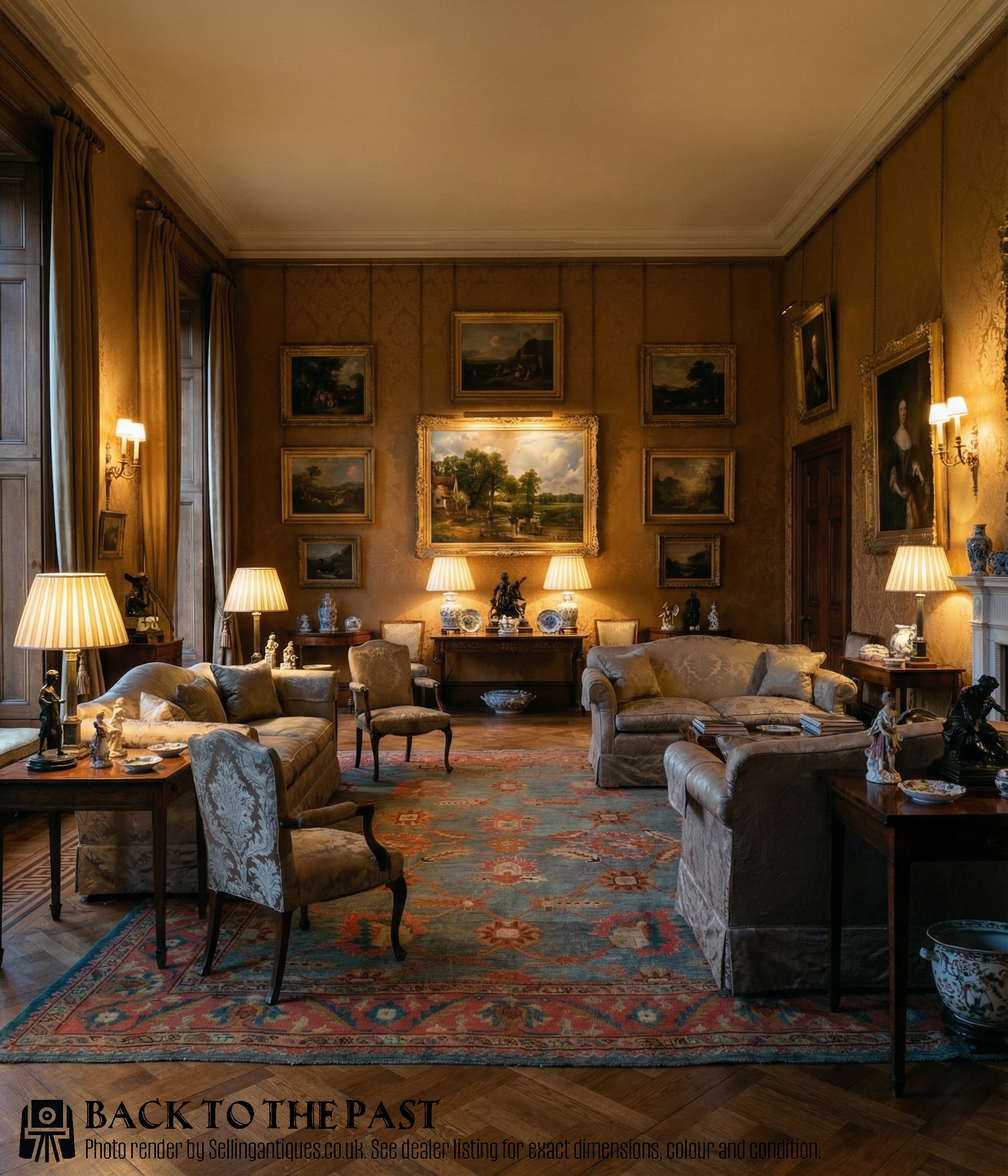
Decorative Floral Area Rug
A decorative floral area rug encompasses hand-knotted and flatwoven floor coverings centred around botanical motifs, floral sprays, and garden trellis patterns. These pieces span production from the eighteenth century through the early twentieth century, originating primarily from Persian, Indian, and European workshops. The selection encountered on this page ranges from room-size carpets down to smaller tribal rugs and flatwoven kilims.
Buyers seeking a decorative floral area rug will frequently encounter traditional Persian styles such as Mahal, Ziegler, and Sultanabad, alongside Indian Amritsar and European Bessarabian flatweaves. These pieces utilise plant-inspired designs, ranging from structured central medallions to meandering floral vines across diverse ground colours. Each origin brings distinct handling of botanical elements, creating varied visual rhythms within the interior.
The physical form varies from expansive carpets exceeding five metres in length down to compact scatter rugs and paired kilims. Such variety allows these textiles to anchor large reception spaces or to add warmth to more intimate rooms. The durability inherent in these historical weaves ensures they continue to function practically under foot while serving as major design elements.
Markers of quality and execution
Quality in these woven works rests on the precision of the knotting and the balance of the botanical composition across the field. Superior examples display harmonious colour saturation and finely drawn floral details that demonstrate high technical skill from the weaver. The handling of scale within the floral motifs dictates how successfully the design commands the room.
Condition and structural integrity also separate standard examples from the finest survivors of the period. Original edge bindings, full pile retention, and minimal historical restoration preserve the integrity of the piece. Subtle variations in wool quality and the depth of the initial dye batch further distinguish superior workshops from standard output.
Listings span from the eighteenth century to the 1930s, featuring wool and cotton materials across Persian, Indian, and European styles.
The Decorative Floral Area Rug Glossary
- Kilim
- A flatwoven carpet or rug produced without a pile, common in Bessarabian traditions. These textiles offer a smooth surface texture and are often reversible.
- Medallion
- A central ornamental design motif placed in the middle of the rug field. It typically anchors the surrounding floral sprays and geometric borders.
- Pile
- The raised surface of a rug formed by the cut ends of knotted yarn. The density and height of this wool layer dictate the physical weight and plushness of the piece.
- Selvedge
- The finished side edges of a carpet formed by wrapping transverse threads over the outermost warp cords. Proper binding protects the structural integrity of the weave.
- Warp
- The stationary vertical threads stretched upon the loom that serve as the foundation for the knots. Cotton is the most common material found in these structural foundations.
Decorative Floral Area Rug: Frequently Asked Questions
How do I clean an antique rug?
Maintenance requires gentle vacuuming without a rotating brush head to protect the delicate wool fibres and ancient foundation threads.
Professional specialist cleaning remains essential for deep washing to preserve the natural dyestuffs and prevent fibre degradation.
Are these rugs suitable for high traffic?
Traditional wool pile construction provides considerable natural resilience, allowing these pieces to withstand normal domestic foot traffic.
Placing a quality underlay beneath the textile prevents slippage and reduces friction against the floorboards.
How do I date an old carpet?
Dating relies on stylistic analysis of the floral motifs, structural characteristics, and regional weaving traits recorded across the manufacturing period.
Comparing knot density and palette variations against documented examples from specific decades helps narrow the production era.
Can I use underfloor heating with them?
Natural wool and cotton textiles tolerate moderate underfloor heating provided the temperature remains at conservative levels.
Excessive heat can dry out natural fibres and historical dyes, so monitoring the surface temperature safeguards the textile.